Sadly it is the end of an era. Portslade Green Gym – the wonderful group of volunteers who have been managing Madeira Drive Green Wall for us for so many years, has closed.
It is very hard to maintain a voluntary group these days. The Green Gymers haven’t been getting any younger – and have found it hard to recruit new members.
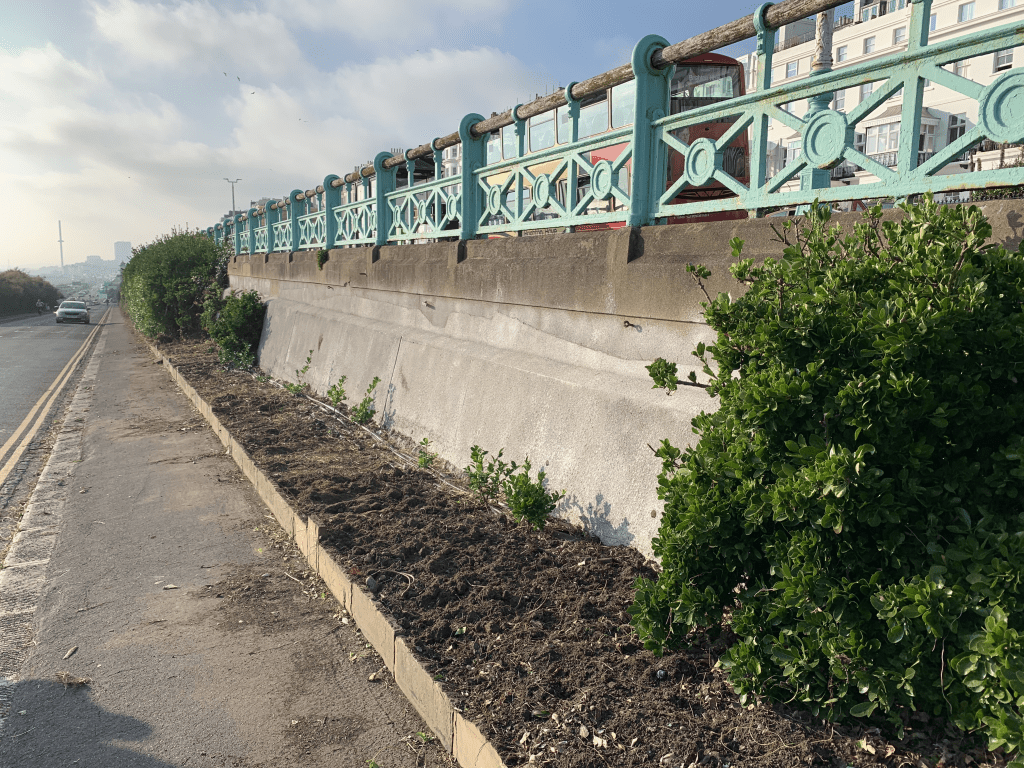
Such a shame, given how important social contact and exercise is for older people – and how much they have contributed to the Maderia Drive and other sites across Brighton & Hove. They have visited once or twice a year since 2016 – a decade of hard work to keep down troublesome plants, nurture the baby spindle trees planted by us, and litter pick.
Here they are on film in 2022 for LatestTV.
Thank you to all the wonderful volunteers who have helped over the years. You shall be missed.
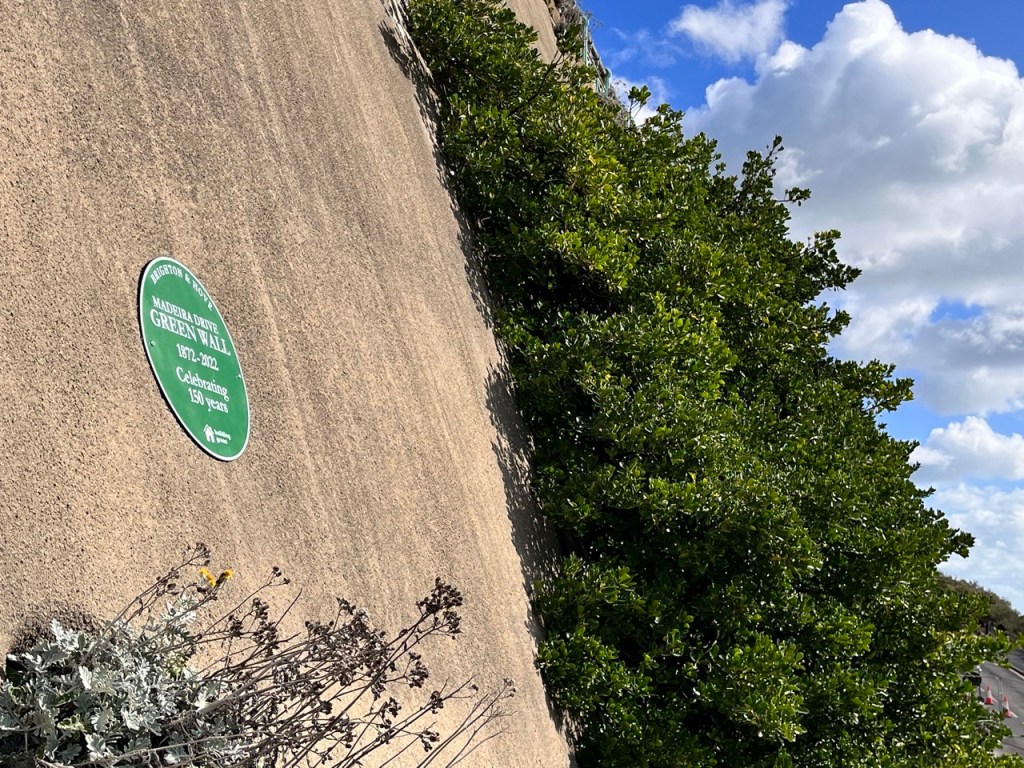
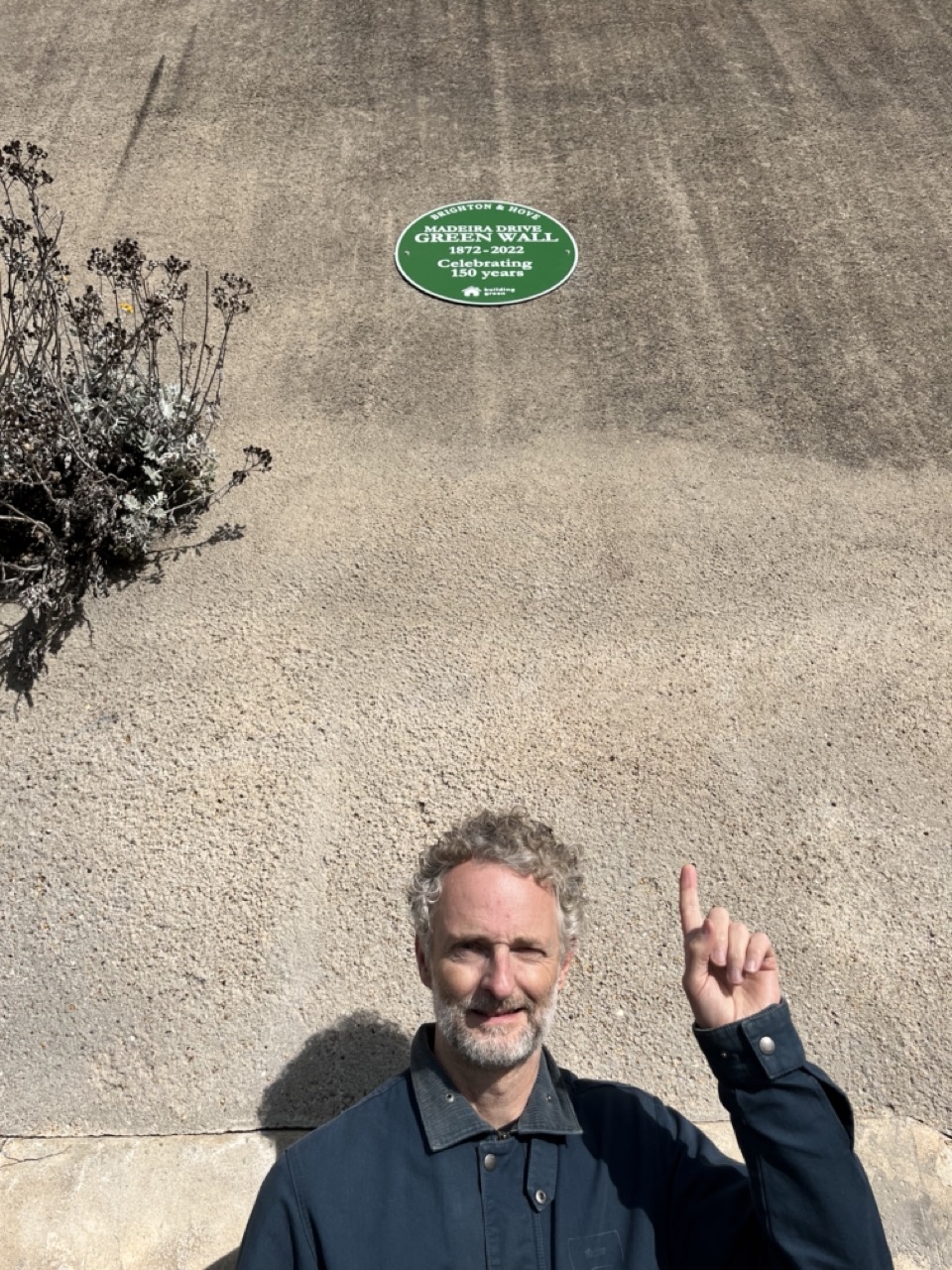
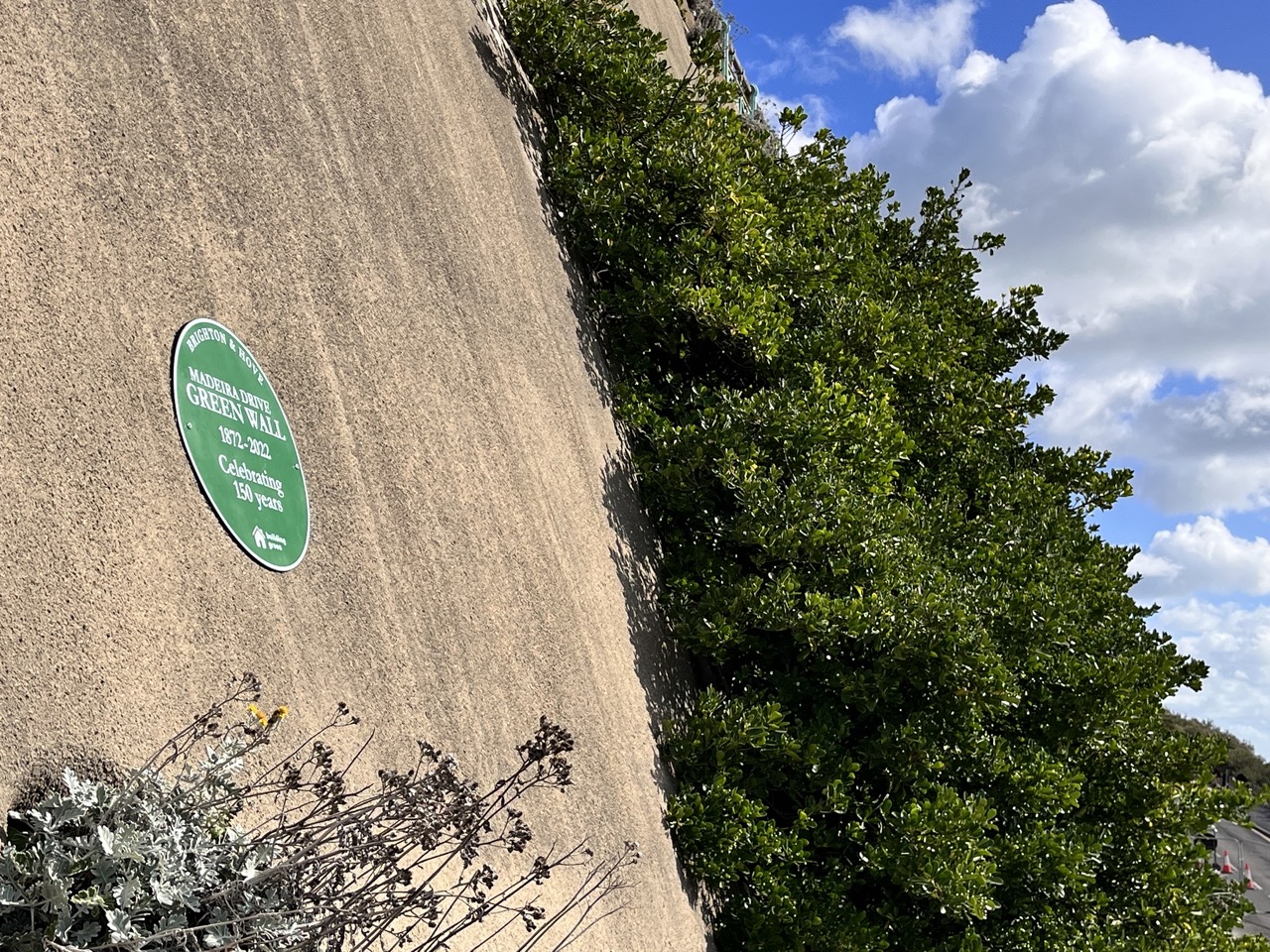
A ‘green plaque’ has been installed at Duke’s Mound, Brighton & Hove, to mark the 150th year of the Madeira Drive Green Wall.
Originally planted in 1872, this is the longest and oldest green wall in the country. And the first ‘green plaque’ of its kind.
Building Green Founder James Farrell (pictured) said ‘The idea behind the Green Plaque is to celebrate places of historic importance for people and nature. Modelled on English Heritage’s ‘Blue Plaque’ for famous residencies, the plaque installed at Duke’s Mound recognises the unique contribution Victorian’s made to the city seafront – and the pioneering example of bringing nature, recreation and heritage together that was recently featured in the film ‘The Great Green Wall of Brighton.’
With thanks to Brighton & Hove City Council, Harrity Building & Construction and Standard8.
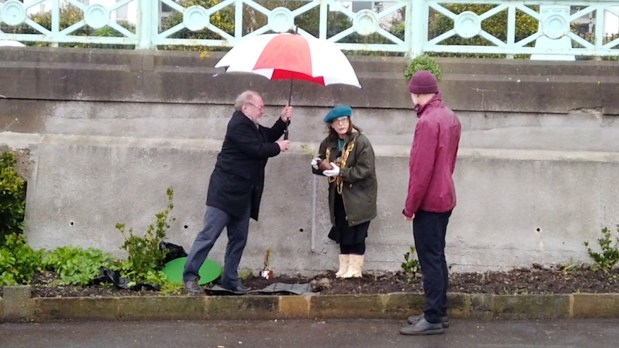
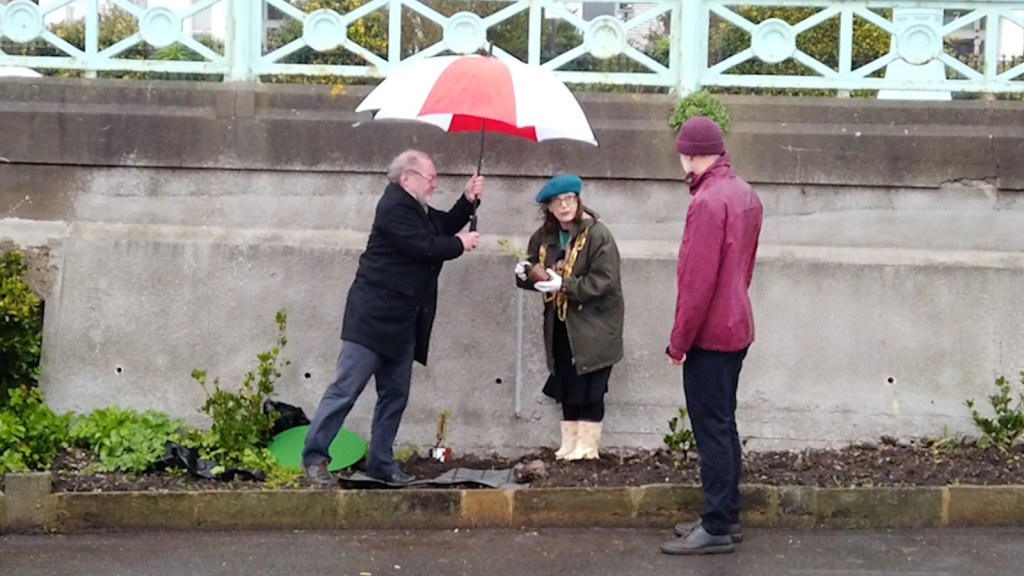
Today Mayor Cllr Lizzie Dean planted two baby Japanese spindle trees, in celebration of 150 years of the Madeira Drive Green Wall.
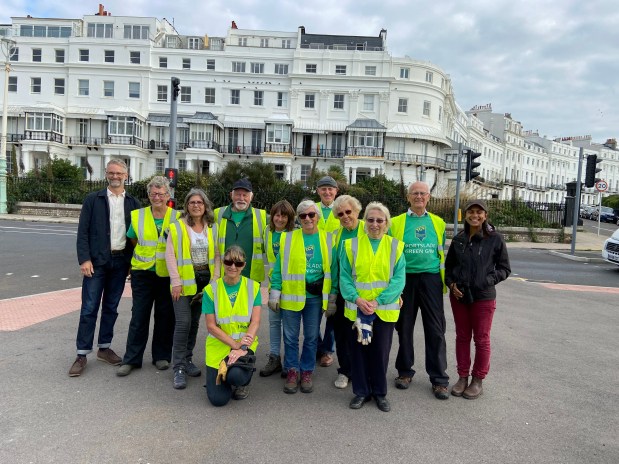
The Mayor braved torrential rain to plant the trees, and also unveil a ‘Green Plaque’ awarded to the site by Brighton & Hove Building Green. In attendance was Portslade Green Gym representative Sue Stubbings, and Biodiversity Officer Kim Dawson.
The Mayor said:
“I am delighted to be here today to celebrate the 150th anniversary of the Madeira Drive Green Wall.
Thanks to Victorian visionaries including the Council surveyor Phillip Causton Lockwood, Brighton & Hove is home to not only the longest, oldest green wall in Europe – but also the longest continuous ironwork structure in the world, Madeira Terrace.
I would like to thank the volunteers from Brighton & Hove Building Green who have worked for years towards this achievement – as well as the volunteers from Portslade Green Gym and the local East Brighton community who regularly tend the plants here.”
The full speech follows.
Thanks to Victorian visionaries including the Council surveyor Phillip Causton Lockwood, Brighton & Hove is home to not only the longest, oldest green wall in Europe – but also the longest continuous ironwork structure in the world, Madeira Terrace.
The green wall was planted in 1872, and predates the Terrace. It was established along with hedges and other plants, to make the new seafront an attractive place to walk, take the sea air, and enjoy the views.
Work is shortly to begin to restore and revive the Terrace, and these ambitions remain as relevant now as they did then.
Brighton’s seafront is world famous, and attracts millions of visitors, and provides a vibrant space for local people and businesses. But it is hard to imagine what it would look like without this magnificent green wall.
There are over 100 types of flowering plants along the green wall, as well as birds such as goldfinches, wrens and sparrows, and butterflies like red admirals and holly blues. In recognition of its wildlife value, the Council has designated Madeira Drive Green Wall a Local Wildlife Site – the first of its kind in the country.
I would like to thank the volunteers from Brighton & Hove Building Green who have worked for years towards this achievement – as well as the volunteers from Portslade Green Gym and the local East Brighton community who regularly tend the plants here.
I would like to encourage more people to come and take in the nature that can be found on our seaside. It is a wonderful resource which can help us feel calmer and happier.
In time, the Council plans to restore the green wall to its original full length, and open the Terraces again for events and recreation.
As a small step in that plan, I am honoured to be planting this small Japanese spindle tree – a cutting from its 150 year old parents.
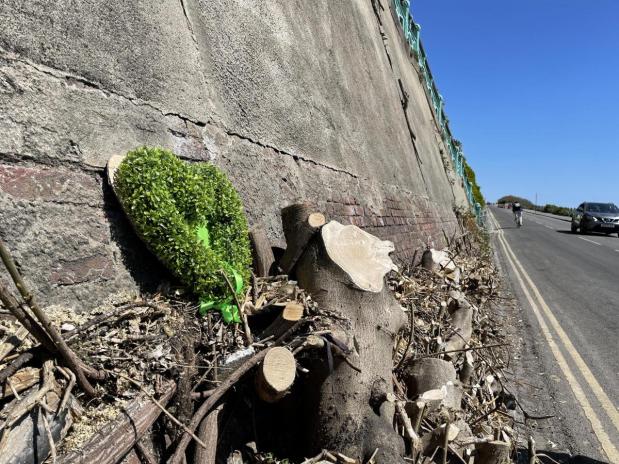
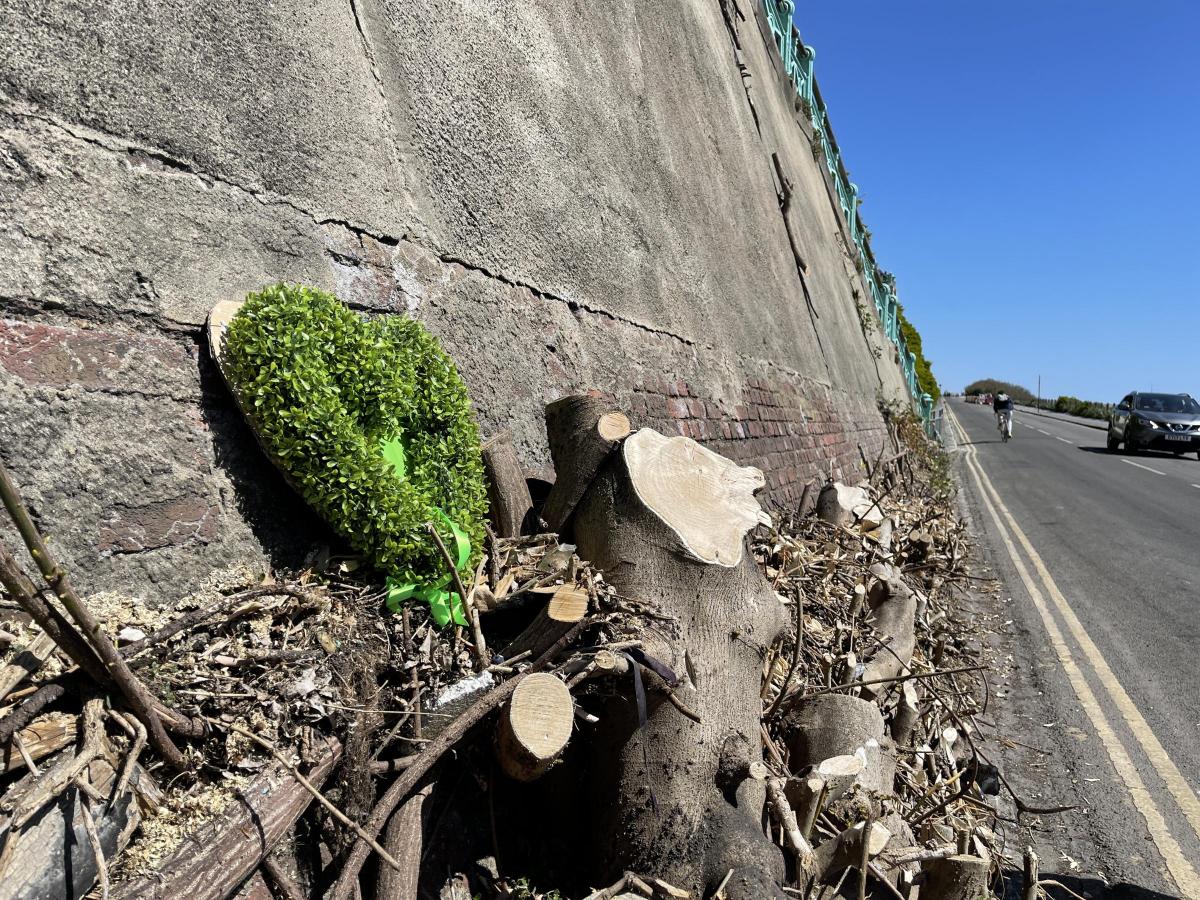
Building Green has been speaking to the Council and its contractors following the unfortunate cutting back of the green wall at the bottom of Duke’s Mound, near the Volks Workshop.
The event triggered an outpouring of concern from the public, a wreath-laying, and commitments to establish a management plan for the Local Wildlife Site.
Improvements to the road are to start shortly, so Council contractors will be sensitively pruning back the large fig tree that grows in this section and is currently spreading into the road. The idea is to train it up, not out! Building Green have been assured that the veteran Japanese spindle plants along this section will be encouraged to continue re-growing up the cliff.
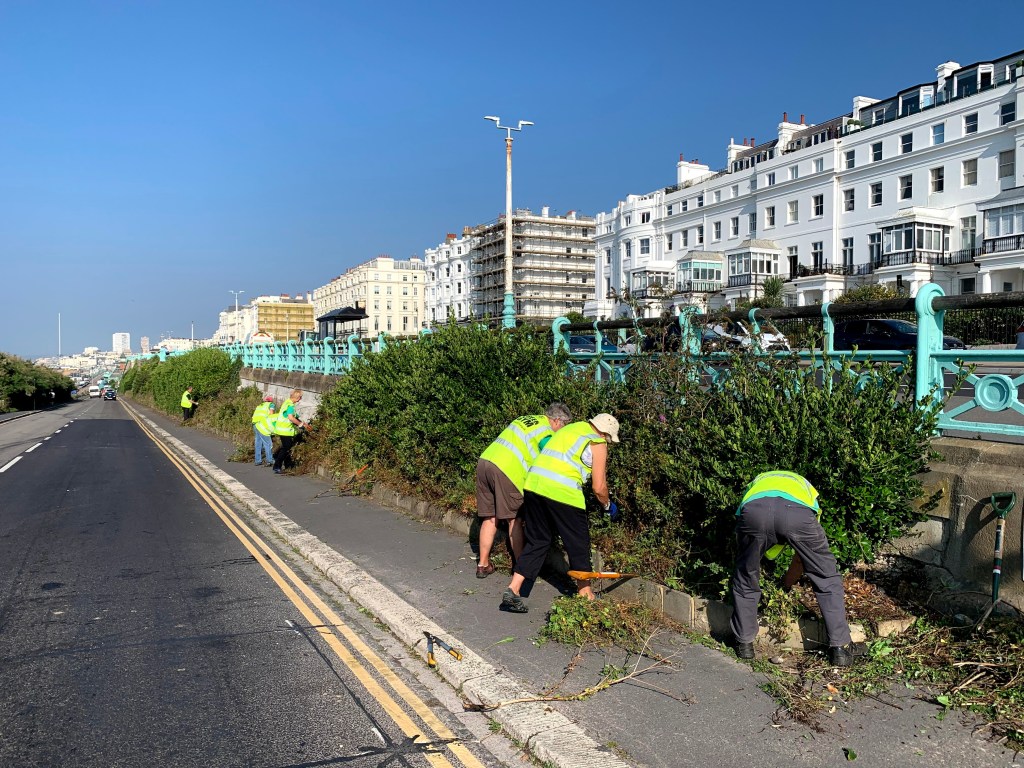
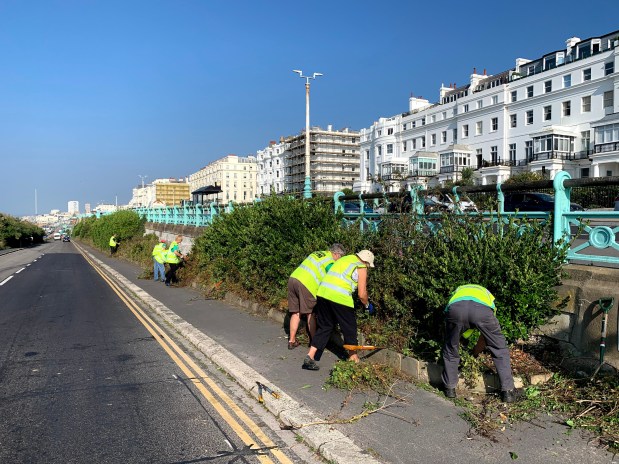
Those amazing folk from Portslade Green Gym were at Madeira Drive for the first of this year’s visits to the green wall. They were last due on 5 March 2020, and we all know why that didn’t happen!
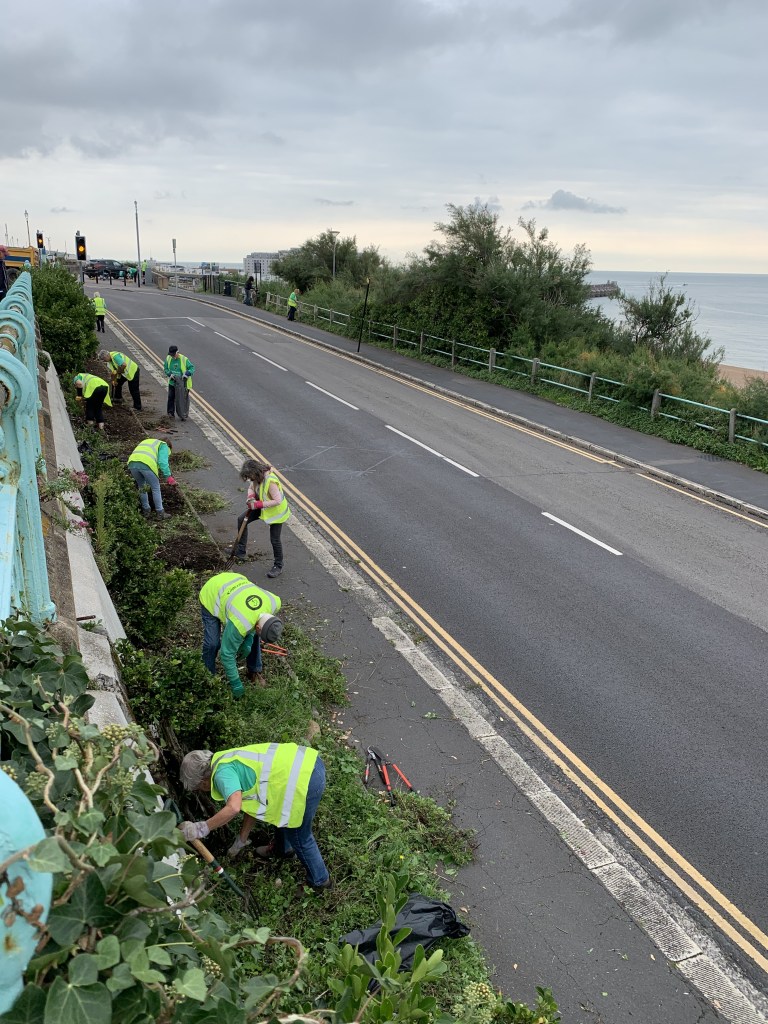
Doing their usual terrific work today, to cut back growth, ensuring the maintenance of the wildlife on the site, and protection of the historic Japanese spindle plants.
Lopping and chopping – Portslade Green Gym volunteers working in the sunshine at Madeira Drive Green Wall, Brighton & Hove
There were also good signs that the Building Green Babies – young spindle plants we grew from cuttings on site – are growing up.
One of the volunteers was saying how important this work is – not just from a wildlife point of view, but for the mental health of the team. Many of the volunteers are older, and live alone – being outdoors with their friends, doing something physical, is a joy – and something sorely missed during lockdown.
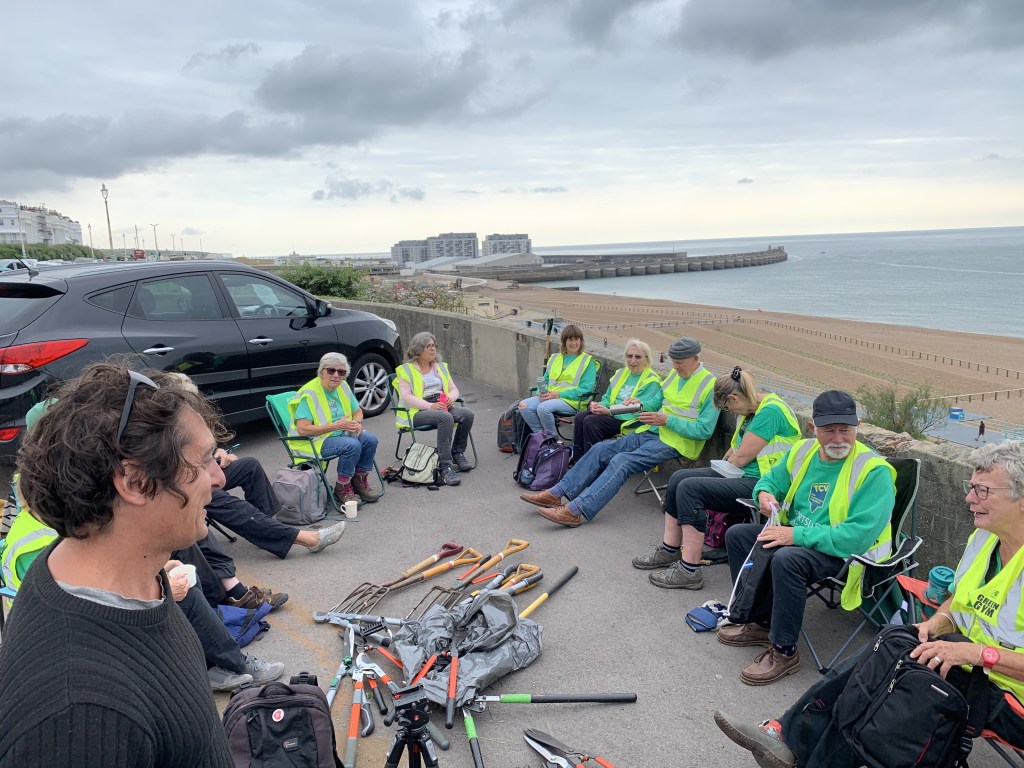
Portslade Green Gym volunteers warming up in the sunshine at Madeira Drive Green Wall, Brighton & Hove
Our thanks to the Council team for cutting back along the path edge this week, to keep the pavement clear for pedestrians.
After! These babies were planted in May 2019 from cuttings taken in summer 2018…so 4 years old!
Next volunteer work day is 18 November. Come and say hello, or lend a hand.
Most striking has been the outpouring of local concern and sadness at how the work was completed, an apology from The Council, and a memorial event yesterday (involving a minute’s silence and a wreath laying) organised by local people and members of Madeira Drive campaign groups.
Meanwhile, Building Green volunteers have replanted a section of the wall on Duke’s Mound, as part of our long term project to restore the wall to its former length.
Building Green awaits the report of what happened exactly, so we can ensure that all parties learn from this for the future.
However we do know that the cutting included a very large fig, several stools of Japanese spindle planted in 1872, and the removal of large specimens of Spanish gorse and Darwin’s barberry. A number of ferns have been exposed and died. This section of wall was used by dunnock, wren and blackbird.
We know from our coppicing trials elsewhere on the green wall, and from recent work in partnership with the Council to protect or translocate older plants, that with the right care and attention it can regrow. There are some signs this is already happening.
However, regular cutting back and trimming would have avoided this situation from developing in the first place. So, as next steps, we will be encouraging the Council to work with us and local people to:
tidy and care for this section of wall now, with feeding, to maximise regrowth
establish a management plan for the whole green wall
set up budget and resources for regular maintenance, to ensure public access and safety along the pavement, optimum conditions for wildlife, and long term health of the green wall
incorporate the full linear extent of the green wall into the ‘MT30’ project, which is looking at the restoration of Madeira Terrace.
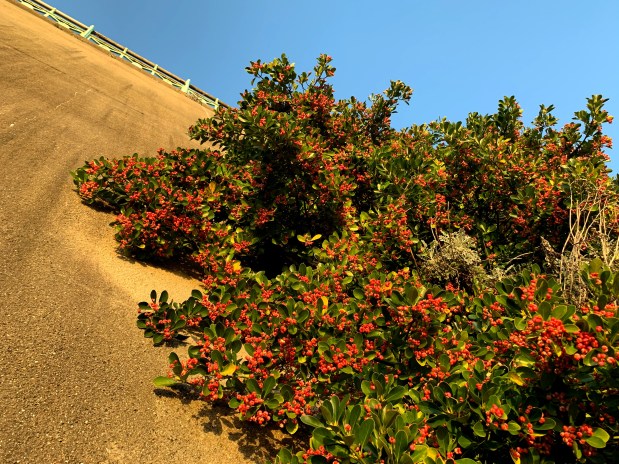
This year has been particularly good for Japanese spindle berries at the Madeira Drive green wall. Who knows why?
While we ponder that, here are some facts about this amazing plant.
Seeds are propogated by birds
It depends on bees, flies and hoverflies to pollinate the flowers
It is very tolerant of salty conditions, and a wide range of soil types
Roots and stems yield up to 7% gutta-percha, a non-elastic rubber used as an electrical insulator and in making plastics
Decoctions from the bark are considered to be tonic, anti-rheumatic, anhidoritic and diuretic. Chinese women use the leaves to aid difficult childbirths
It is host to a wide variety of invertebrates including Unaspis euonymi, a sap-sucking ‘scale’ insect; and dusty grey/black vine weevils, Otiorhynchus sulcatus, which can take notched nibbles out of leaf edges.
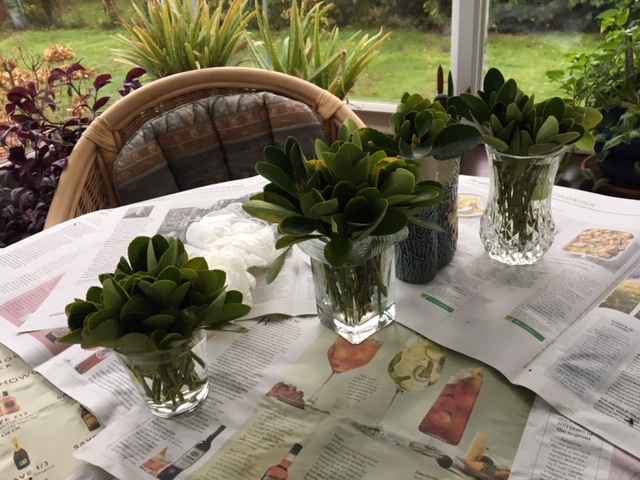
“On Saturday 23rd November I took 60 cuttings from the Japanese Spindle on Madeira Drive – the green wall. I took the cuttings from along the green wall, from the end of the arches and up Duke’s Mound. I took from the new growth, the lighter greener leaves. With the help and expertise of family (Mom) 60 cuttings are now planted and will hopefully grow inside over winter. Like the other cuttings James has nurtured and that are now planted in, these will I hope eventually add to the green wall, filling it out and helping it to grow the whole way along.
The cuttings are varied in length, and taken from different parts of the green wall, to see if some take better than others. Each of the stems has been cut at an angle, soaked in water overnight and dipped in organic rooting gel, and planted into deep compost pots. The top of the soil has been covered in course grit to keep moisture in and help keep the soil compacted. They are all inside a light conservatory that’s insulated and that is heated. I’ll let you know how they get on and hopefully we can plant them in next year sometime.”







 Brighton & Hove Building Green