A timeline of the major events in the development of Brighton’s seafront – specifically, Madeira Drive in Kemptown.
Note there is now a separate page on Madeira Drive on this website with photos and a longer history.
I’d welcome corrections, additions and comments. A book is a future possibility!
827 Sussex annexed by Kingdom of Wessex. ‘Beorhthelm’s Farm’ recorded, and was a landing place for boats with villagers and smallholders.
1086 Domesday book records Bristelmestune, a settlement of three manors on the modern site of Brighton
1290 – 1340 40 acres of ‘lower town’ old fishing village lost to sea level rise
1640s Sea level rise threatens fishing village on cliffs above foreshore
1514 Fishing village Brighthelmstone burned to ground by French
1703 – 1703 Great storms destroy Brighton lower town and most of foreshore. Cliffs along Brighton are composed of ‘Head’ (or ‘Coombe’) drift, an easily eroded deposit of chalk rubble and flint with a proportion of clay and sand. In front of the Old Town the cliffs were known as Middle Street Cliff, Ship Street Cliff, Black Lion Street Cliff and the East Cliff, and were separated by gaps with steep paths to the beach which people used to carry goods. Below the cliffs was the foreshore, a mixture of sand, shingle and chalk reef of the kind that can now be seen below the undercliff walk between the Marina and Rottingdean at low tide.
1713 – 1722 Town collects funding from churches for sea defences
1723 First sea defences – groynes – raised from these ‘Church Briefs’ taxes. 2 wooden defences in the old town. At £8000 considered by Daniel Defoe to be ‘more than the whole town was worth’.
1773 Brighton Town Act establishes coal tax for ‘building and repairing groyns, to render the coast safe and commodious’. Coal tax continues to 1887.
1780 Georgian Brighton begins from fishing village
1795 Sea wall at Old Steine, built by proprietors of New Steine and East Cliff residents, is a simple flint structure
1808 4 groynes below East Cliff
1823 Royal Suspension Chain Pier built by Captain Samuel Brown, starting 1822 and opening 25 November 1823. Cost £30,000. Embarkation point for cross-channel ferries.
Work starts on Kemp Town estate
1824 First Brighton lifeboat established at Chain Pier. The toll-house was destroyed in a storm on 24 November.
1827-1838 Cement facing on the East Cliff. £100k for 2 miles. Rubble mounds to enhance sea defence which was extended between Old Steine and Royal Cresent in 1830-3. The sea defence was 23 feet thick at the base.
1833 and 1836 Chain Pier damaged by storms but repaired and re-opened.
1851 Magnus Volk, son of clockmaker, born on Western Road
1855 Kemp Town estate completed
1867 First concrete groyne at East Street
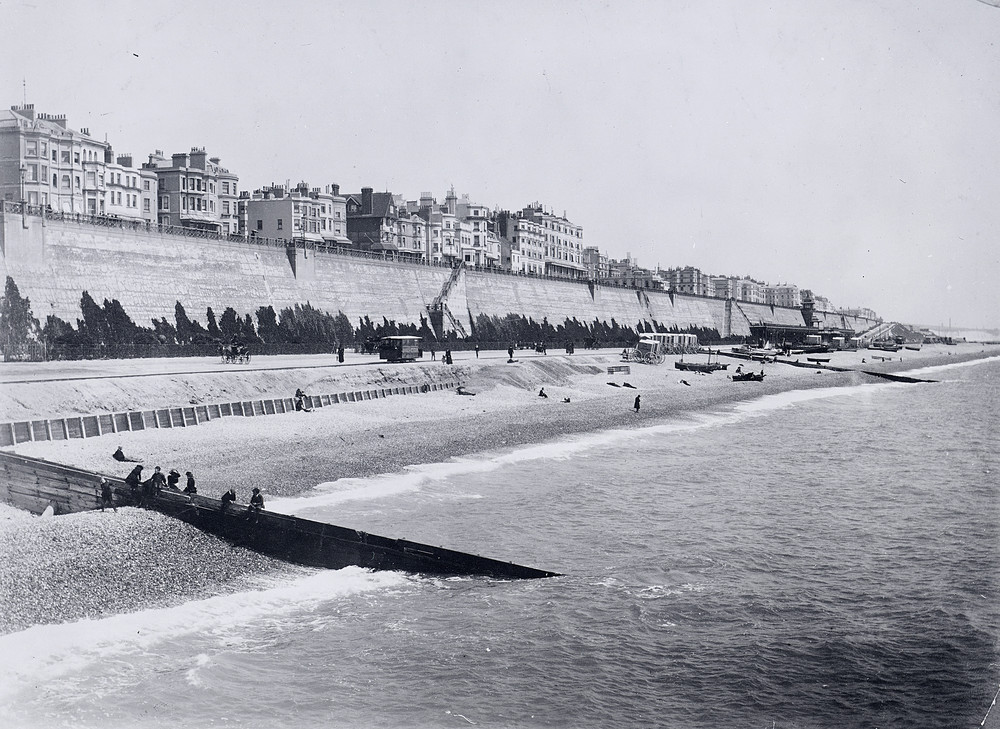
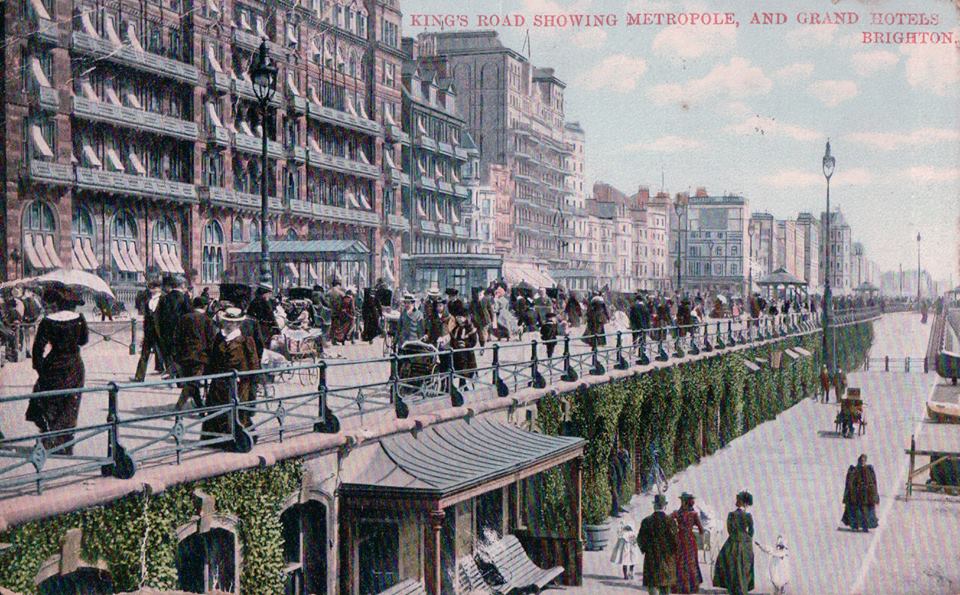
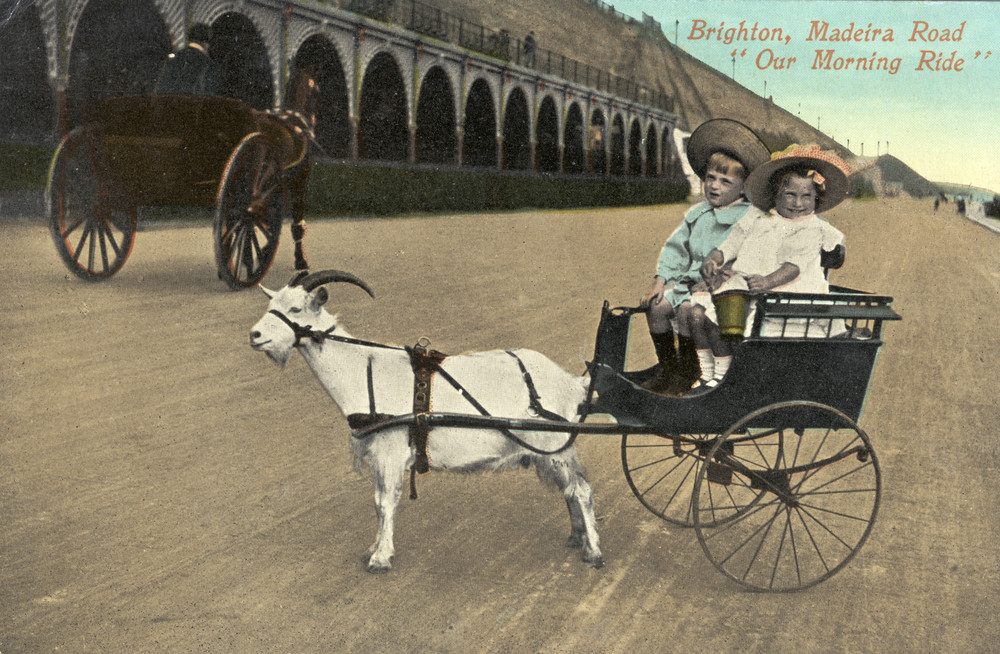
1870 A new sea wall faced with stone from the first Blackfriars Bridge in London, demolished in 1863. Madeira Road laid out on the sea wall, using rubble from the old sea defences.
1872 The Aquarium opens. Designed by Eugenius Birch and built in 1869-1872, with extensions in 1874-1876. The exterior was rebuilt in 1927-1929 by David Edwards, the Brighton borough engineer.
1877 Banjo ‘promenade’ groyne built (officially Paston Place Groyne). 270 feet long with 3 feet wide walls.
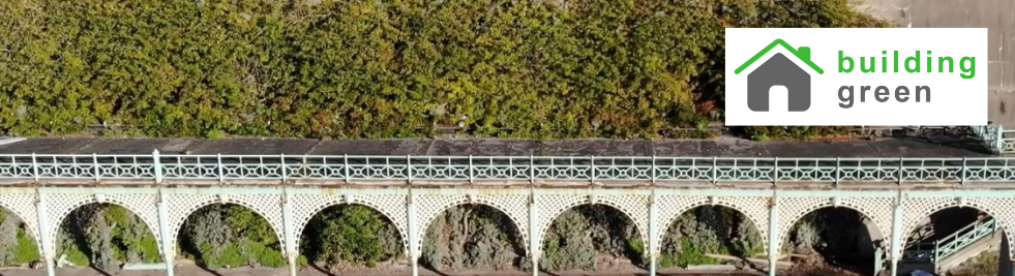
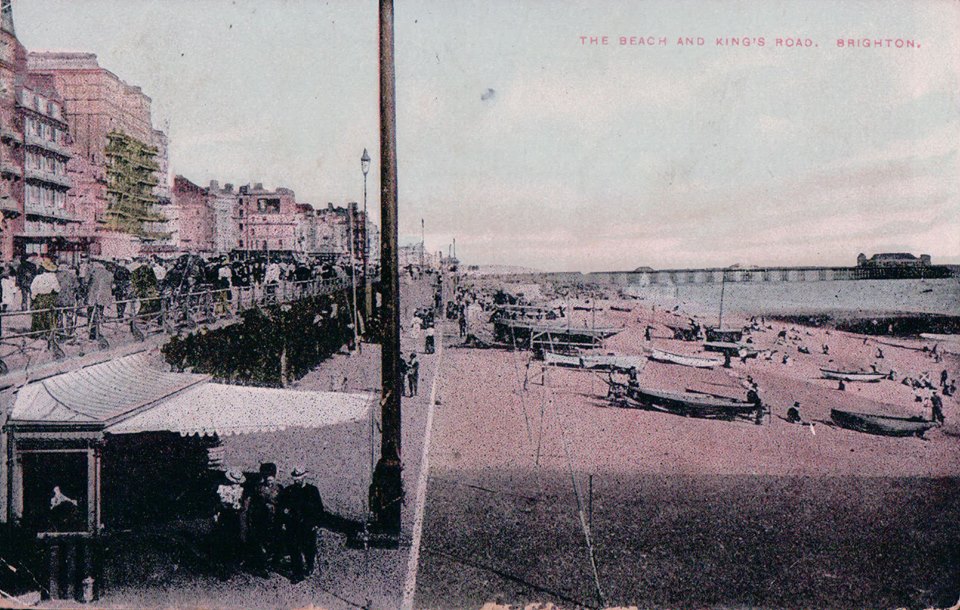
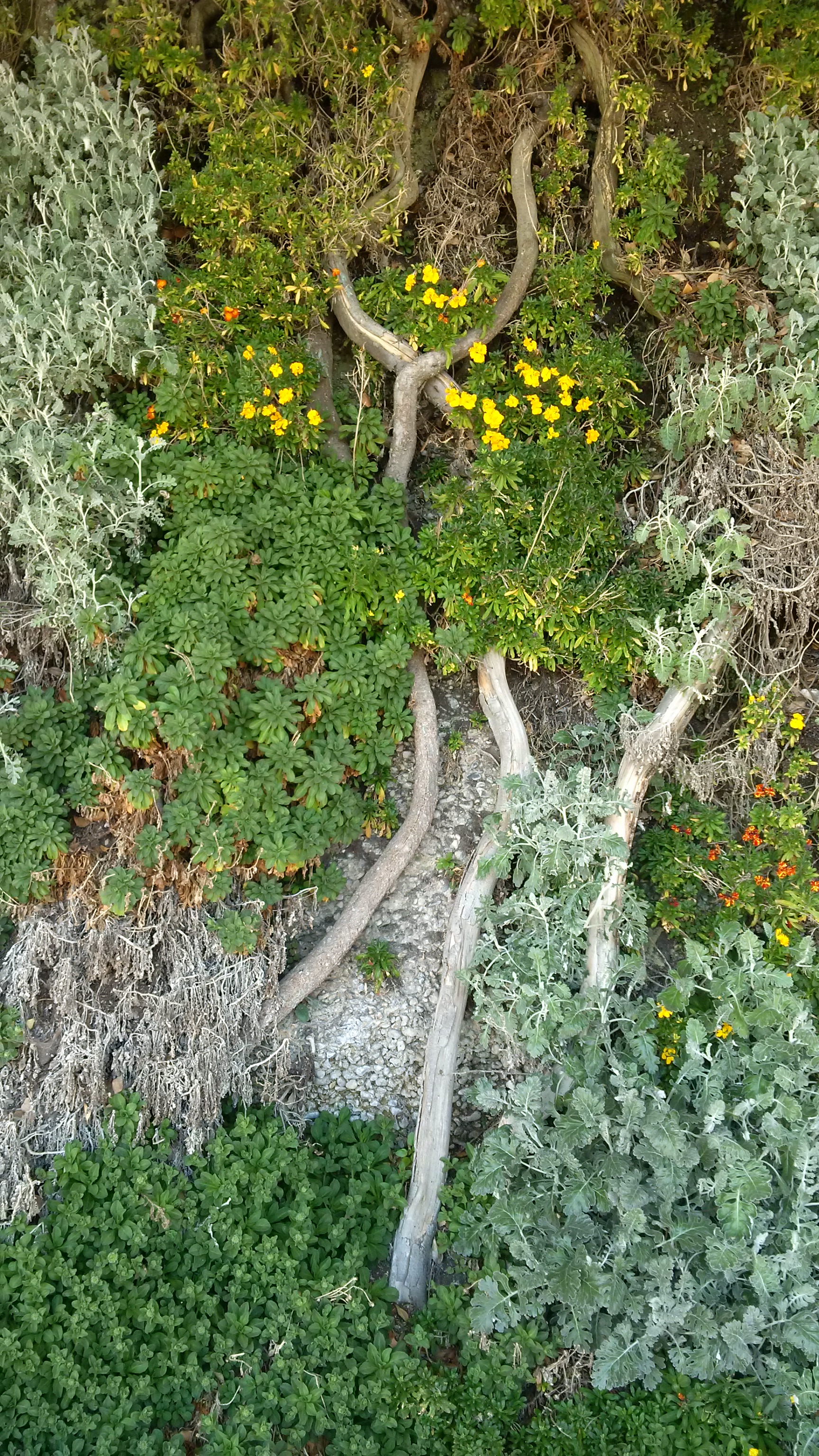
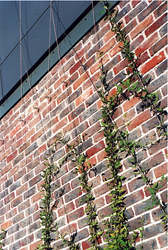
1870 – 1882 Planting of Japanese spindle and ivy along Maderia Road, including along the bottom of the East Cliff (the ‘green wall’), begins in this period. This was established at regularly spaced intervals, and trained with guide wires to grow up the cliff. The ‘green wall’ made the otherwise barren promenade a more attractive place to be, and a natural backdrop for riders on the future Volks Electric railway.
1880 Wooden railings on the cliff top replaced with cast iron railings present today.
1882 Confirmed record of Japanese Spindle planting (Notes from J.R.B. Evison’s 1969 book ‘Gardening By the Sea’ records ‘Japanese Privet’ planted on the cliff face. Evison was Director of Parks at Brighton 1951 onwards. Evison notes ‘I have only seen it [flowering] on the cliff face at Brighton where plants set out in 1882 are some 60ft high…’). Hedges and lawns are present along the Madeira Terrace.
1883 Volks Electric railway opens, running from the swimming arch near the Aquarium to the Chain Pier.
1884 Madeira Lawns laid out, thanks to the acres of land reclaimed by Banjo Groyne, to provide additional recreational space and a more attractive seafront.
1890 Under the
Brighton Improvement Act of 1884, Madeira Terrace [sheltered walk or ‘Colonnade’ and ‘Max’s Walk’], Madeira lift and shelter hall [now Concorde 2] were built. Terrace designed by borough surveyor Phillip Causton Lockwood, who also designed the
Brighton ‘birdcage’ Bandstand which was built in 1884. In total 2,837 feet (864.7m) long. The shelter hall was designed as a cafe and waiting room.
“…each bay of the entirely cast-iron arcade has an identical elevation: round arches carried on single columns of a fanciful marine order; scalloped-arch intrados; spandrels formed by concentric rings of quatrefoils, forming a pierced sun screen; keystone cast to resemble either a female or a bearded male deity, perhaps Venus and Neptune.” (From English Heritage listing)
The terraces were also designed with a gap to allow the Japanese spindle plants to continue their climb up the cliff face. Seating was designed on the upper terrace, to sit proud of the ‘green wall’. The shelter hall lift was originally powered by water pressure, with the current electro-mechanical lifting mechanism fitted in 1930. The western terrace was added later.
1891 The Palace Pier construction begins. Designed by R St George Moore. A funding crisis caused a halt in construction, which was completed by Sir John Howard in 1901
1894 Construction of Magnus Volks’ Daddy Long Legs track begins by British Thomson-Houston Co. Ltd. 2.8 miles from Banjo Groyne to Rottingdean.
1896 Daddy Long legs railway car ‘Pioneer’ opens 28 November. Tram by the Gloucester Railway Carriage & Wagon Company. Described as a mix between an ‘open-top tramcar, a pleasure yacht and a seaside pier’ for 160 passengers. Deck fitted out with an ornate saloon (complete with leather upholstered seats and exotic palms), promenade deck on top. Helmed by law by a sea Captain. 35 minute journey at 21/2d each way.
First London to Brighton horseless carriage run (the Veteran Car Rally) to celebrate lifting of law requiring man to walk in front of ‘car’ with red flag. Won by a steam car.
Chain Pier destroyed by December storm, Daddy Long Legs badly damaged just a week after opening.
1897 Daddy Long Legs repaired, and re-built with 2ft longer legs. Re-opens in July. Carries 44,282 passengers in the year.
1899 Palace Pier opens in May.
1900 New groynes constructed East of Banjo cause scouring of Daddy Long Legs track bed, and new sea defences would have required moving the line.
1901 Brighton Corporation removes part of track obstructing sea defence works. Line closes, ‘Pioneer’ left to rot at Ovindean pier until 1910, when remainder sold for scrap.
1902 Electric railway extended to Rottingdean, with viaduct
1905 First ‘Motor Race Week’, for which Madeira Road was tarmac’d. Led to annual National Speed Trials, every September since.
1909 Madeira Road renamed Madeira Drive
1936 Black Rock Lido opens
1937 Magnus Volk dies, railway operation passes to Brighton Corporation
1940 Beaches closed in July, protected with mines and barbed wire, and reponed July 1945
1948 Restored track and railway reopened. Carries 1 million passengers a year.
1952 Brighton Corporation open Esplanade and slopes [Duke’s Mound] to public
1971 – 1979 Brighton Marina constructed. Madeira Terraces, walk and lift (‘Arcade with raised walkway, associated buildings and lift tower’) listed by English Heritage in 1971.
1978 Black Rock Lido closes
2000 Concorde 2 opens in the shelter hall.
2009 Madeira lift re-opens following restoration started in 2007.
2013 Madeira Drive Green Wall surveyed, and its value for wildlife identified. First survey shows 69 plants, later further plants are added to the list, making the total 100 species. Candidate local wildlife site in City Plan (to be adopted).
2014 First restoration works at Madeira Drive Green Wall by B&HCC, Brighton & Hove Building Green and Ecology Consultancy. Madeira Drive and the green wall feature at the first International Green Wall Conference.
2015 Marine Drive Terraces are closed to the public due to concerns over the safety of the structure. Management of the green wall by partnership of Building Green and B&HCC continues on the ramp between Madeira Drive and eastern Marine Parade. The first new ideas for the future of Madeira Terraces are drawn up by local planner Michael Doyle, and discussed in private talks between developers and the Council.
201? Madeira Drive Green Wall adopted as statutory Site of Importance for Nature Conservation in the Brighton & Hove City Plan.
References
1896 Crypto Bantam
http://www.urban75.org/railway/brighton-sea-railway.html
http://publicdomainreview.org/collections/the-daddy-long-legs-of-brighton/
http://volkselectricrailway.co.uk/history/the-daddy-long-legs/
http://www.mybrightonandhove.org.uk/page_id__7936_path__0p115p207p1487p.aspx
https://en.wikipedia.org/wiki/History_of_Brighton
http://www.historicengland.org.uk/listing/the-list/list-entry/1381696
http://www.brightonhistory.org.uk/laws/brighton_laws_town.html
https://www.architecture.com/FindAnArchitect/ArchitectPractices/ABIRArchitects/Projects/Brighton39;Birdcage39;Bandstand.aspx



 Brighton & Hove Building Green