The ‘World famous sheltered walk’ and Madeira Drive green wall made a great backdrop to the finish of Stage 7 of the Tour of Britain yesterday.
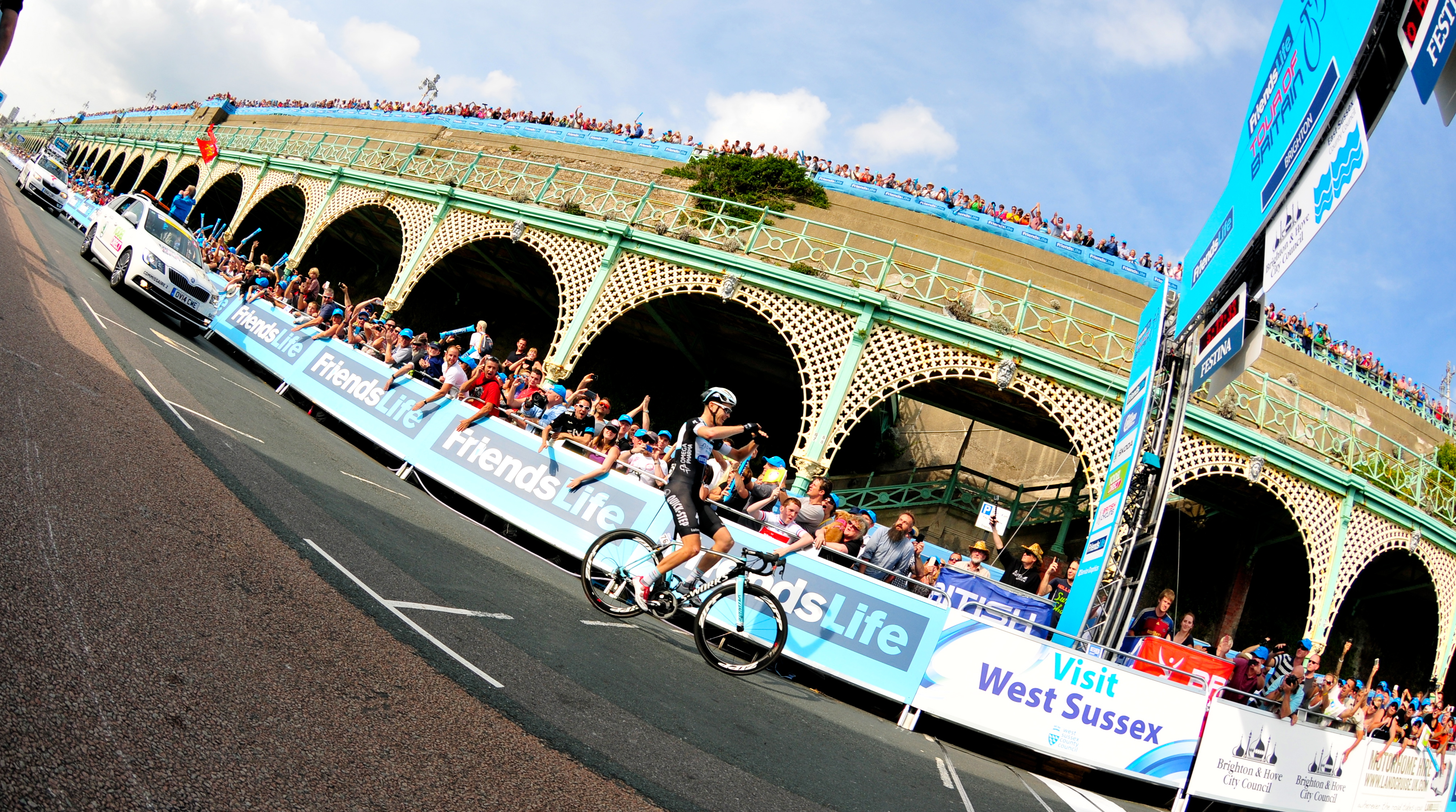
Julien Vermote shown here about to cross the line to take the stage win.
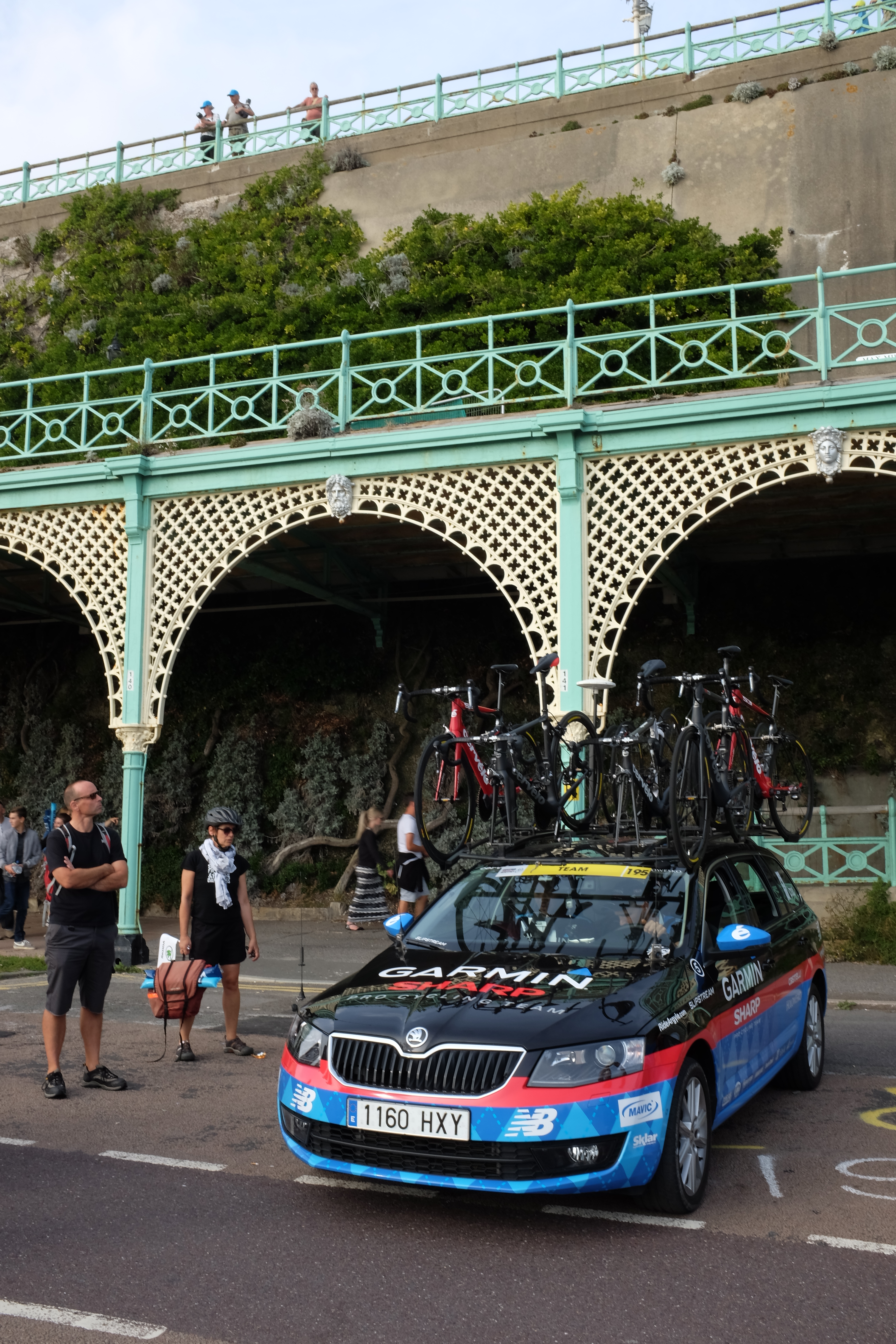
Team Garmin
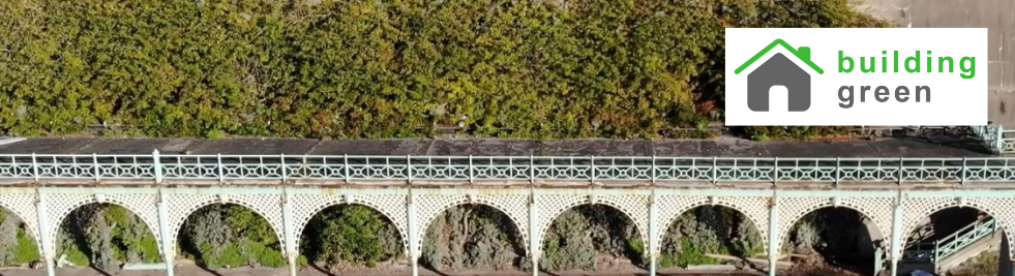
The ‘World famous sheltered walk’ and Madeira Drive green wall made a great backdrop to the finish of Stage 7 of the Tour of Britain yesterday.
Julien Vermote shown here about to cross the line to take the stage win.
Team Garmin
Down to inspect the works at the green wall today with the Council, Ecology Consultancy and CJ Thorne.

Excellent work building the new, wider bed with York stone, clearing away rubbish and rubble, and cutting back the of the ivy and spindle by RW Green to improve access to the wall and manage the sheer weight and volume of vegetation.
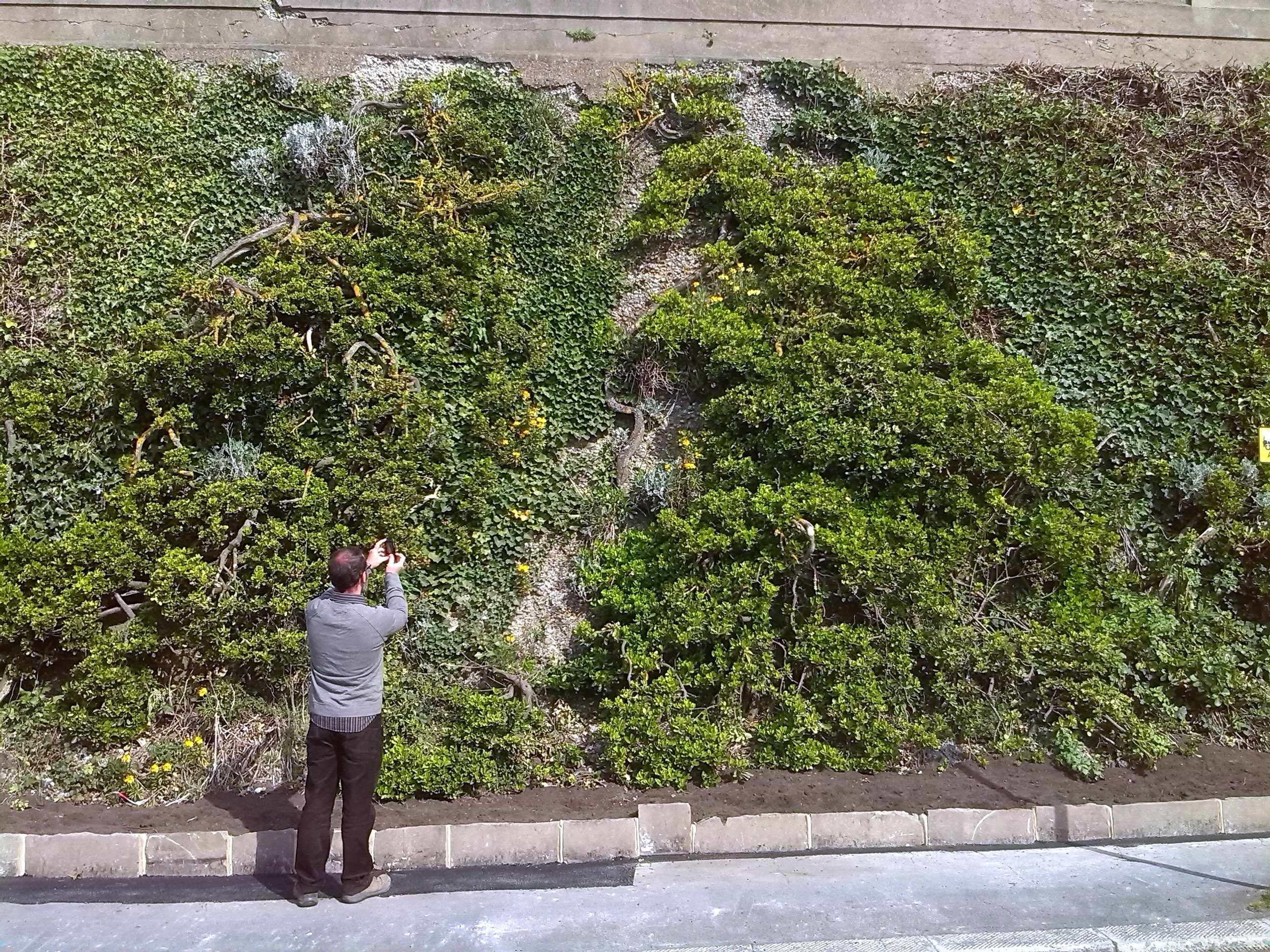
Some interesting finds – including very old brackets for training wires
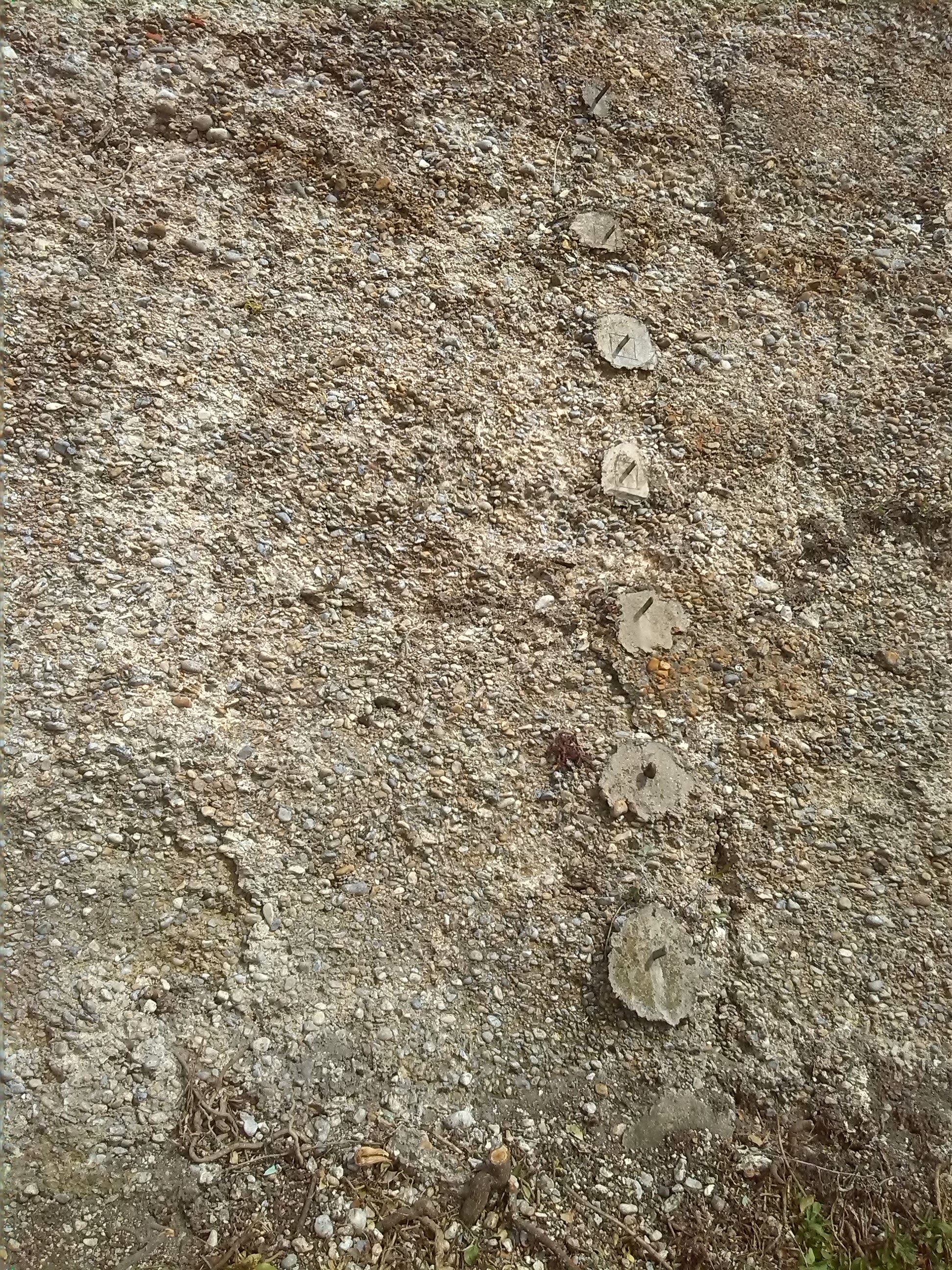
and a brick portal to…somewhere!

In September the concrete facing works will take place on the bare sections, which we plan to then plant up with more spindle, ivy and hopefully some troughs to encourage more plant species.
Then should be good (with a little maintenance) for another 200 years!

Contractors CJ Thorne working on Madeira Drive to widen the bed ready for pruning and cliff re-facing
By Michael Davies, local government reporter

A MAJOR conservation project on one of the longest “green walls” in the country is under way.
Work has started on the Madeira Drive retaining wall on Brighton seafront to protect more than 90 different species of coastal plants, which spread 20 metres high and 1.2 kilometres a bug the 200-year-old structure.
Brighton and Hove City Council has been working with the help of Brighton and Hove Building Green and the Ecology Consultancy to prune back the foliage and enlarge the bed at the foot of the wall.
Last year the green wall – which is on the north side of Duke’s Mound on Brighton seafront was designated as a local wildlife site by the city council.
Among the plants that will be protected by the works are the hoary stock, a coastal plant that is common on the south coast, cow parsley, which grows mostly through March and June, foxglove, which blooms in midsummer, and a fig tree and ferns.
One of the major features of the wall is a display of Japanese spindle, which was established in the 19th Century when the wall was first built, to help improve the appearance of the area.
It is believed to be among the oldest surviving species of that plant in the UK.
Work on the project, which will include health checks on the plants and repairing any damage to the concrete wall, got under way this week. It is hoped it will be completed before the next bird nesting season, which runs from March 1 to July 31.
It is not currently known how much the repairs will cost.
James Farrell, from Brighton and Hove Building Green, said: “The green wall is over 150 years old, supports 90 plant species, and is now the only Site of Nature Conservation Importance of its kind in the UK.
It forms a vital part of our natural and built heritage and has been under threat due to the deteriorating state of the East Cliff face.
The work that has started this week west of Duke’s Mound will safeguard the cliff face and green wall for the future.”
Councillor Ian Davey, deputy leader of Brighton and Hove City Council, said: “The variety of plants grow- ing on the Madeira Drive retaining wall makes it one of the most important ‘green walls’ in the country.
The plants and the wall are part of the seafront environment that we want to protect, providing a haven for wildlife and a source of enduring interest for people.”
Building Green has been instrumental in the planning for the future of the unique green wall on the seafront at Madeira Drive.
Work begins today to maintain the plants, and safeguard the integrity of the cliff face.
We have been working with the Council and our partners the Ecology Consultancy.

Conservation work on one of the longest green walls in the country has begun this week on Brighton seafront to protect a huge variety of coastal plants and repair the concrete wall.
Over 90 different species are growing on the Madeira Drive retaining wall on the north side of Duke’s Mound to the east of Brighton seafront. Up to 20 metres high and 1.2 kilometres long on a wall nearly 200 years old, Brighton’s green wall is one of the oldest and longest in the country.
Brighton & Hove City Council is working with the guidance of Brighton and Hove Building Green and the Ecology Consultancy, pruning back foliage and enlarging the bed at the foot of the wall. This autumn the council will be carrying out repair work to the concrete wall itself to maintain the effectiveness of the wall and provide an ongoing habitat for plants and wildlife.
Last year the council designated the green wall a local wildlife site, ensuring its continued protection as the only site of its kind in the UK.
Councillor Ian Davey, deputy leader of Brighton & Hove City Council, said: “The variety of plants growing on the Madeira Drive retaining wall makes it one of the most important ‘green walls’ in the country. The plants and the wall are part of the seafront environment that we want to protect, providing a haven for wildlife and a source of enduring interest for people.”
As well as an impressive display of Japanese spindle growing almost up to the upper promenade, the wall contains the nationally scarce hoary stock, a coastal plant most commonly found on the south coast, with its striking white to purple flowers in early summer and with exquisite fragrance.
There is an incredible diversity of plants, from cow parsley and foxglove, usually found alongside woodland, to a fig tree and a number of shade tolerant ferns.
The Japanese spindle was deliberately established in the early 19th century when the wall was built, as a means to improve the appearance of the seafront for visitors and local people. Originating from Japan, Korea and China, these hardy plants are amongst the oldest surviving plants of this species in the UK.
Work is being carried out now on a 400 metre stretch to avoid the bird nesting season.
Understanding the age and history of the green wall at Madeira Drive is taking some research! Comments and materials welcome…here’s what we understand so far.
1. Early 1700s
Beorthelm’s-tun, by now ‘Brighthelmstone’, remained a small fishing village (population circa two thousand) until the 1780s. The first sea defences were erected in Brighton in 1723 (funded from the first local taxes), and Georgian Brighton developed from 1780.
So for the first half of the 18th Century, and certainly before that time, the East Cliff can be considered relatively ‘natural’. It may have looked similar to West Beach at Newhaven, shown below, with erosion and colonisation by a range of native coastal plants.

Newhaven West Beach, Sussex University
2. Early 1800s.
Plants, almost certainly established naturally, are visible on the East Cliff (if you squint) as shown in this Constable painting of the Royal Suspension Chain Pier dated 1824-27 . Kemptown development begins in 1823.

2. 1830s
The book ‘In the news Brighton’ confirms that the East Cliff was faced with cement between 1827 and 1838, shortly after Constable’s painting. This ‘splendid and useful structure’ cost £100,000, stretches for 2 miles, and is composed of ‘concrete cement…boulder stones, lime and sand’. More at My Brighton & Hove.
According to Measuringworth.com that’s about £8 million in today’s money in terms of relative purchasing power.
4. Late 19th Century
Madeira Road (later Drive) construction begins in 1870. It would make sense to think that the planting took place at or after this time.
However this painting from the 1870s shows the plants already well established.
This is by William Earp (undated) – possibly 1870s.

Notes from J.R.B. Evison’s 1969 book ‘Gardening By the Sea’ records ‘Japanese Privet’ planted on the cliff face in 1882 at least. Evison was Director of Parks at Brighton 1951 onwards. Evison notes ‘I have only seen it [flowering] on the cliff face at Brighton where plants set out in 1882 are some 60ft high…’
If that’s right, then Spindle – on Brighton seafront at least – grows at almost one and a half feet a year!
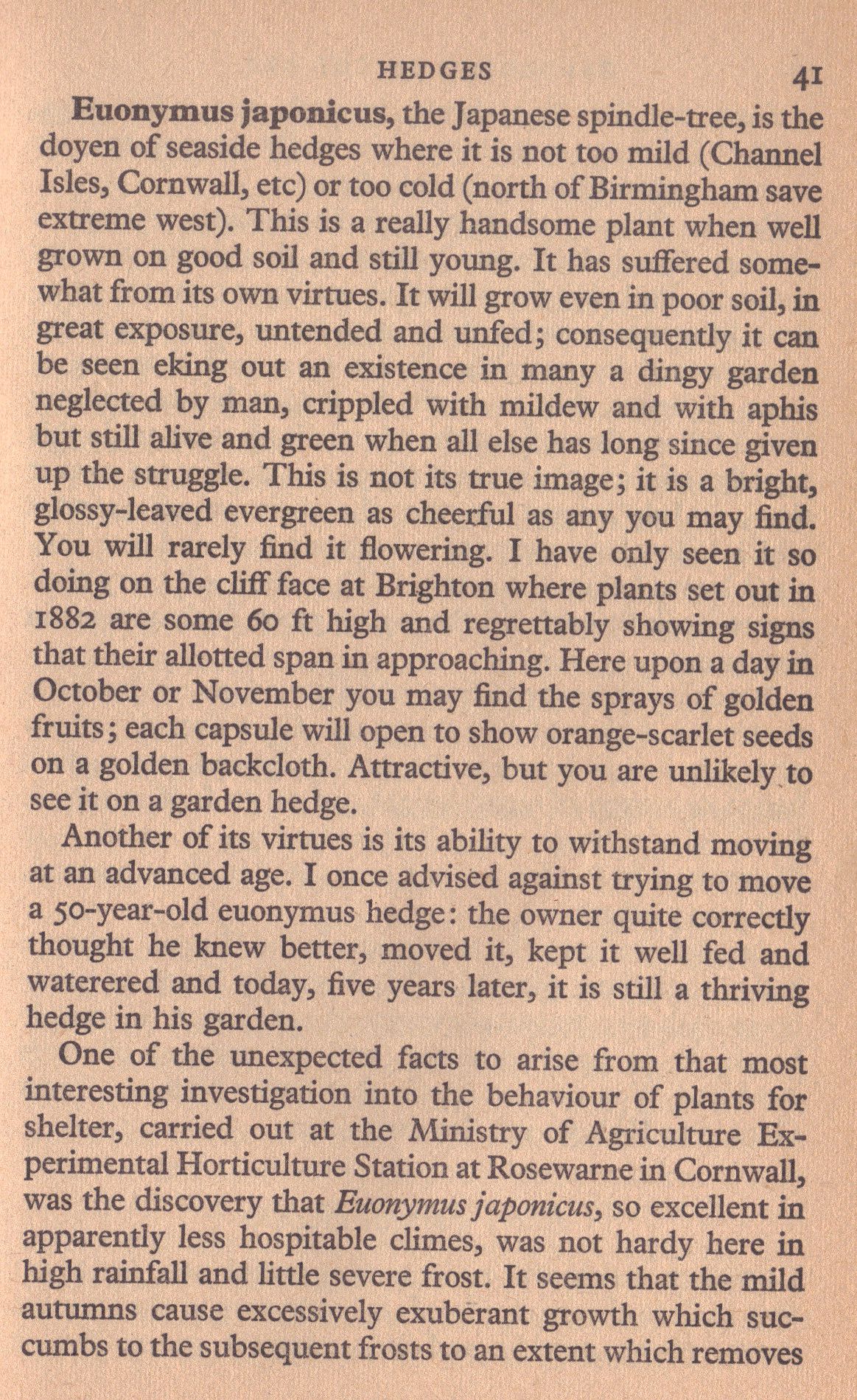

Looking for clues in botanical circles hasn’t helped much either yet. The GB Non-Native Species Secretariat incorrectly states that Japanese Spindle (the plant well established on the cliff now) was first recorded in the UK in 1897. Evison shows was here at least 25 years earlier, and this text has it introduced in England in 1804!
A nice later picture dated between 1883 and 1896 showing the planting well established on the rendered cliff face (and the old aquarium clock tower!).

5. So…when was it planted!
Safe to say we’re not certain – not from this evidence at least. Again, shout if you know something we don’t!
Best (vague) date for a Japanese Spindle-based wall is mid-19th Century, if pushed then I’d go for 1870. But there has certainly been cliff vegetation on this site since work began on the Kemptown estate in 1823, and earlier through history as a natural part of the South coast seaside.
The modern green wall at Madeira Drive has honorable roots indeed.
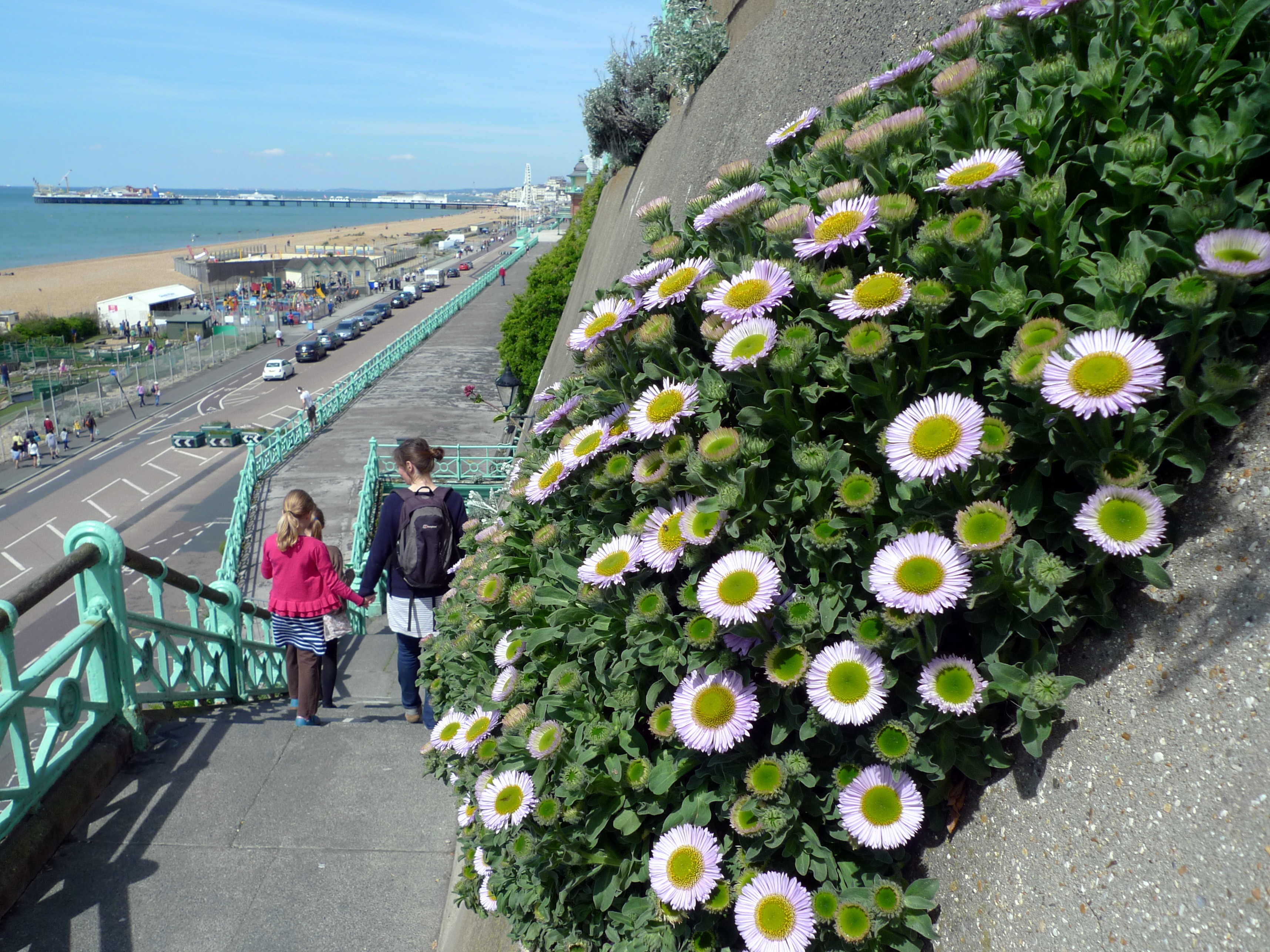
Plant list by Ben Kimpton MSc BSc Dip(Hort) MCIEEM of Ecology Consultancy (many thanks), with negligible help from me! If you have any other records, esp inverts, get in touch! Most interesting finds were hoary stock and a poss nationally rare sea fern grass Catapodium marinum.
Acer pseudoplatanus Sycamore R y
Achillea millefolium Yarrow R
Anisantha sterilis Barren brome R b
Anthriscus sylvestris Cow parsley O b
Arctium minus Lesser burdock R b
Asplenium adiantum-nigrum Black spleenwort LF w
Avena sativa Common oat R b
Bellis perennis Daisy R b
Berberis sp. Barberry R b
Capsella bursa-pastoris Shepherd’s purse O
Carex pendula Pendulous sedge R b
Catapodium marinum Sea fern grass R NR, ?
Catapodium rigidum Hard fern grass O
Centranthus ruber Red valerian F
Cerastium fontanum Common mouse-ear O b
Chenopodium album Fat-hen R b
Cirsium arvense Creeping thistle R b
Cirsium vulgare Spear thistle O
Convolvulus arvensis Field bindweed R b
Conyza canadensis Canadian fleabane R ?
Coronopus squamatus Greater swinecress R b
Crocosmia x crocosmiiflora Monbretia R b
Cymbalaria muralis Ivy-leaved toadflax F
Cyrtomium falcatum House Holly Fern R w, ?
Dactylis glomerata Cock’s-foot R o
Digitalis purpurea Foxglove R
Epilobium ciliatum American willowherb R b
Epilobium hirsutum Great willowherb R b
Erigeron glaucus Seaside daisy LF
Erysimum cheiri Wallflower LA
Euonymus japonicus Japanese spindle D
Ficus carica Fig R b
Galium aparine Cleavers O
Geum urbanum Wood avens R b
Hedera helix Englsh ivy LA
Hemerocallis fulva Orange day-lily R b
Hordeum murinum Wall barley O b
Hyacinthoides hispanica Spanish bluebell R b
Lolium perenne Perennial ryegrass R
Malva sylvestris Common mallow R b
Malva x clementii Garden tree mallow R ?
Matthiola incana Hoary stock O NR
Narcissus pseudonarcissus Daffodil R b
Parietaria judiaca Pellitory-of-the-wall A
Pentagottis sempervirens Blue alkanet R bPhyllitis scolopendrium Hart’s-tongue fern LF w
Picris echioides Bristly ox-tongue O b
Plantago coronopus Stag’s-horn plantain O b
Plantago major Greater plantain R b
Poa annua Annual meadow grass F
Polypodium vulgare Common polypody LF w
Rumex obtusifolius Broad-leaved dock O b
Sagina procumbens Procumbent pearlwort R
Sambucus nigra Elder R b, s
Sedum acre Biting stonecrop LA
Sedum album English stonecrop O
Senecio cineraria Silver ragwort F
Senecio vulgaris Groundsel F
Sisybrium orientale Oriental rocket O b, ?
Smyrmium olusatrum Alexanders O b
Sonchus asper Prickly sow-thistle R b
Sonchus oleraceus Smooth sow-thistle R s
Spergularia rubra Sand spurrey O
Stellaria media Common chickweed O b
Taraxacum officinale agg. Dandelion R b
Triticum aestivum Bread wheat R b ?
Ulex sp. Gorse R
Urtica dioica Common nettle R b
Veronica x franciscana Hedge veronica LF
Qualifiers
b = base of wall or planters on Max Miller’s Walk
s = seedling
y = young tree/sapling
w = growing in more wet/shady areas
? = species level to be checked
NR = Nationally rare
Dominant, Abundant, Frequent, Occasional, Rare, Locally
 Brighton & Hove Building Green