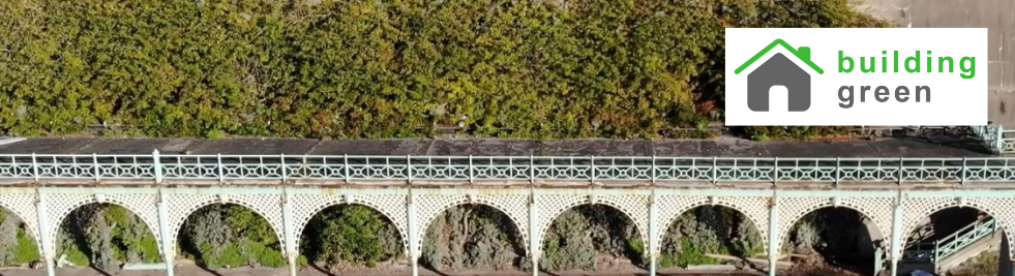
History of the Madeira drive green wall

Understanding the age and history of the green wall at Madeira Drive is taking some research! Comments and materials welcome…here’s what we understand so far.

1. Early 1700s

Beorthelm’s-tun, by now ‘Brighthelmstone’, remained a small fishing village (population circa two thousand) until the 1780s. The first sea defences were erected in Brighton in 1723 (funded from the first local taxes), and Georgian Brighton developed from 1780.

So for the first half of the 18th Century, and certainly before that time, the East Cliff can be considered relatively ‘natural’. It may have looked similar to West Beach at Newhaven, shown below, with erosion and colonisation by a range of native coastal plants.

Newhaven West Beach, Sussex University

2. Early 1800s.

Plants, almost certainly established naturally, are visible on the East Cliff (if you squint) as shown in this Constable painting of the Royal Suspension Chain Pier dated 1824-27 . Kemptown development begins in 1823.

Constable - Royal Suspension Chain Pier

2. 1830s

The book ‘In the news Brighton’ confirms that the East Cliff was faced with cement between 1827 and 1838, shortly after Constable’s painting. This ‘splendid and useful structure’ cost £100,000, stretches for 2 miles, and is composed of ‘concrete cement…boulder stones, lime and sand’. More at My Brighton & Hove.

According to Measuringworth.com that’s about £8 million in today’s money in terms of relative purchasing power.


4. Late 19th Century

Madeira Road (later Drive) construction begins in 1870. It would make sense to think that the planting took place at or after this time.

However this painting from the 1870s shows the plants already well established.

This is by William Earp (undated) – possibly 1870s.

William Earp, Royal Chain Pier

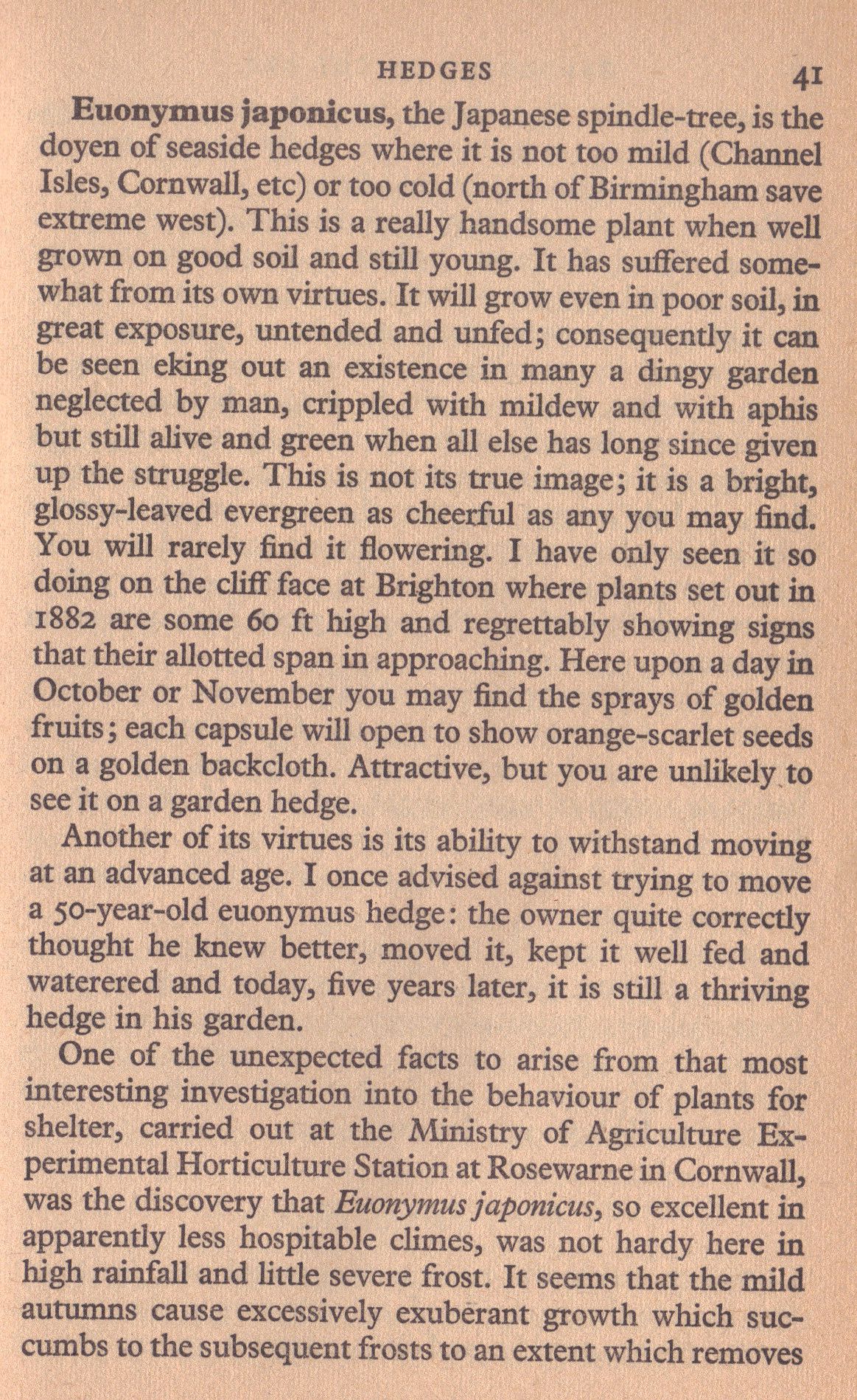
Notes from J.R.B. Evison’s 1969 book ‘Gardening By the Sea’ records ‘Japanese Privet’ planted on the cliff face in 1882 at least. Evison was Director of Parks at Brighton 1951 onwards. Evison notes ‘I have only seen it [flowering] on the cliff face at Brighton where plants set out in 1882 are some 60ft high…’

If that’s right, then Spindle – on Brighton seafront at least – grows at almost one and a half feet a year!

Japanese Privet - Description From 'Gardening By The Sea' P.41

Japanese Privet - Description From 'Gardening By The Sea' P.42

Looking for clues in botanical circles hasn’t helped much either yet. The GB Non-Native Species Secretariat incorrectly states that Japanese Spindle (the plant well established on the cliff now) was first recorded in the UK in 1897. Evison shows was here at least 25 years earlier, and this text has it introduced in England in 1804!

A nice later picture dated between 1883 and 1896 showing the planting well established on the rendered cliff face (and the old aquarium clock tower!).

East from the Sealife Centre

5. So…when was it planted!

Safe to say we’re not certain – not from this evidence at least. Again, shout if you know something we don’t!

Best (vague) date for a Japanese Spindle-based wall is mid-19th Century, if pushed then I’d go for 1870. But there has certainly been cliff vegetation on this site since work began on the Kemptown estate in 1823, and earlier through history as a natural part of the South coast seaside.

The modern green wall at Madeira Drive has honorable roots indeed.


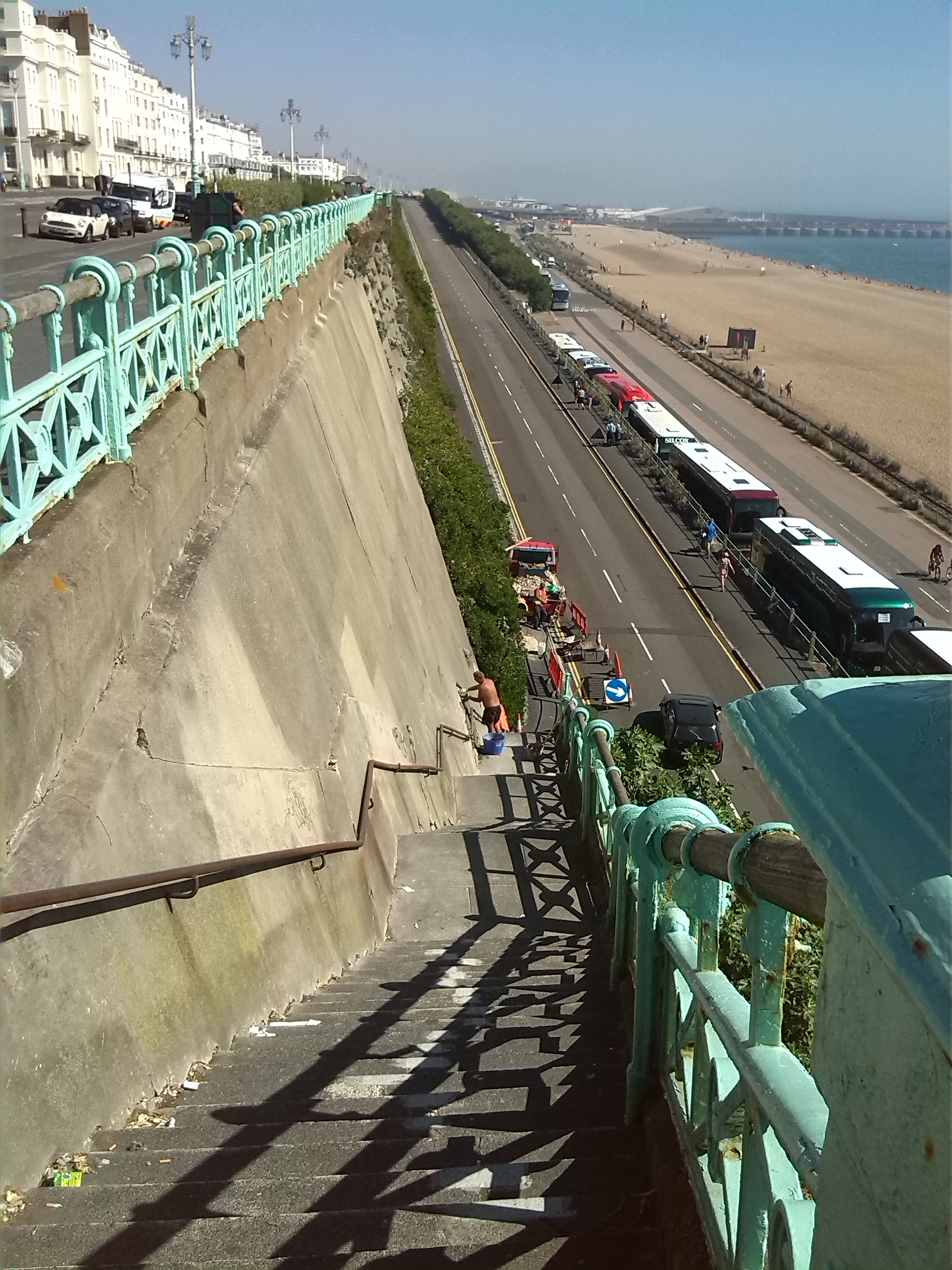
Maintenance begins on the Maderia Drive green wall

The Council has begun work to maintain the wall at Madeira Drive, starting with filling cracks in render and clearing out a re-filling the expansion cracks above the Volks Railway workshop.

Madeira Drive wall maintenance begins

Madeira Drive wall maintenance begins

IMG_20130904_142114

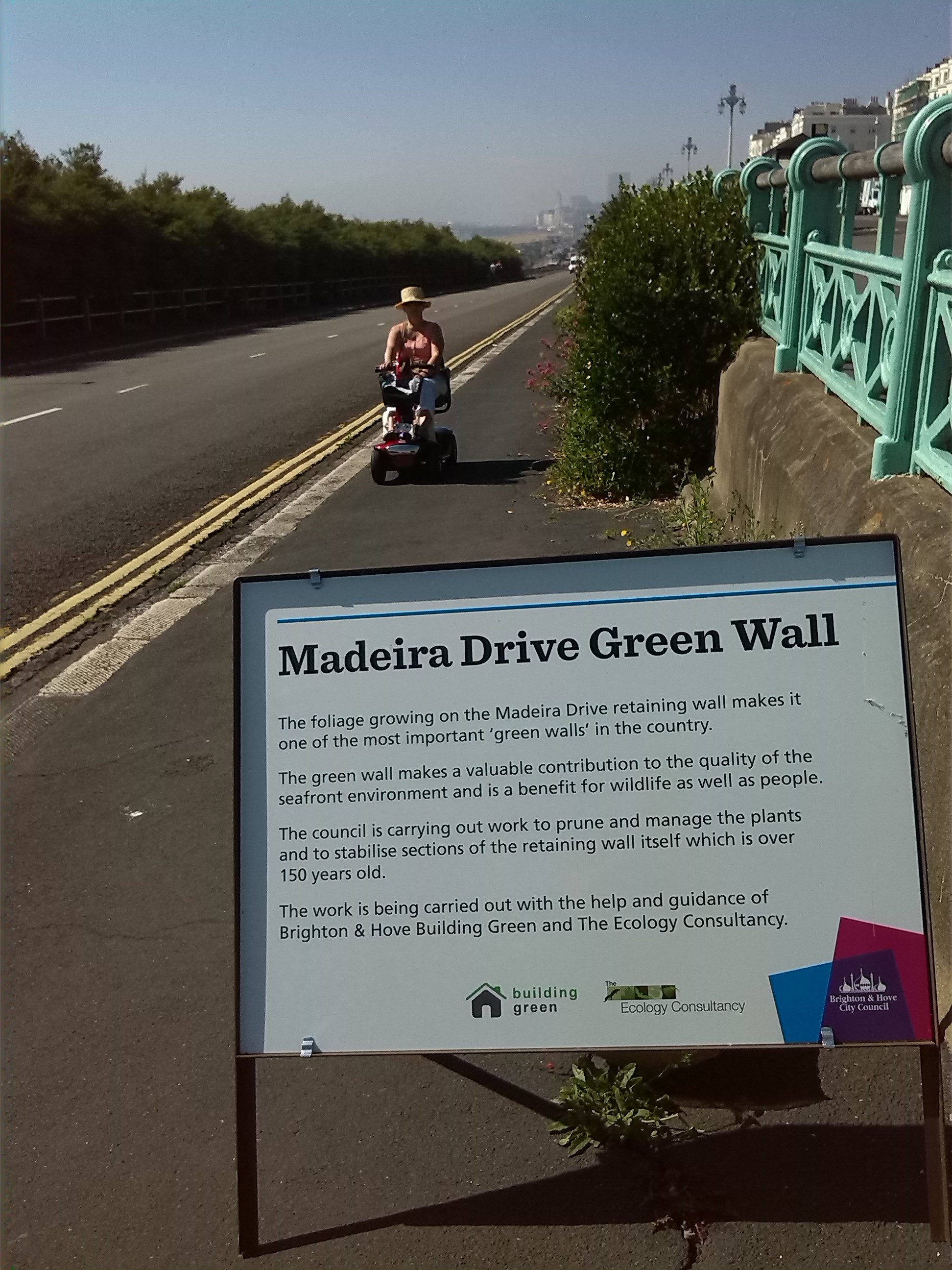
Building Green and the Ecology Consultancy are advising on the work – people are stopping to read the signs the council have put up, explaining what’s going on.

Green roof on The Level cafe

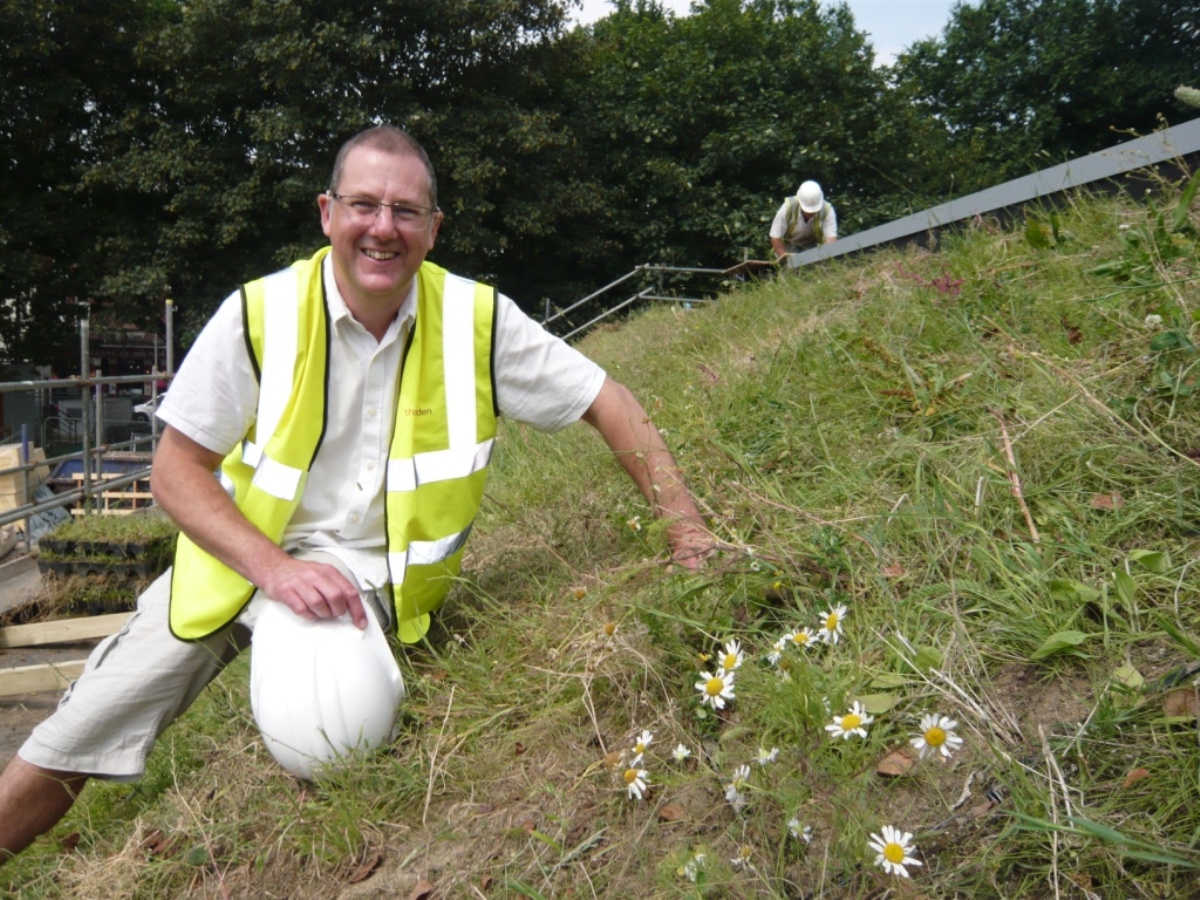
In case you didn’t notice,  The Level has had a major makeover. The new cafe has a steeply sloping green roof, planted with chalk grassland plants.

Designed and installed by Organic Roofs. Here’s the Argus story.


More than just a cycling-themed cafe at the Level in Brighton

6:30am Thursday 8th August 2013 in News

Councillor Pete West, chairman of the Brighton and Hove City Council’s environment, transport and sustainability committee

The city’s first cycling themed café is on track to open in the autumn.

Velo at The Level has been offered the lease on an eco-café as part of Brighton and Hove City Council’s £2.3 million restoration of the area.

Run by a team of local entrepreneurs headed by Nigel Lambe, co-owner of Small Batch Coffee Company, café Velo will combine a cycling theme with great coffee and outstanding food. The new single-storey café has high sustainability credentials, including a green, wildlife-friendly roof, solar thermal and PV panels, air source heating and a rainwater harvesting system.

The building, occupying a highly visible position at the heart of the park adjacent to the restored and re-landscaped Rose Walk, will feature glass doors opening out onto a substantial dining terrace on three sides.

Its positioning enables visitors to look out over the rest of the park, particularly the southern area with its new sensory gardens, water fountains, children’s play areas, restored pavilions, bridges and pergolas.

The café is expected to be open by the end of September, although the restored south end of the park, including the playground and the new skatepark has already re-opened to the public.

The new skate park at the Level

The new skate park at the Level

The first UK green wall to be designated a Site of Importance for Nature Conservation?!

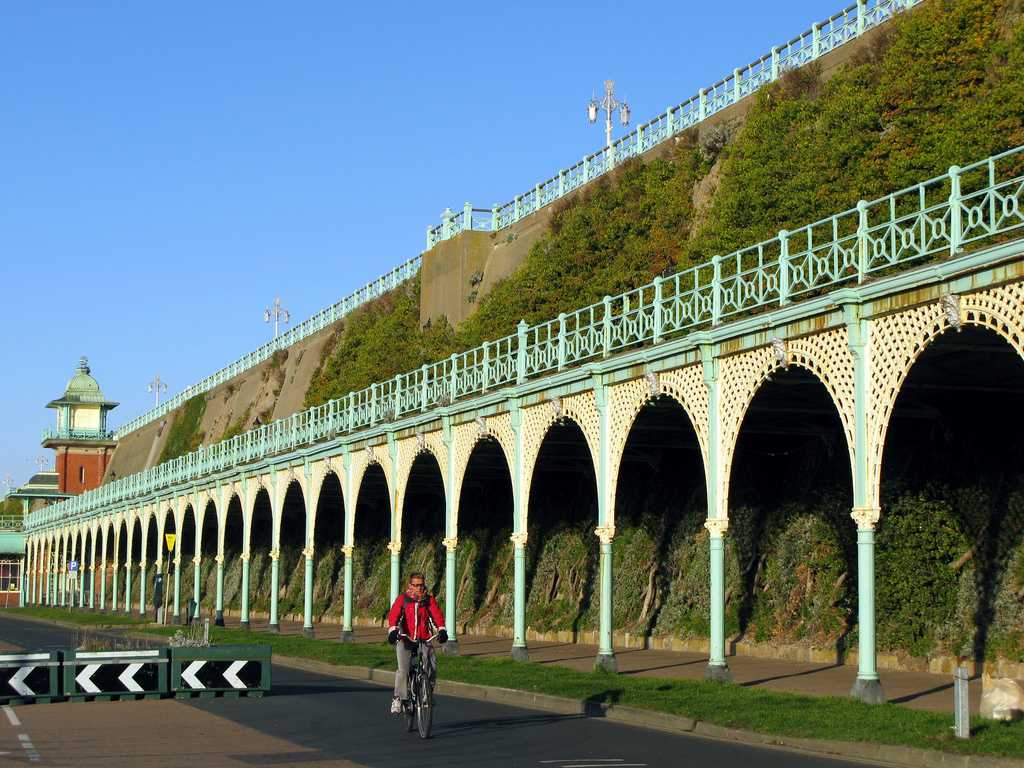
Madeira Drive’s 130 year old green wall was tonight voted a Site of Nature Conservation Importance (SNCI) at a meeting hosted by Brighton Council.

As far as we know, this is the first planted green wall to be given this designation in the UK – recognising its importance for wildlife as well as people, and offering protection in the city’s planning policy.

Green wall on cliff face in Brighton

Madeira Drive green wall

We’ve had good conversations with the Council about how best to manage the wall, to safeguard the cliff whilst protecting this amazing feature of the seafront…for another 130 years!

Here’s the draft citation: 105 – 323 036 Madeira Drive Green Wall

Volks goes solar, shingle habitat park to be created

The Council approved an application to rebuild the Volks railway sheds at Banjo groyne, Kemptown – and install a park with ‘solar trees’ to harness green electricity for the train. Very cool, and a nice addition to what – green wall apart – is a long stretch of seafront with little natural habitat.

There will be some existing vegetated shingle lost – unfortunate, given this is a national priority habitat of European importance – but overall there will be net gain of 192m2. See the ecology statement. This will be in a new ‘solar park‘ to the left of the groyne, where the council keep the swimming buoys in winter…with interpretation etc.

Now

Amazing to think that when the Volks was running in the late 19th Century, the sea came in right up to the road boundary – that section of track to the left of the sandy triangle was elevated above the water.

Elevated section – shingle solar park to be created to the left of this section of track

All that shingle collected in a little over 100 years by groynes and longshore drift…


After

Visualisation by vistudio


69 plants recorded, Marine Parade green wall, Brighton

Image

Plant list by Ben Kimpton MSc BSc Dip(Hort) MCIEEM of Ecology Consultancy (many thanks), with negligible help from me! If you have any other records, esp inverts, get in touch! Most interesting finds were hoary stock and a poss nationally rare sea fern grass Catapodium marinum.

Acer pseudoplatanus Sycamore R y
Achillea millefolium Yarrow R
Anisantha sterilis Barren brome R b
Anthriscus sylvestris Cow parsley O b
Arctium minus Lesser burdock R b
Asplenium adiantum-nigrum Black spleenwort LF w
Avena sativa Common oat R b
Bellis perennis Daisy R b
Berberis sp. Barberry R b
Capsella bursa-pastoris Shepherd’s purse O
Carex pendula Pendulous sedge R b
Catapodium marinum Sea fern grass R NR, ?
Catapodium rigidum Hard fern grass O
Centranthus ruber Red valerian F
Cerastium fontanum Common mouse-ear O b
Chenopodium album Fat-hen R b
Cirsium arvense Creeping thistle R b
Cirsium vulgare Spear thistle O
Convolvulus arvensis Field bindweed R b
Conyza canadensis Canadian fleabane R ?
Coronopus squamatus Greater swinecress R b
Crocosmia x crocosmiiflora Monbretia R b
Cymbalaria muralis Ivy-leaved toadflax F
Cyrtomium falcatum House Holly Fern R w, ?
Dactylis glomerata Cock’s-foot R o
Digitalis purpurea Foxglove R
Epilobium ciliatum American willowherb R b
Epilobium hirsutum Great willowherb R b
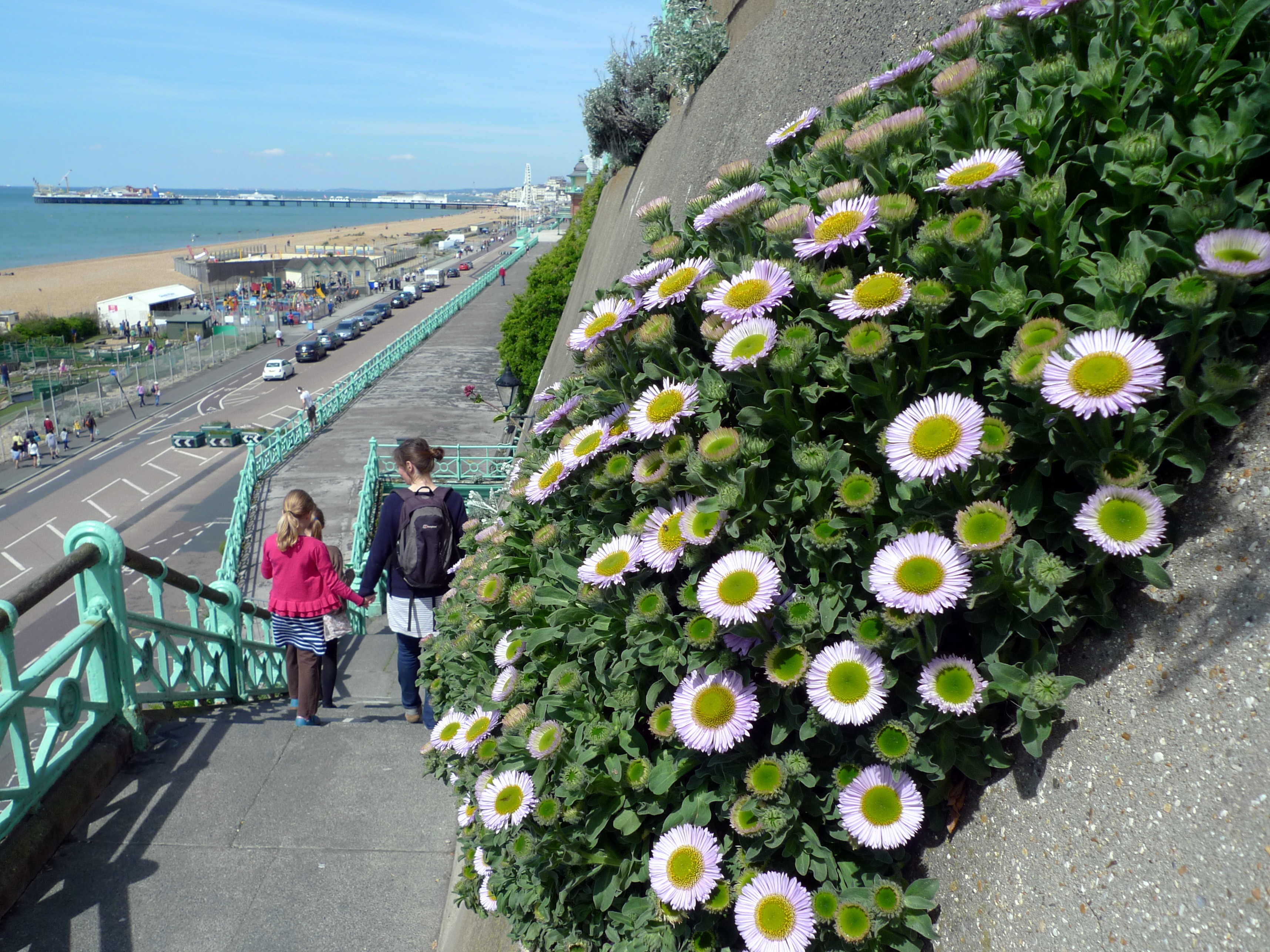
Erigeron glaucus Seaside daisy LF
Erysimum cheiri Wallflower LA
Euonymus japonicus Japanese spindle D
Ficus carica Fig R b
Galium aparine Cleavers O
Geum urbanum Wood avens R b
Hedera helix Englsh ivy LA
Hemerocallis fulva Orange day-lily R b
Hordeum murinum Wall barley O b
Hyacinthoides hispanica Spanish bluebell R b
Lolium perenne Perennial ryegrass R
Malva sylvestris Common mallow R b
Malva x clementii Garden tree mallow R ?
Matthiola incana Hoary stock O NR
Narcissus pseudonarcissus Daffodil R b
Parietaria judiaca Pellitory-of-the-wall A
Pentagottis sempervirens Blue alkanet R bPhyllitis scolopendrium Hart’s-tongue fern LF w
Picris echioides Bristly ox-tongue O b
Plantago coronopus Stag’s-horn plantain O b
Plantago major Greater plantain R b
Poa annua Annual meadow grass F
Polypodium vulgare Common polypody LF w
Rumex obtusifolius Broad-leaved dock O b
Sagina procumbens Procumbent pearlwort R
Sambucus nigra Elder R b, s
Sedum acre Biting stonecrop LA
Sedum album English stonecrop O
Senecio cineraria Silver ragwort F
Senecio vulgaris Groundsel F
Sisybrium orientale Oriental rocket O b, ?
Smyrmium olusatrum Alexanders O b
Sonchus asper Prickly sow-thistle R b
Sonchus oleraceus Smooth sow-thistle R s
Spergularia rubra Sand spurrey O
Stellaria media Common chickweed O b
Taraxacum officinale agg. Dandelion R b
Triticum aestivum Bread wheat R b ?
Ulex sp. Gorse R
Urtica dioica Common nettle R b
Veronica x franciscana Hedge veronica LF

Qualifiers
b = base of wall or planters on Max Miller’s Walk
s = seedling
y = young tree/sapling
w = growing in more wet/shady areas
? = species level to be checked
NR = Nationally rare

Dominant, Abundant, Frequent, Occasional, Rare, Locally

Living roof revolution – Brighton Argus article

For those that didn’t catch the Argus’ Saturday centre spread on living roofs and Building Green on 16 March, here it is.

Living roof revolution across Brighton and Hove

In News By Ben Leo, reporter

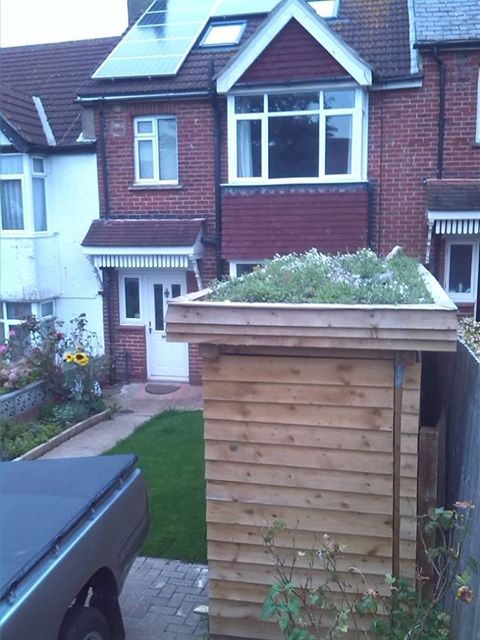
A green roof in Brighton and Hove

From suburban homes to giant water treatment plants, the city’s rooftops are turning green in a bid to cut carbon emissions and summertime temperatures. Ben Leo looks at why councils and businesses are reshaping the skyline

The mercury is rising, the beach is bustling and the sun is blazing away.

On hot days, temperatures in urban areas like Brighton and Hove can be 20 to 60 pe cent higher than in the surrounding countryside.

This is because land surfaces and some buildings, particularly those built with dark and dense materials, retain a substantial amount of heat and fail to find the capacity to release it until night-time.

That, coupled with concentrated energy use and less ventilation than in rural areas, creates a phenomenon dubbed the “urban heat island effect”, which has been blamed for an increased number of deaths in the city during heatwaves.

Brighton and Hove City Council is conscious of the problem and keen for businesses and residents to take action.

One of the biggest remedies for the urban heat island effect requires green-fingered gardeners to get the pitchfork out and take a trip up to the roof of their office block or home. Then, start work on planting your thriving “green roof”.

Green roofs maximise the use of otherwise wasted roof space by using it as an area of vegetation, cut summertime temperatures and lower our carbon footprint.

The idea is to create rooftop gardens full of plants, flowers and life.

They’re nicknamed “living roofs” and are designed to help lower urban air temperatures and reduce the heat island effect. Additionally, they absorb rainwater, provide insulation and create habitats for wildlife.

Requirement

London, backed by Mayor Boris Johnson, is spearheading the green roof agenda – all major new developments within the most of Westminster and the inner parts of Camden, Islington, Hackney, Tower Hamlets, Southwark, Lambeth and Kensington and Chelsea, are required to have a green roof.

Now there are calls for Brighton to follow suit. James Farrell, who works for the Environment Agency and the campaign group Building Green in Sussex, previously used his expertise to direct town hall chiefs in London on a greener path.

He said: “You can green any structure from a shed to a sewage treatment works, and there’s great evidence from around the world on how this approach to cities improves the way they look and feel for everyone who visits, or who lives and works in them.

“In my previous job I led on green roofs at the Greater London Authority, and developed the first UK planning policy requiring green roofs and walls on all major development.

Drainage

“The Mayor of London now expects green features like these on all major developments and encourages the London boroughs to expect the same.

“There has been a rapid uptake since and it’s becoming more common to see them.

“Green roofs help us handle flood risk by reducing the impact of heavy rainfall on our drainage systems and there are great benefits for keeping buildings cool to lower energy bills, and providing a home to urban wildlife. What’s more, seagulls don’t like them.”

It’s estimated that less than 1% of buildings in Brighton and Hove are host to a green roof.

Mr Farrell suggests the UK is a “long way behind” countries like Switzerland and Germany, where green roofs are required on all developments.

Public policy

He continued: “Here, we rely on goodwill and generally supporting policies in its local plan – but a firmer planning policy would make a huge difference.

“The current Local Plan has a general requirement for ‘new nature conservation features’ but no specific requirement for green roofs or walls and doesn’t recognise the wider benefits. With a bit of a bigger push from the council, we could catch up and be a flagship world city.”

Two years ago, Mr Farrell and Lee Evans, the founder of Organic Roofs – a leading grass roof installation company – set up courses to teach people how to install their own ‘DIY’ roofs.

He said: “This month we had 18 very happy participants who had fun learning the basics in the classroom, built their own green-roofed bird boxes to practise the principles, and visited a number of green buildings across |the city.”

Popularity

Despite low numbers of green-roofed buildings in Brighton, their popularity is increasing. Last year Organic Roofs saw their turnover trebled.

“We aim to encourage clients to emulate local ecological conditions with their roofs.

“We research the local biodiversity action plan and then cross-reference the priority species with their food source plants that we know will grow on a green roof, so that clients know their roofs are a small but meaningful contribution to their local environment and its challenges,” said Mr Evans.

One of the largest green roofs in Europe can be found at Southern Water’s new treatment works site in Peacehaven.

Covering an area of almost 18,000 square metres – the size of two-and-a-half football pitches – it’s been planted with downland grass to blend in with the surrounding landscape.

New projects

Bosses at the firm are so protective over the roof they drafted in birds of prey to stop crows and seagulls from digging it up.

The council has also invested in numerous green roof projects across the city, including at Whitehawk Library, Downs View Link College and Whitehawk Children’s Centre.

Further projects at The Level and at student accommodation in London Road are also in the pipeline.

Councillor Pete West, chairman of the environment and sustainability committee, said the council encourages green roofs because they reduce atmospheric pollution and encourage biodiversity without consuming scarce land.

It’s also helping town hall bosses work towards their green-goals in the Local Biodiversity Action Plan.

He continued: “In some cases they can provide high-rise green space for people with access to the buildings to enjoy and together with other greening features, such as green walls and urban landscaping, they can connect otherwise isolated green spaces to establish networks of green space through the city.

“This is important for biodiversity and ties in with our efforts to protect and conserve Brighton and Hove’s most important species.”