


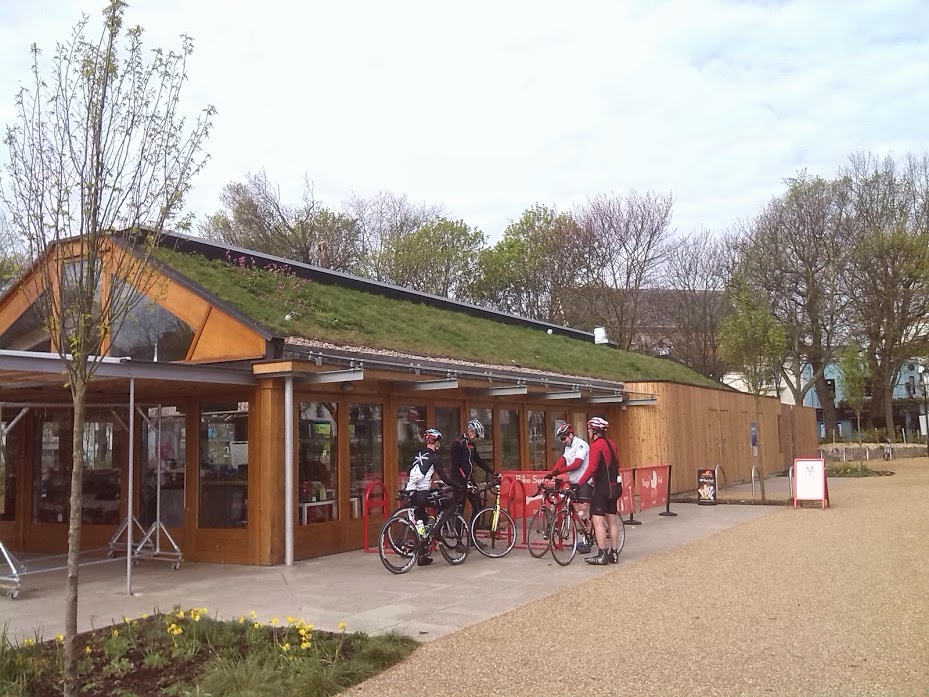
Velo in action, 21 April 2014
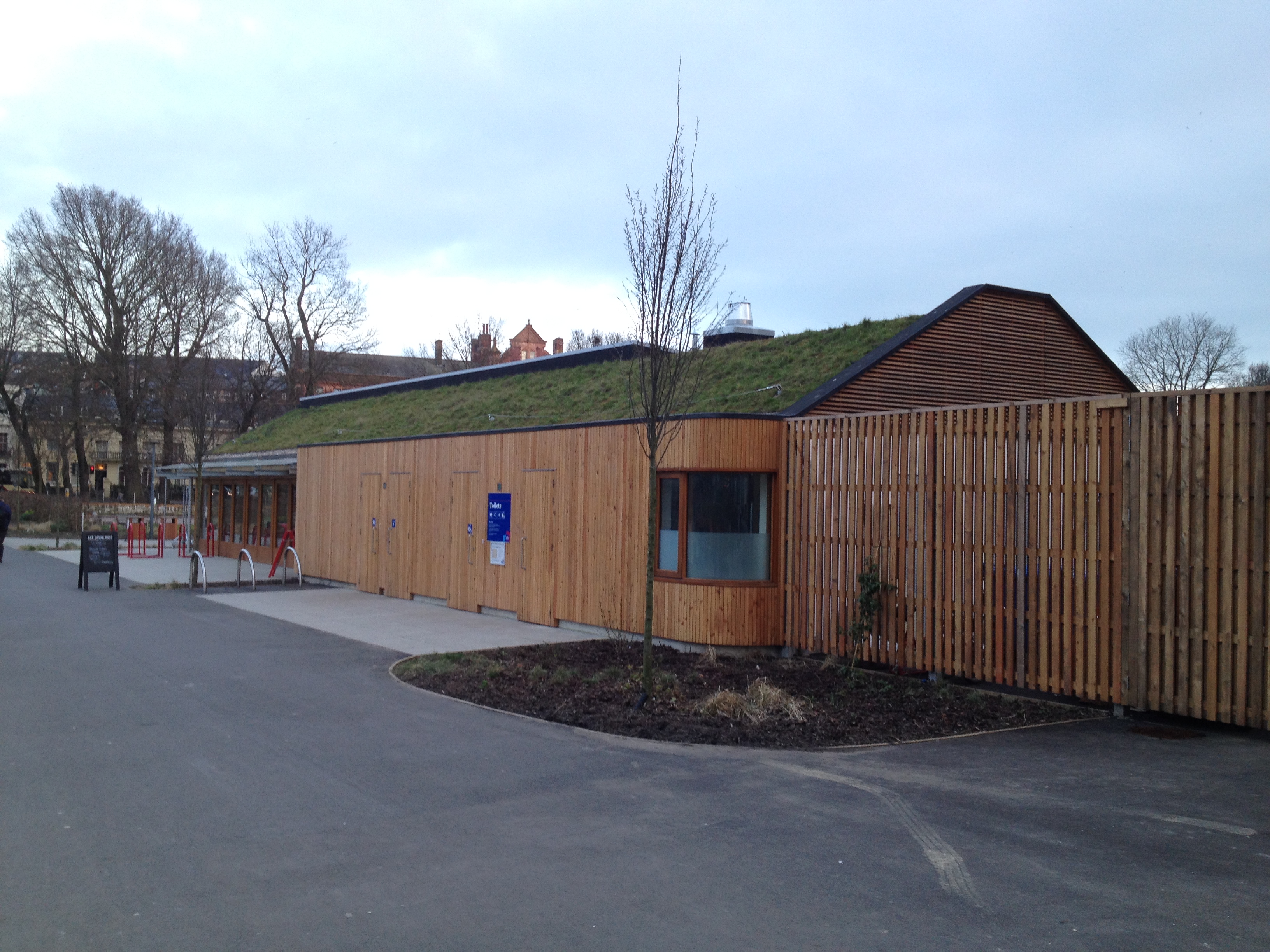
The new Level redevelopment, opened last Autumn, features as its centrepiece the Velo Cafe, a low-impact cycle hub and cafe with renewable electricity, rainwater harvesting and locally sourced foods.
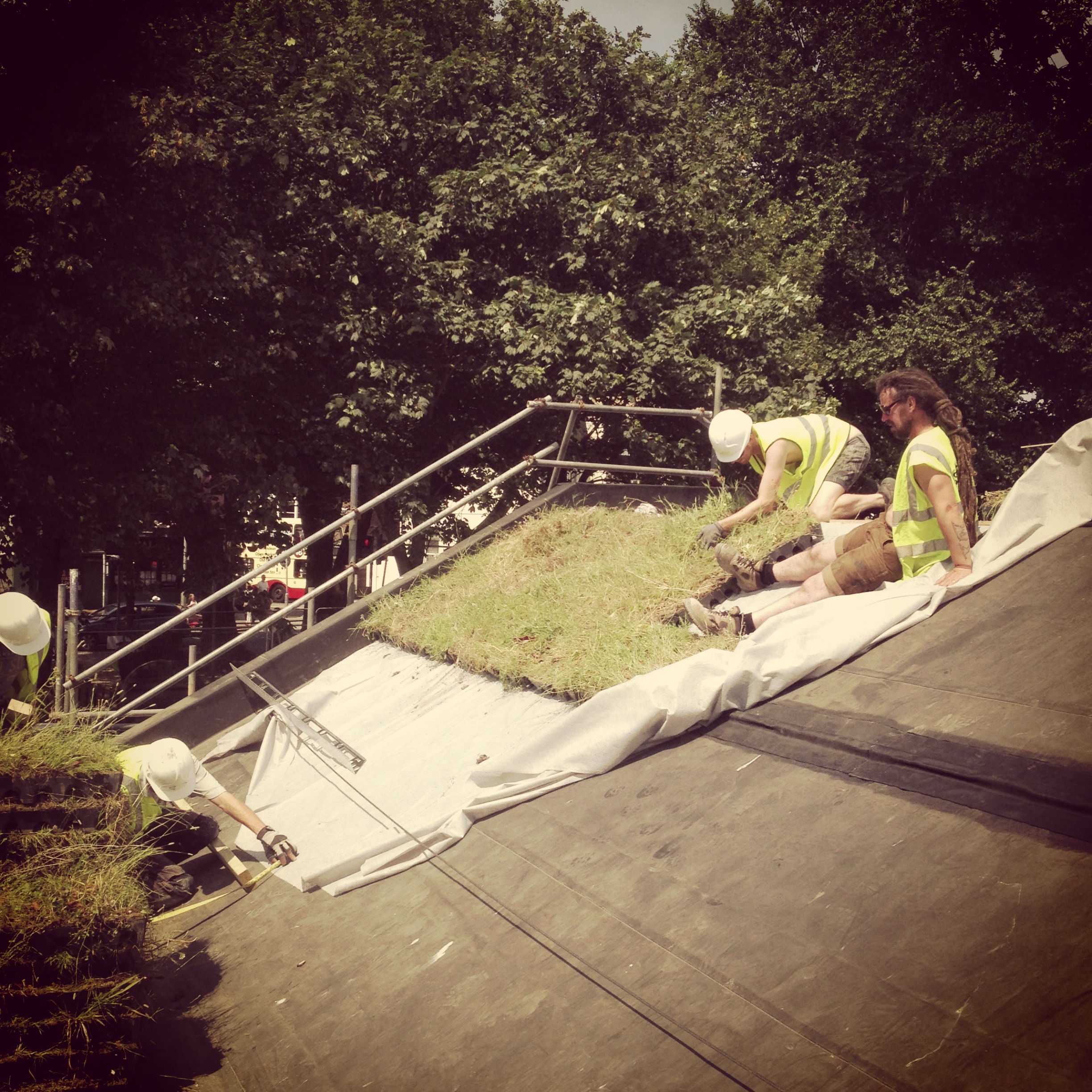
The roof was designed and installed by Organic Roofs Ltd of Brighton, using a modular system planted with a Downland-emulating wildflowers and grass mix from ANS, including Selfheal, Dropwort, Salad Burnet, Rough Hawkbit, Wild Marjoram and Hoary Plantain.
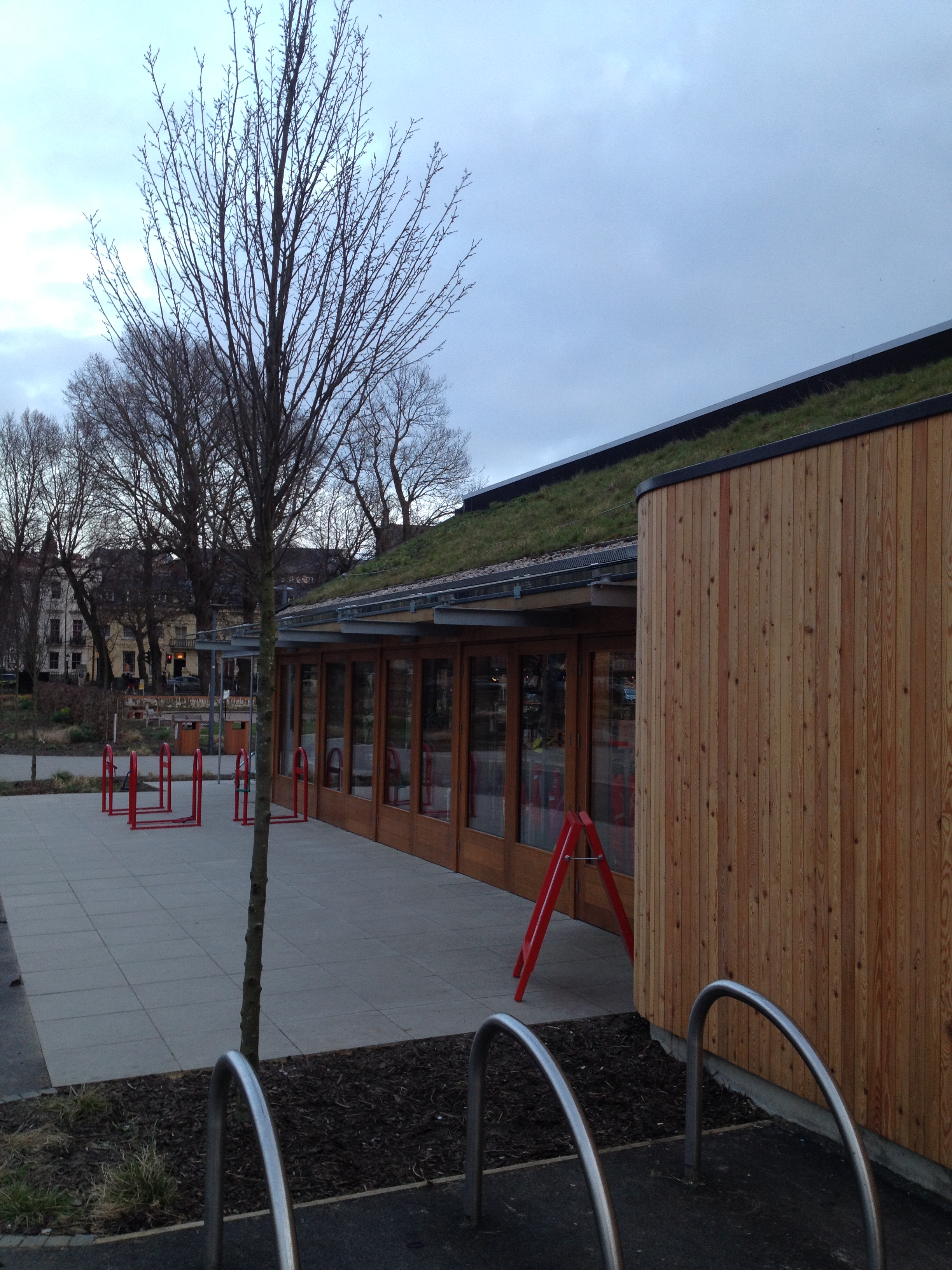
The north side of the roof has fared a little better than the south during the hot summer post-installation but with some spring maintenance scheduled in the coming weeks by Organic Roofs and given the mixed weather of recent weeks the roof should be flowering soon.
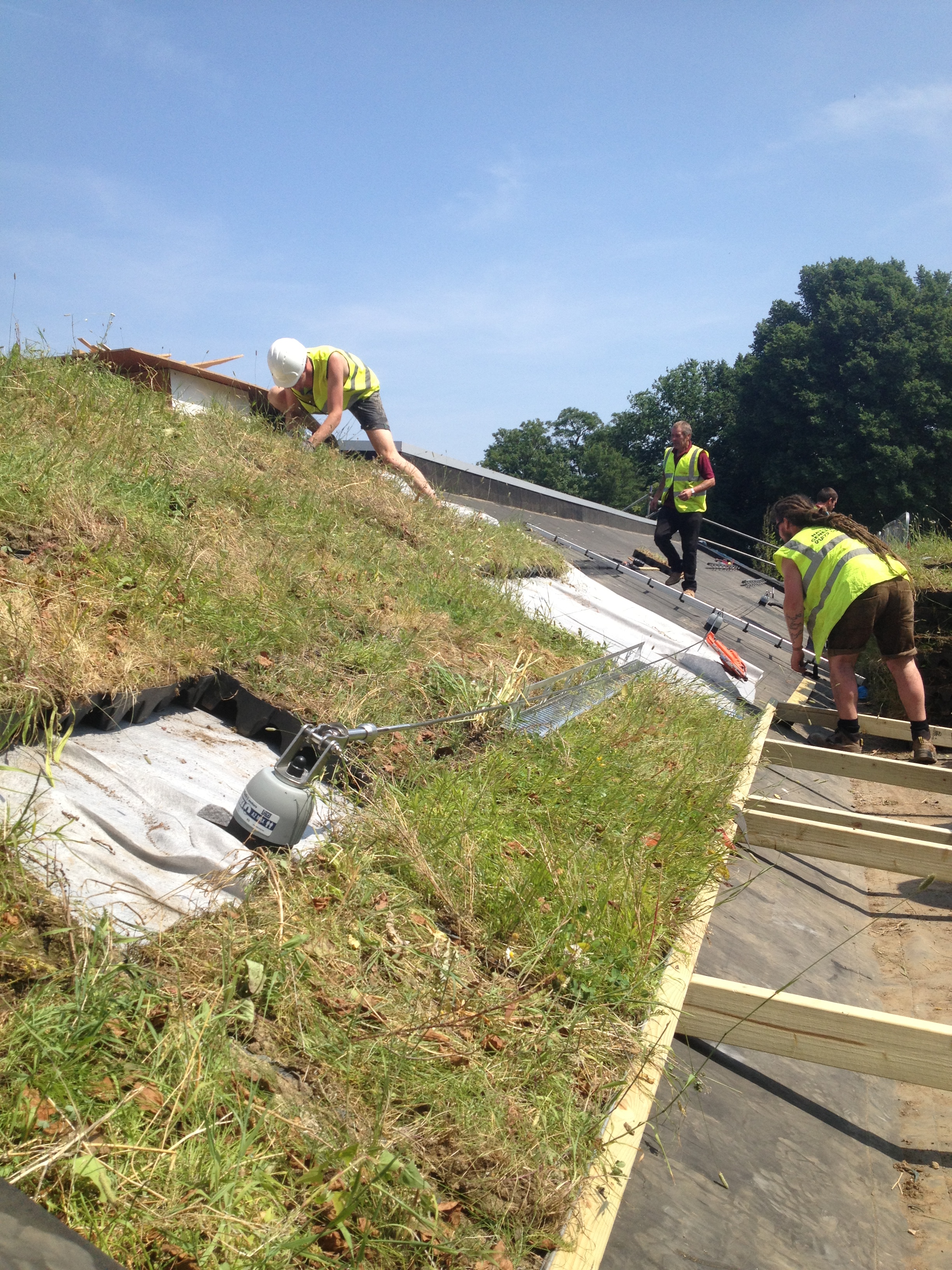
Images from Organic Roofs.
At the other end of the line from Brighton, Victoria is going green in a big way.
If you’ve been lately, you’ll have noticed the huge new green walls.


Huge.
Now new development is set to establish 25 hectares of green roof, which will help with storm water control and improve biodiversity as well as – let’s face it – soften the urban impact of the area visually.
“The 10-year regeneration strategy will create the green roof space the size of 30 football pitches to turn the area into one of the most sustainable and biodiverse areas in London.”
A little hyperbole here from the news release, but you get the idea.
Here in Brighton, Building Green and the Council commissioned the Ecology Consultancy to map the potential for new and ‘retrofit’ green roofs as part of the Nature Improvement Area and (hopefully) the first UK Urban Biosphere Reserve. More on that mapping soon.
Joined up with all this stuff is the Catchment Partnership for the Adur & Ouse, which Brighton is slap bang in the middle of. The Draft Biosphere plan has this to say.
“A key element is water, as a resource for life and as a flooding risk. The Adur & Ouse Partnership is working with the Biosphere Project to implement the Water Framework Directive (WFD) locally. … In urban areas, the focus will be to develop more ’green infrastructure’ such as green roofs or rainwater storage to reduce flood risk by slowing or preventing water entering urban drainage networks…”
Now we just need to make it happen!
In case you didn’t notice, The Level has had a major makeover. The new cafe has a steeply sloping green roof, planted with chalk grassland plants.
Designed and installed by Organic Roofs. Here’s the Argus story.
6:30am Thursday 8th August 2013 in News
The city’s first cycling themed café is on track to open in the autumn.
Velo at The Level has been offered the lease on an eco-café as part of Brighton and Hove City Council’s £2.3 million restoration of the area.
Run by a team of local entrepreneurs headed by Nigel Lambe, co-owner of Small Batch Coffee Company, café Velo will combine a cycling theme with great coffee and outstanding food. The new single-storey café has high sustainability credentials, including a green, wildlife-friendly roof, solar thermal and PV panels, air source heating and a rainwater harvesting system.
Its positioning enables visitors to look out over the rest of the park, particularly the southern area with its new sensory gardens, water fountains, children’s play areas, restored pavilions, bridges and pergolas.
The café is expected to be open by the end of September, although the restored south end of the park, including the playground and the new skatepark has already re-opened to the public.

The new skate park at the Level
For those that didn’t catch the Argus’ Saturday centre spread on living roofs and Building Green on 16 March, here it is.
In News By Ben Leo, reporter

From suburban homes to giant water treatment plants, the city’s rooftops are turning green in a bid to cut carbon emissions and summertime temperatures. Ben Leo looks at why councils and businesses are reshaping the skyline
The mercury is rising, the beach is bustling and the sun is blazing away.
On hot days, temperatures in urban areas like Brighton and Hove can be 20 to 60 pe cent higher than in the surrounding countryside.
This is because land surfaces and some buildings, particularly those built with dark and dense materials, retain a substantial amount of heat and fail to find the capacity to release it until night-time.
That, coupled with concentrated energy use and less ventilation than in rural areas, creates a phenomenon dubbed the “urban heat island effect”, which has been blamed for an increased number of deaths in the city during heatwaves.
Brighton and Hove City Council is conscious of the problem and keen for businesses and residents to take action.
Green roofs maximise the use of otherwise wasted roof space by using it as an area of vegetation, cut summertime temperatures and lower our carbon footprint.
The idea is to create rooftop gardens full of plants, flowers and life.
They’re nicknamed “living roofs” and are designed to help lower urban air temperatures and reduce the heat island effect. Additionally, they absorb rainwater, provide insulation and create habitats for wildlife.
Requirement
London, backed by Mayor Boris Johnson, is spearheading the green roof agenda – all major new developments within the most of Westminster and the inner parts of Camden, Islington, Hackney, Tower Hamlets, Southwark, Lambeth and Kensington and Chelsea, are required to have a green roof.
Now there are calls for Brighton to follow suit. James Farrell, who works for the Environment Agency and the campaign group Building Green in Sussex, previously used his expertise to direct town hall chiefs in London on a greener path.
He said: “You can green any structure from a shed to a sewage treatment works, and there’s great evidence from around the world on how this approach to cities improves the way they look and feel for everyone who visits, or who lives and works in them.
“In my previous job I led on green roofs at the Greater London Authority, and developed the first UK planning policy requiring green roofs and walls on all major development.
Drainage
“The Mayor of London now expects green features like these on all major developments and encourages the London boroughs to expect the same.
“There has been a rapid uptake since and it’s becoming more common to see them.
“Green roofs help us handle flood risk by reducing the impact of heavy rainfall on our drainage systems and there are great benefits for keeping buildings cool to lower energy bills, and providing a home to urban wildlife. What’s more, seagulls don’t like them.”
It’s estimated that less than 1% of buildings in Brighton and Hove are host to a green roof.
Mr Farrell suggests the UK is a “long way behind” countries like Switzerland and Germany, where green roofs are required on all developments.
Public policy
He continued: “Here, we rely on goodwill and generally supporting policies in its local plan – but a firmer planning policy would make a huge difference.
“The current Local Plan has a general requirement for ‘new nature conservation features’ but no specific requirement for green roofs or walls and doesn’t recognise the wider benefits. With a bit of a bigger push from the council, we could catch up and be a flagship world city.”
Two years ago, Mr Farrell and Lee Evans, the founder of Organic Roofs – a leading grass roof installation company – set up courses to teach people how to install their own ‘DIY’ roofs.
He said: “This month we had 18 very happy participants who had fun learning the basics in the classroom, built their own green-roofed bird boxes to practise the principles, and visited a number of green buildings across |the city.”
Popularity
Despite low numbers of green-roofed buildings in Brighton, their popularity is increasing. Last year Organic Roofs saw their turnover trebled.
“We aim to encourage clients to emulate local ecological conditions with their roofs.
“We research the local biodiversity action plan and then cross-reference the priority species with their food source plants that we know will grow on a green roof, so that clients know their roofs are a small but meaningful contribution to their local environment and its challenges,” said Mr Evans.
One of the largest green roofs in Europe can be found at Southern Water’s new treatment works site in Peacehaven.
Covering an area of almost 18,000 square metres – the size of two-and-a-half football pitches – it’s been planted with downland grass to blend in with the surrounding landscape.
New projects
Bosses at the firm are so protective over the roof they drafted in birds of prey to stop crows and seagulls from digging it up.
The council has also invested in numerous green roof projects across the city, including at Whitehawk Library, Downs View Link College and Whitehawk Children’s Centre.
Further projects at The Level and at student accommodation in London Road are also in the pipeline.
Councillor Pete West, chairman of the environment and sustainability committee, said the council encourages green roofs because they reduce atmospheric pollution and encourage biodiversity without consuming scarce land.
It’s also helping town hall bosses work towards their green-goals in the Local Biodiversity Action Plan.
He continued: “In some cases they can provide high-rise green space for people with access to the buildings to enjoy and together with other greening features, such as green walls and urban landscaping, they can connect otherwise isolated green spaces to establish networks of green space through the city.
“This is important for biodiversity and ties in with our efforts to protect and conserve Brighton and Hove’s most important species.”
One of the course participants wrote in to say “I just wanted to write to thank you for the inspirational Green Roof course this weekend; I feel ready (and keen) to start my extension roof and confident that I can!
I know that a feedback form will be coming but I just wanted you to know just how much I appreciated all the effort that you put into the course which hit the right note on so many levels.”

Building Green DIY course March 2013
Music to our ears!
Great weekend, thanks to everyone who took part and to Lee from Organic Roofs and Stephan and Charles from Brighton Permaculture Trust.
Here is a Flickr slideshow with photos from the course – and some of the roofs we visited.
We are pleased to have had enough bookings to run the training course this weekend, 16-17 March. There will be site visits, presentations, discussion and a surgery with green roof professional and co-tutor Lee Evans of Organic Roofs.

Crew Club Brighton, early stages of colonisation
There are still a few places – if you’re interested book via Brighton Permaculture Trust!
In 2008 Building Green volunteer Hanna produced our first set of case studies – examples of some of the best green walls and roofs in Brighton & Hove.
You can download them here.
Keen volunteers to update them should post here!

Dusty Gedge opens the first virtual green roof and living wall conference, 12 Feb – 13 Mar 2013.
More here.
 Brighton & Hove Building Green