There are over 100 types of flowering plant growing on the Madeira Drive Green Wall ‘Local Wildlife Site’.
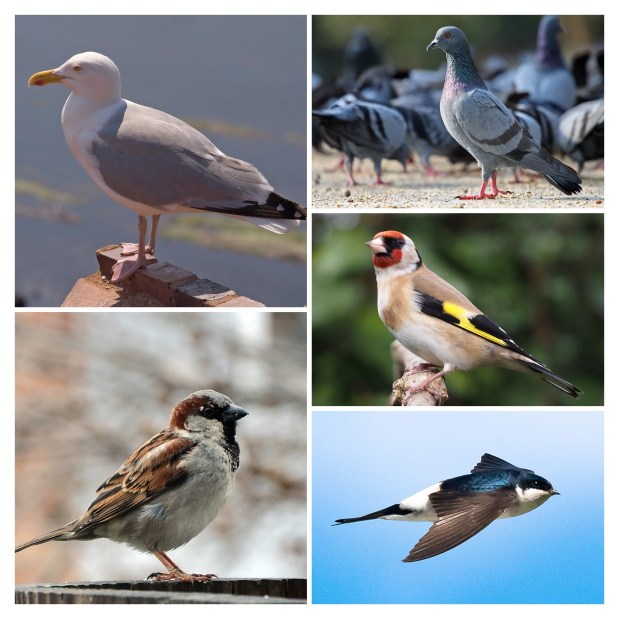
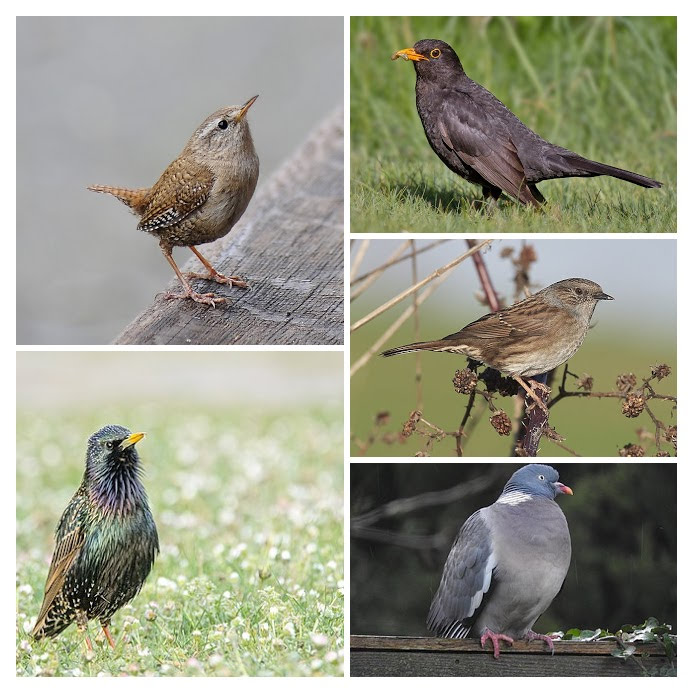
And there are 10 types of bird that have been seen nesting, or feeding, in these plants.
See how many birds you can spot next time you’re down there…it’s a great time to visit as it’s breeding season and there should be lots of birdsong.
Here’s what to look for, and let us know if you can add to the list!
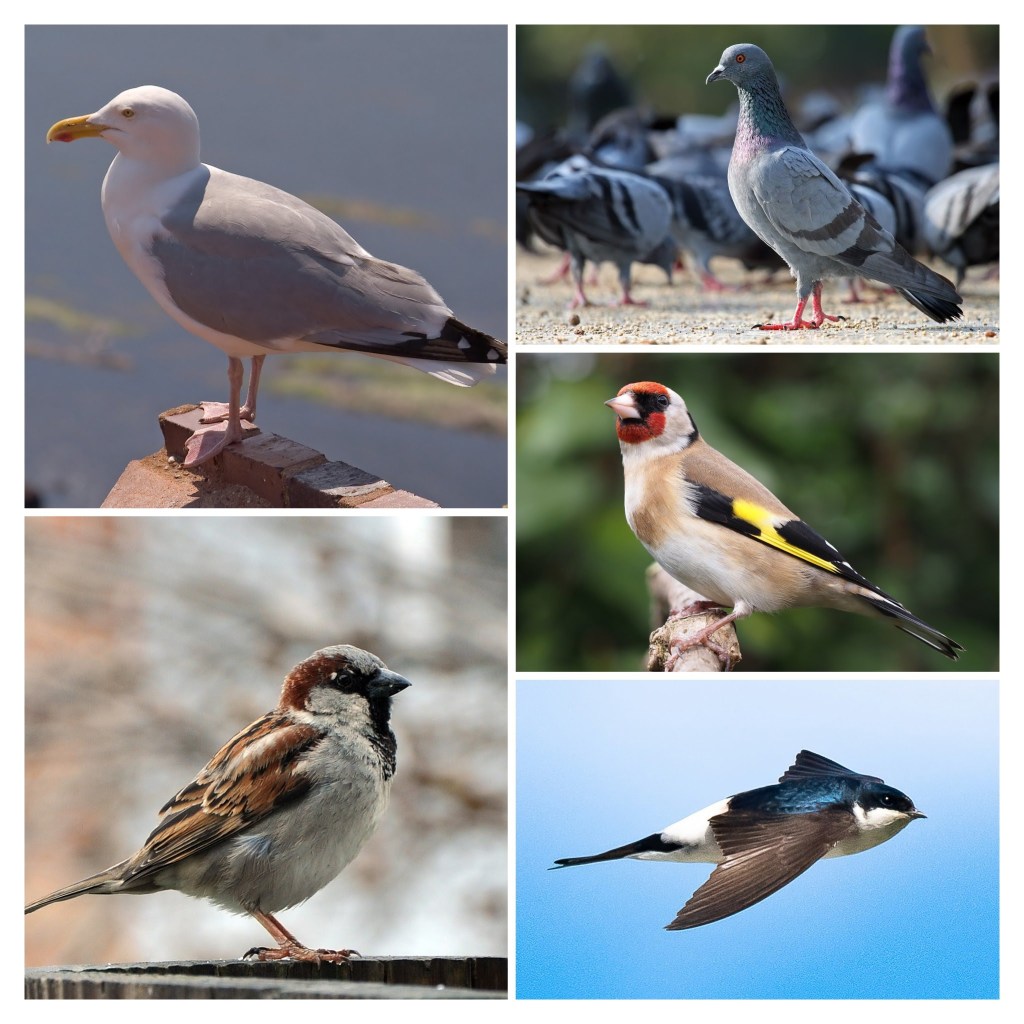
Clockwise from Top Left: Wren, Blackbird, Dunnock, Wood pigeon, StarlingClockwise from Top Left: Herring gull, Feral pigeon, Goldfinch, House martin, House sparrow
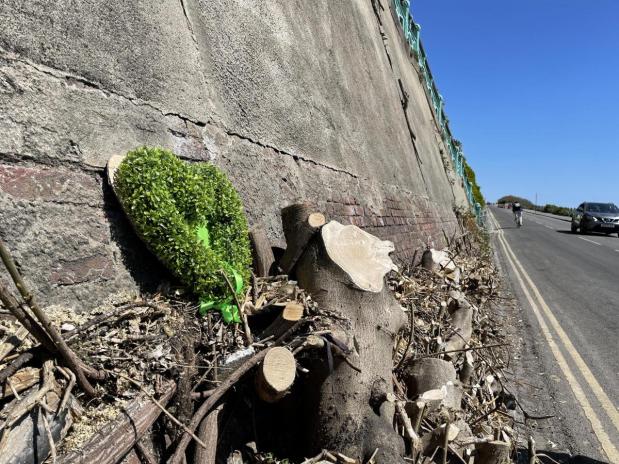
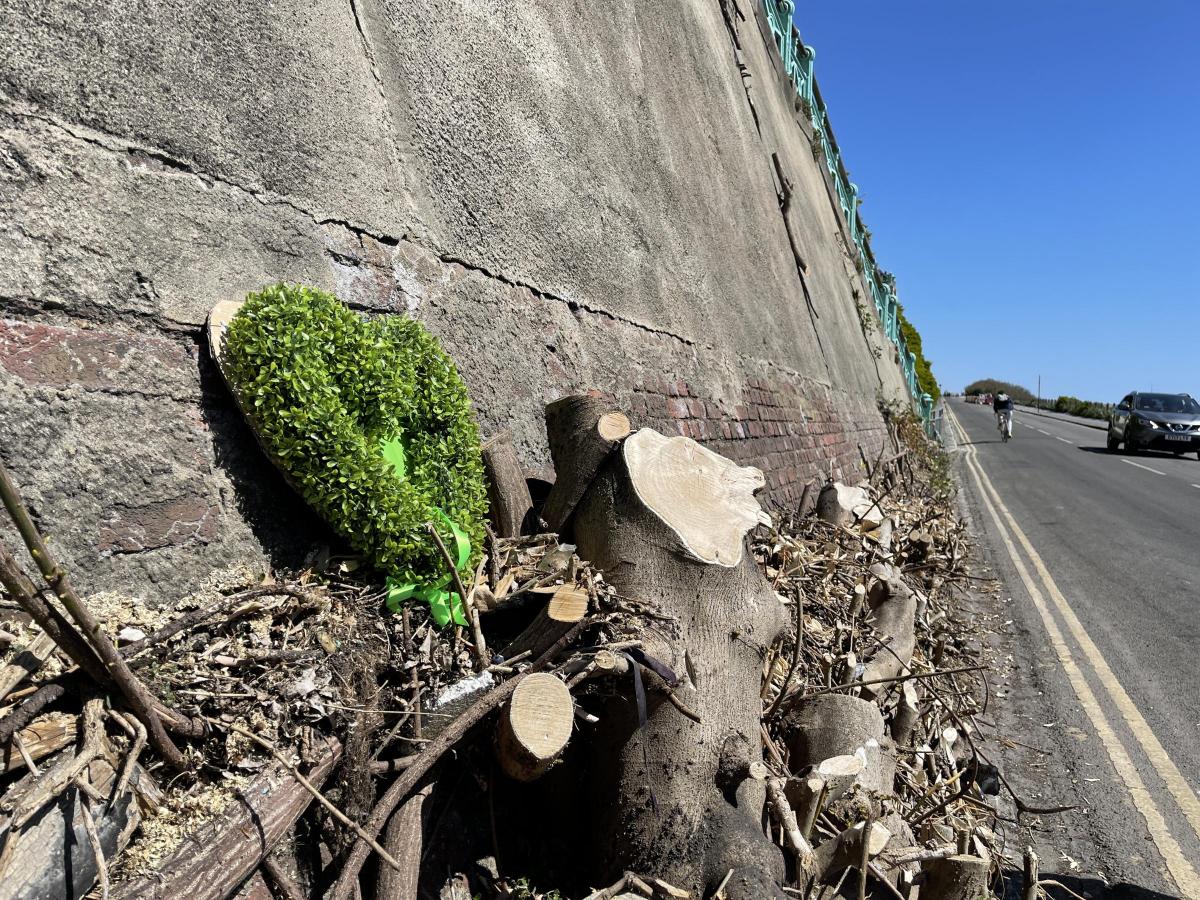
Most striking has been the outpouring of local concern and sadness at how the work was completed, an apology from The Council, and a memorial event yesterday (involving a minute’s silence and a wreath laying) organised by local people and members of Madeira Drive campaign groups.
Meanwhile, Building Green volunteers have replanted a section of the wall on Duke’s Mound, as part of our long term project to restore the wall to its former length.
Building Green awaits the report of what happened exactly, so we can ensure that all parties learn from this for the future.
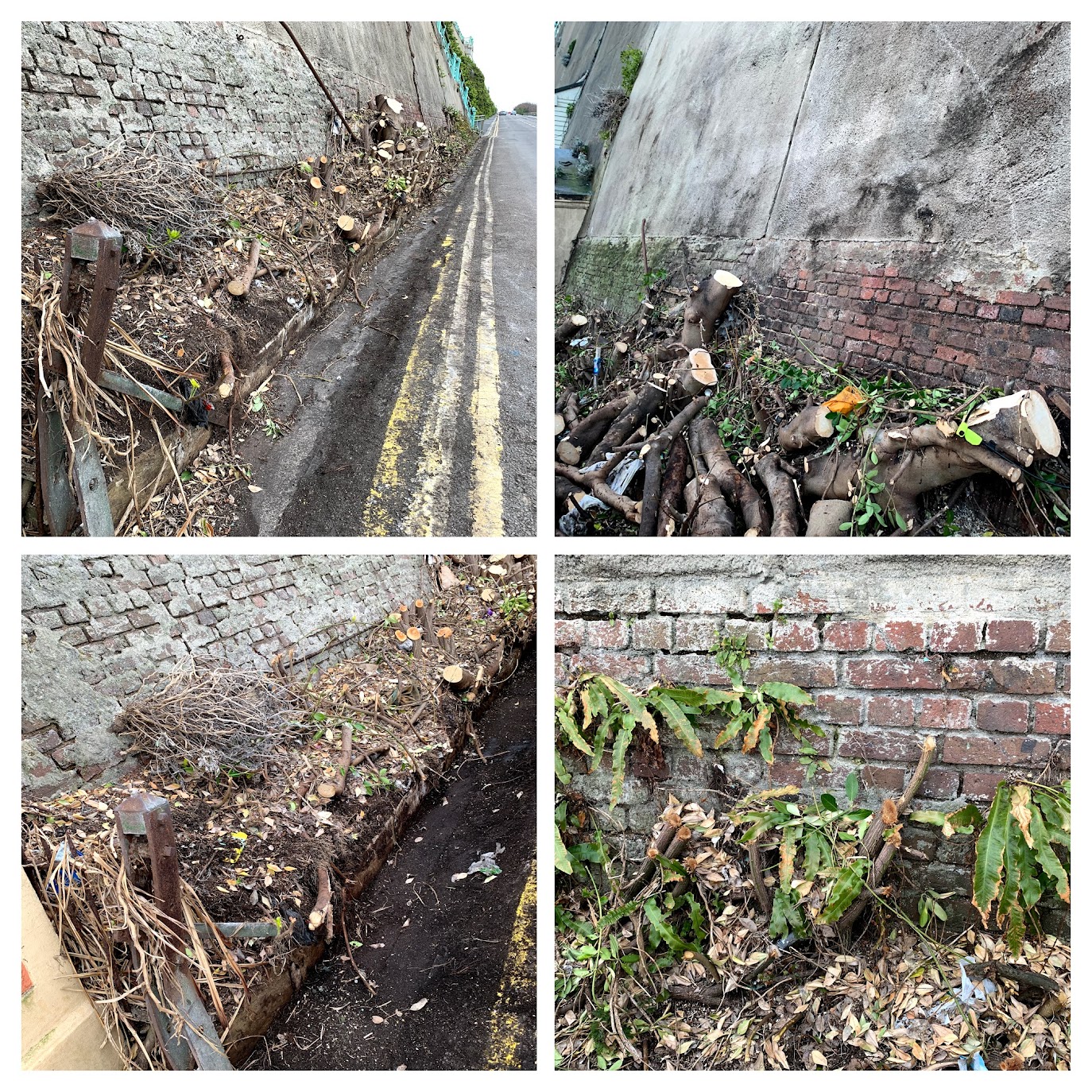
However we do know that the cutting included a very large fig, several stools of Japanese spindle planted in 1872, and the removal of large specimens of Spanish gorse and Darwin’s barberry. A number of ferns have been exposed and died. This section of wall was used by dunnock, wren and blackbird.
We know from our coppicing trials elsewhere on the green wall, and from recent work in partnership with the Council to protect or translocate older plants, that with the right care and attention it can regrow. There are some signs this is already happening.
However, regular cutting back and trimming would have avoided this situation from developing in the first place. So, as next steps, we will be encouraging the Council to work with us and local people to:
tidy and care for this section of wall now, with feeding, to maximise regrowth
establish a management plan for the whole green wall
set up budget and resources for regular maintenance, to ensure public access and safety along the pavement, optimum conditions for wildlife, and long term health of the green wall
incorporate the full linear extent of the green wall into the ‘MT30’ project, which is looking at the restoration of Madeira Terrace.
A few recent happenings on Madeira Drive Green Wall – our natural backdrop to the eastern seafront.
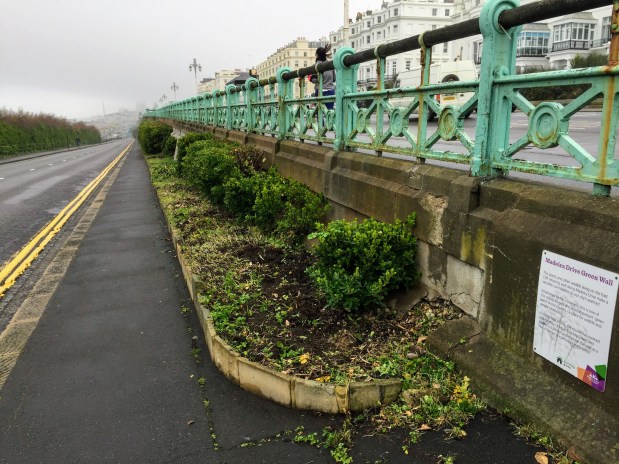
1 – Recent loss of historic section of green wall
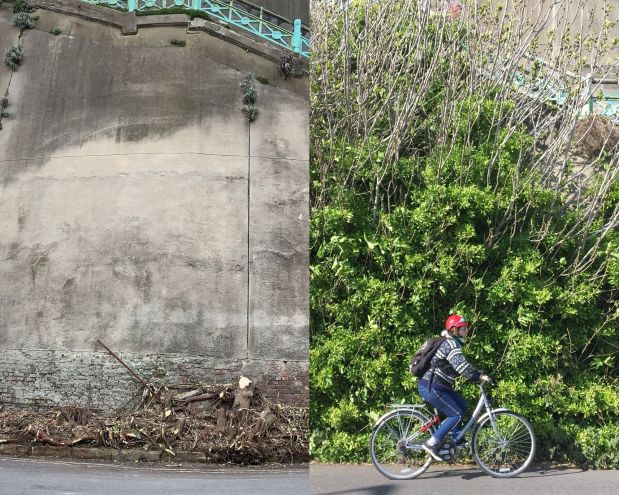
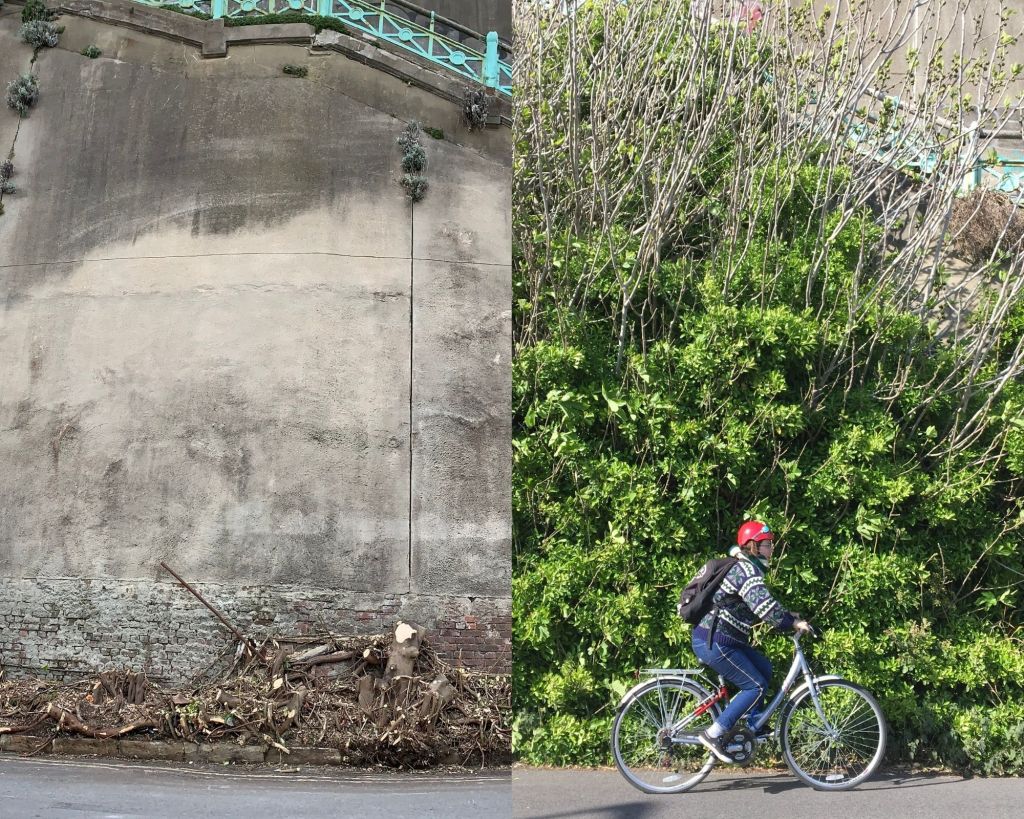
Building Green was saddened by recent action on 12 March to cut down a section of historic green wall next to the Volks workshop. Originally planted in 1872, approximately 6-8 Japanese spindle plants were cut, along with a large fig tree that was popular with local people. There was no prior notice or communication with Building Green.
This section of wall is part of the recently declared Local Wildlife Site – the only one of its kind in the UK.
The Council are commissioning a report into what happened, but the work is believed to have been a miscommunication relating to the creation of the new cycleway along Madeira Drive.
Building Green are hoping the spindle will grow back – our trials of copping these plants elsewhere along the green wall shows that they can regenerate, so we remain optimistic.
2 – Joining up the whole green wall with the MT30 project
Building Green is looking to prevent further miscommunication and ensure that the entire historic length of the green wall is considered as part of the regeneration of Madeira Drive.
As such we were pleased to have agreement from the Madeira Terraces MT30 project that the full length of green wall – east to the top of Duke’s Mound – will be included in the MT30 project.
3 – New planting at Duke’s Mound
Building Green has been unable to conduct any volunteer maintenance of the Duke’s Mound stretch of green wall during the pandemic.
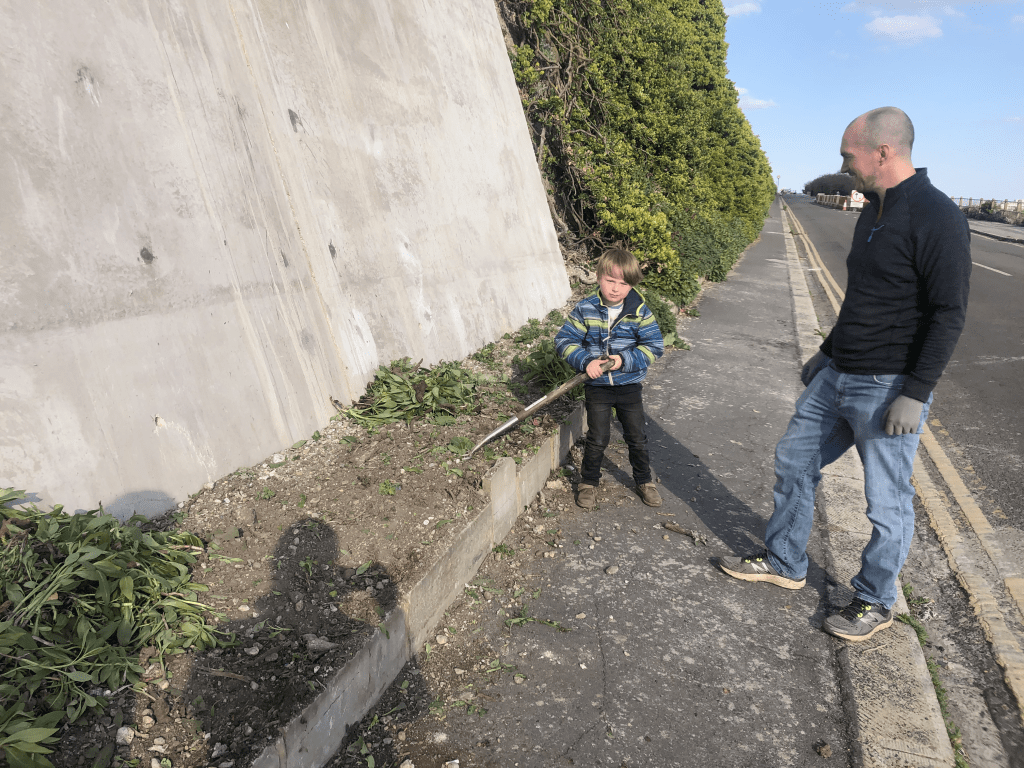
However, Building Green’s Treasurer & Son have been quietly growing cuttings of Japanese spindle and will be planting these out in a recently re-surfaced section of the East cliff.
We are proud to see this volunteer action underway – as part of restoring the original extent of the green wall.
Clearing a recently resurfaced section of green wall ready for planting Japanese spindle
Remember the purpose of the project is to select c30 arches for restoration, to improve the seafront, prove the case and build momentum for funding the remaining 121 arches.
The design team is now at RIBA Stage 2 (see below). This is the phase of design that starts to get interesting, with drawings and initial whole life costings. A 3D model and topographical survey are underway across the whole Terrace. We haven’t seen this yet but will share it when complete.
The original date for groundworks was October – unsurprisingly, this is delayed. The major work of planning consents and contractor procurement remain, a major decisions still to make.
What is exciting is that many of our original ideas have been put forward and developed further, including the potential for planting parts of the mid-level walk (‘Max’s walk’), ideas for natural stormwater management and sustainable energy creation, and of course the protection and enhancement of the Green Wall.
How many of these get through cost consultancy we will see. Certainly the Green Wall is recognised now as an integral part of Madeira Drive. I will continue to push for its retention, enhancement and restoration as part of the wider seafront environment.
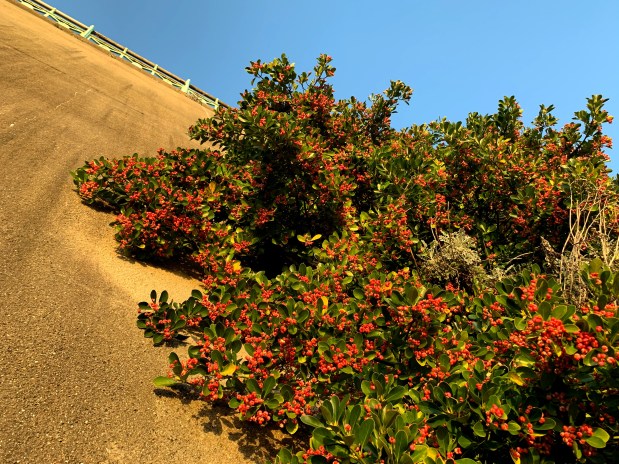
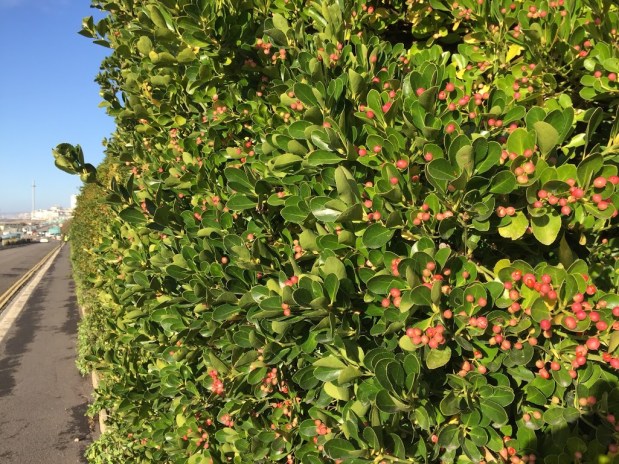
This year has been particularly good for Japanese spindle berries at the Madeira Drive green wall. Who knows why?
While we ponder that, here are some facts about this amazing plant.
Seeds are propogated by birds
It depends on bees, flies and hoverflies to pollinate the flowers
It is very tolerant of salty conditions, and a wide range of soil types
Roots and stems yield up to 7% gutta-percha, a non-elastic rubber used as an electrical insulator and in making plastics
Decoctions from the bark are considered to be tonic, anti-rheumatic, anhidoritic and diuretic. Chinese women use the leaves to aid difficult childbirths
It is host to a wide variety of invertebrates including Unaspis euonymi, a sap-sucking ‘scale’ insect; and dusty grey/black vine weevils, Otiorhynchus sulcatus, which can take notched nibbles out of leaf edges.
BUILDING GREEN Protecting the oldest, longest ‘green wall’ in the UK – Building Green needs advice and input. Building Green have been working with the Council, Portslade Green Gym and others for several years to bring Madeira Drive Green Wall the recognition it deserves. Now designated a Local Wildlife Site – the first of its kind in the UK – the green wall is home to over 100 species of flowering plant and is the oldest and longest green wall in the country, if not Europe.
Planted in 1872, the green wall originally covered over a mile of Brighton East Cliff below Kemp Town. Parts of the site have been lost and damaged over the years, but extensive stretches remain. Building Green have been leading its restoration – particularly at the Duke’s Mound end of Madeira Drive – and have a vision to protect, enhance and restore the green wall to its former extent.
The green wall pre-dates Madeira Terrace – the Grade II* structure which is the focus of work to restore and regenerate the East Brighton seafront. Building Green represent the Natural Environment on a stakeholder panel that was established by the Council to advise on this work, which is on track to begin with the restoration of 30 arches of the Terrace this autumn.
We also welcome input from Green Spaces Forum members on the restoration plans for Madeira Terrace – particularly in terms of the environmental components of the seafront and wider built and natural heritage.
Unfortunately green wall maintenance has been stopped again, as Covid-19 restrictions continue.
The council don’t allow volunteers over 70 years old to work at present, and of course as of today not in groups over 6. Our mighty Green Gym guys and gals fail on both counts…we hope they are keeping active and connected to each other in other ways.
It’s a tough decision. Parts of the green wall are now growing onto the pavement, so Building Green has asked the council to organise some cutting back.
We look forward to restrictions lifting and work starting up again as soon as possible.
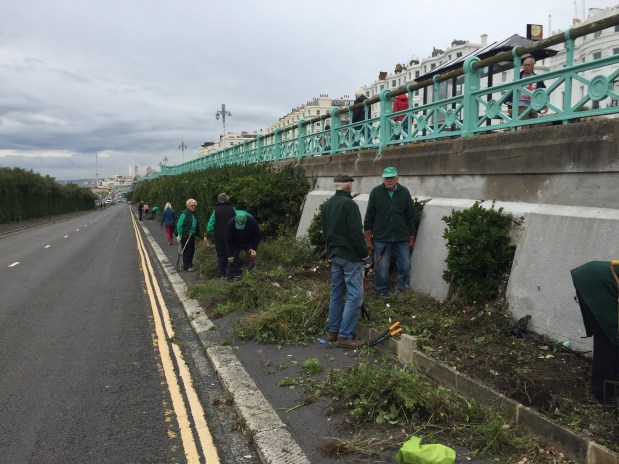
Those intrepid volunteers from Green Gym are going to be back in action this month, caring for the precious planting along Duke’s Mound.
Part of the Maderia Drive Green Wall, they cut back red valerian, ivy and other plants which can crowd out more sensitive vegetation, and generally do a sterling job of making the area look great. They have fun whilst they do it too!
Thursday 17 September, 10am, Duke’s Mound
They will take all necessary Covid-19 precautions as they do it, alongside their usual attention to health, safety and wellbeing.
Our ‘Green Building‘ page has a summary of the benefits of green roofs. But what of green walls? Why kinds are there, and what do they do?
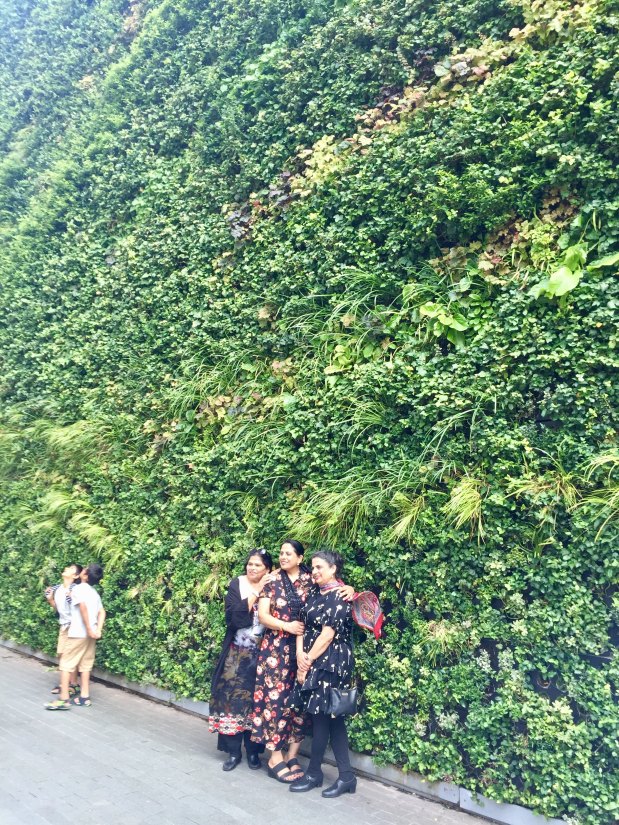
These days there’s a fashion for green walls that involve technical, modular systems which support pocket planting of a huge array of vegetation. Your local supermarket may have one, or you might spot an internal ‘living wall’ in a boutique in town. There’s no doubt these living wall systems can be stunning – with great examples at Westfields in Shepherd’s Bush, and on The Rubens at The Palace in Victoria, London.
However, simple is good too, and simple green walls using trailing or climbing plants have been around for millenia. Taken in the round, and considering the energy it takes to create and eventually dispose of a green wall, and the benefits during its life, these simple green walls perform best.
Benefits include:
Prolonging building fabric
Trapping pollutants which accelerate decay
Biodiversity
Visual amenity
Property value
Cooling
If you’ve got some spare time, take a look at this talk on Green Walls by James Farrell of Brighton & Hove Building Green and Lee Evans of Organic Roofs Ltd. at Green Architecture Day 2017.
Lee goes on to talk about living roofs, so it’s a twofer.
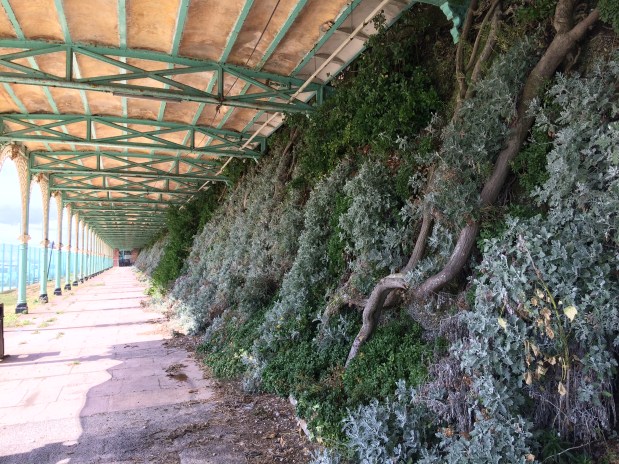
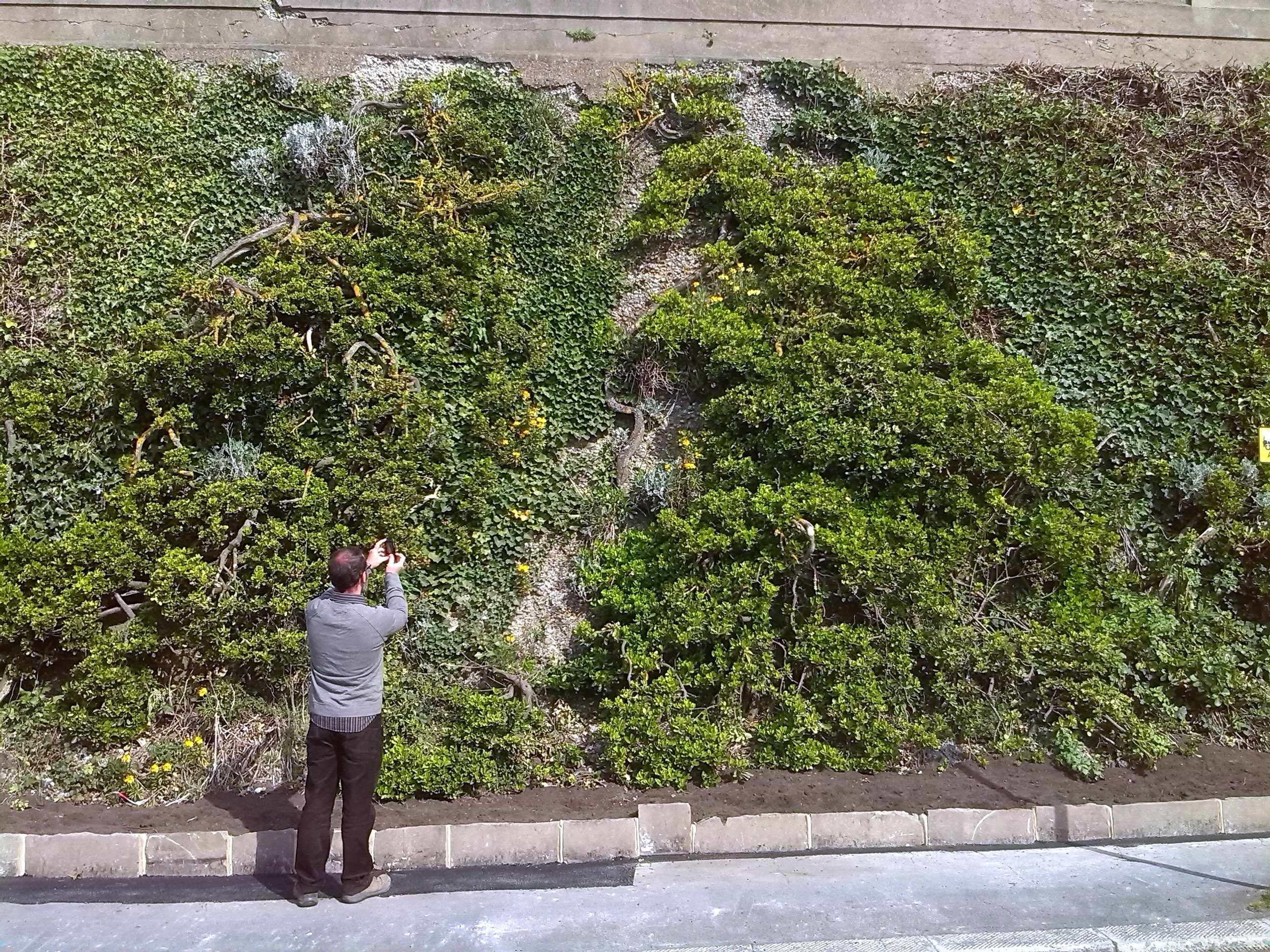
We have a historic example right here in Brighton & Hove. The green wall at Madeira Drive is the oldest and longest in the country, and was planted in 1872. It now supports over 100 species of wild plant and a range of other wildlife.
Madeira Drive green wall, Brighton
Here is a short film about Madeira Drive Green Wall.
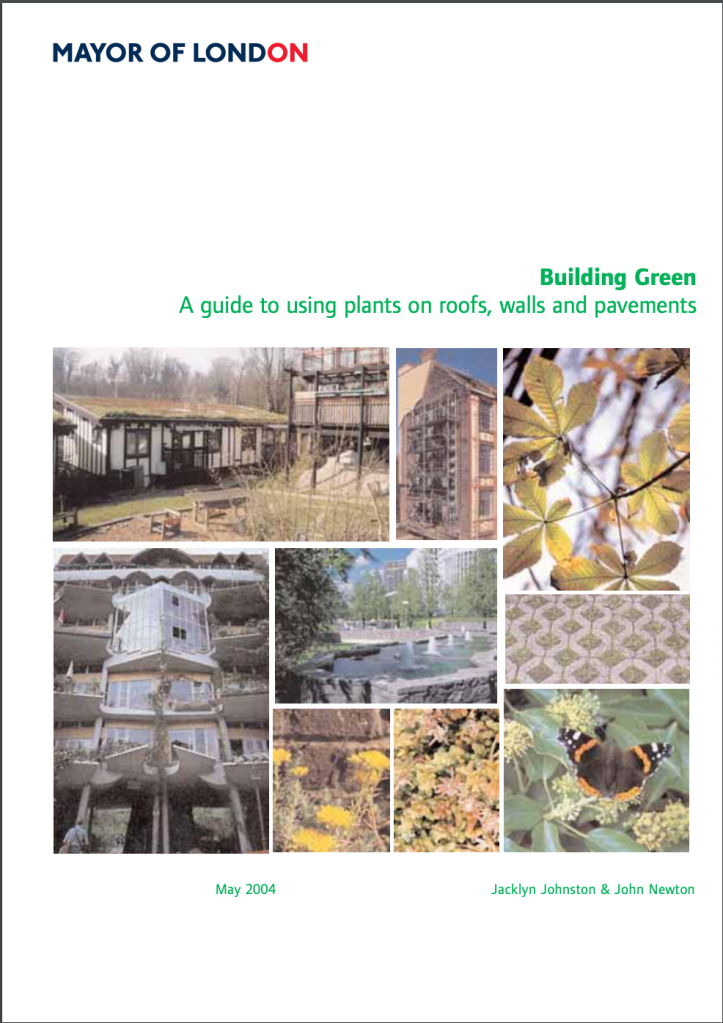
What about your house, block of flats, or workplace? Yes, they can have a green wall too. The book ‘Building Green’ contains tips on how to do it, and a handy planting guide to help you select the right plants for your local environment and the benefits you are seeking.



 Brighton & Hove Building Green