A walk along Duke’s Mound showed the Japanese Spindle coming into fruit…strange fruits they are too! Beautiful though. And don’t forget to pledge in the campaign to Save Madeira Terrace….only two days left!
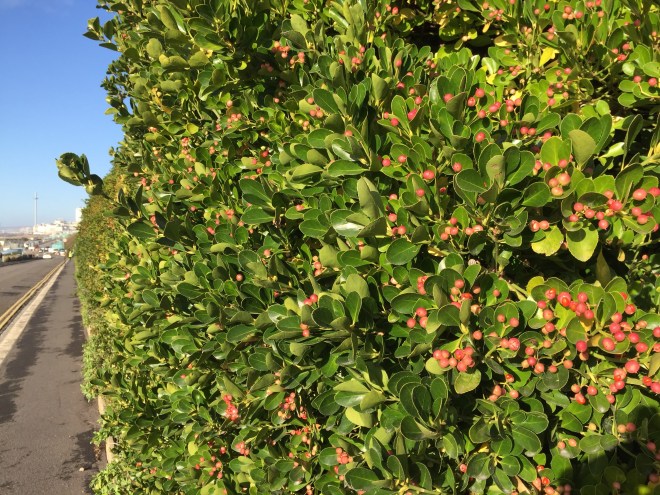

A walk along Duke’s Mound showed the Japanese Spindle coming into fruit…strange fruits they are too! Beautiful though. And don’t forget to pledge in the campaign to Save Madeira Terrace….only two days left!
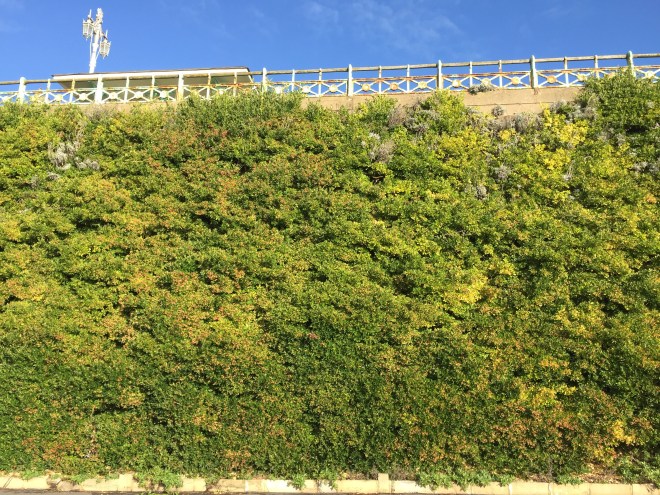
Those wonderful Green Gym volunteers were at it again this week, pruning and improving the famous Green Wall at Madeira Drive. Thank you Green Gym!


The green wall originally extended down to the Palace Pier, and Building Green would love to see it fully restored to its original condition.
That ain’t going to happen unless the Madeira Terrace restoration goes ahead – the green wall and the Victorian terraces are inter-related – so please donate to the ‘Save Madeira Terrace’ campaign.
Currently standing at £381k out of a required £422k…deadline 30 November!
Video here.
This article appeared in The Living Coast newsletter this month.
Did you know that a particular jewel in our ‘green building’ crown is on Madeira Drive?
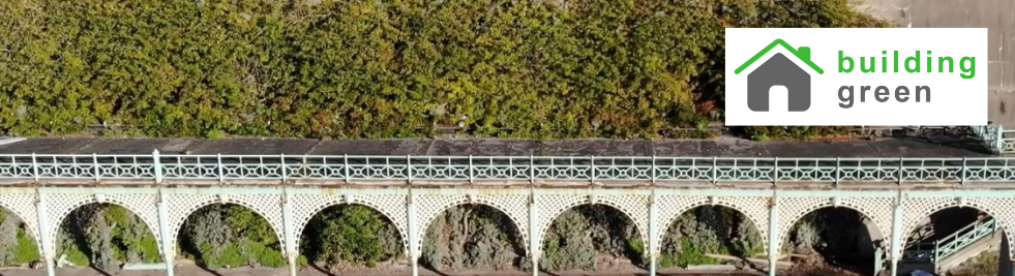
A hotbed of Victorian invention, Madeira Drive’s history has seen piers, an aquarium, an electric railway and ‘Daddy Longlegs seagoing car’, the first speedway and the ‘famous sheltered walk’ – Madeira Terrace. Well, in amongst all that, 150 years ago, the Victorians planted a ‘green wall’. The engineers had the foresight to build the Madeira Terrace in a way which enabled the planting to continue growing up the East Cliff – a rare early example in this country of integrating built and natural environments!

The green wall has grown in majesty since its humble beginnings as a backdrop of evergreen Japanese Spindle, which was planted to soften and improve the appearance of the developing seafront.
A recent survey by Building Green found over 100 species of plants growing on the wall, which – although much reduced from its original extent – is almost certainly the oldest, longest, green wall in Europe! The Madeira Drive Green Wall is now a candidate ‘Local Wildlife Site’ – the only one of its kind in the UK!
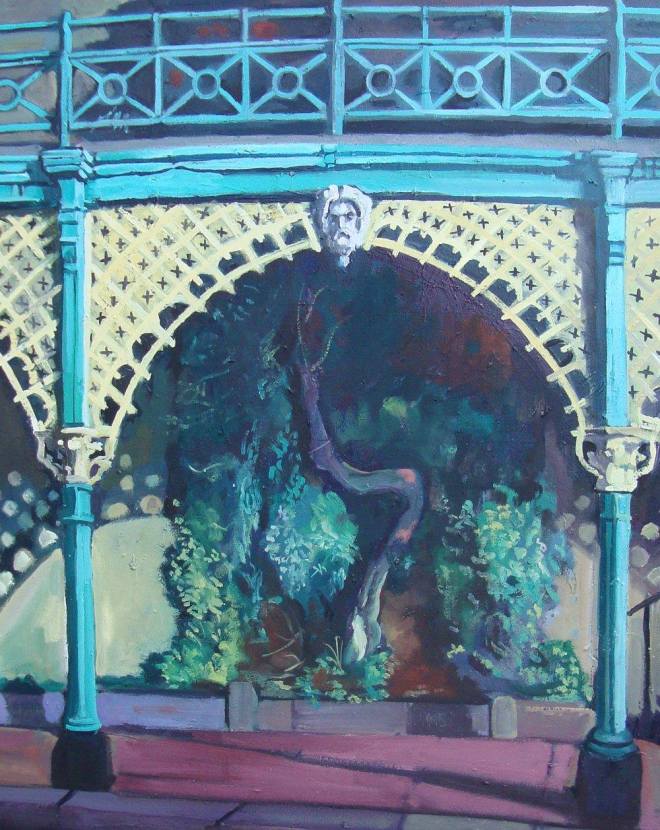
The Duke’s Mound end is managed by Green Gym volunteers in partnership with Building Green, Brighton & Hove City Council and the Ecology Consultancy.

Madeira Terraces are, of course, in need of restoration as part of a newly regenerated East Brighton seafront. Building Green is working with Brighton & Hove City Council and its “Save the Terraces” Campaign to ensure that this regeneration celebrates and enhances both the built and natural environments along the seafront.
What a great opportunity to connect more people with nature – the mission of The Living Coast – whilst honouring our Victorian legacy and creating a place that people really want to spend time in for the next 150 years!
This article by Building Green appeared in The Living Coast newsletter this month, and can be found on their website.
When we talk about creating safe, accessible and attractive towns and cities, we often forget one thing: Nature.
Well, stop and think about this: our species evolved for 2 million years on the African Savannah. That means us humans are hard-wired, physically and mentally, to interact with nature. The Victorians figured out that we feel better when we are amongst it, and build stronger communities when we have access to natural environments around us. We know and love our Victorian parks and the street trees that continue to enhance our city. Even as far back in time as 1750, Lewes’ own Richard Russell (aka ‘Dr Brighton’) published the first book to connect health with sea bathing!
Now, as you may have heard, we are on the cusp of a sixth mass extinction of biodiversity on earth and it’s our fault. We have both rare and everyday plants and animals in our city – and our gardens, parks, allotments, nature reserves, coast and farmland all have a role to play in protecting this biodiversity. But does it really matter? Isn’t biodiversity just for the ‘bird nerds’ and ‘flower fanciers’? Aren’t we apart from nature, not a part of it? What does nature in cities do for us? Well the evidence of how we depend on nature is now quite overwhelming.
Take health, for example. Being active in the natural environment is good for us. The annual cost of inactivity to the NHS in England is £8.2bn. For England as a whole, people living closer to green space have lower death rates and less heart disease. The importance of local green space for kids and poorer communities is especially important for health. Accordingly, doctors are beginning to prescribe a dose of nature in some parts of the country such as Cornwall for example.
There are also functional benefits of course. Greener cities are cooler (our current heatwave temperatures are predicted to be the average by 2050), with better air quality (Brighton & Hove has twice the national limit of harmful nitrous oxides), and better storm water management (we are one of the most at risk locations in the country for surface water flooding).
And what about community? Recent work has estimated that ‘neighbourliness’ delivers a £28bn saving to the UK from increased social connections and demand on policing, social care, welfare and environment. Creating and managing green features is an opportunity for community activity and cohesion, and the greener our places, the less crime we are likely to suffer. For example, one major study in the US recorded 48% fewer property crimes and 56% fewer violent crimes in green Chicago estates.

Green roofs at the University of Brighton’s Checkland building, Falmer campus (James Farrell)
But what about the places in between the green spaces – the buildings themselves that define ‘city’ in the first place? Long gone is the traditional mindset of preserving nature behind fenced off reserves. Nature is out and proud – on green roofs, green walls, balconies and terraces. The local voluntary initiative of ‘Brighton & Hove Building Green’ believes that we can do better with these often under-utilised and ‘wasted’ spaces, and bring about many more of these benefits.
Thanks to imaginative planning policies in places like London, the UK ‘green roof’ movement is growing at 17% annually – the fastest growth in Europe! Here in Brighton & Hove, a recent study identified 87 football pitches-worth of roofs in a 9km2 area of the city centre that were suitable for greening – providing benefits for urban drainage, avoided air conditioning and urban cooling. And hey, they look great – certainly better than boring felt or shingle ballasted roofs, or much of our blank city wall space. Brighton & Hove City Council does have supportive planning policies and it’s not difficult to find great examples of green roofs and walls in Brighton without too much standing on tip-toes: The Level cafe for example, the Crew Club in Whitehawk, the garden in Regency Square that covers the underground car park, the green walls in the New England streets behind Brighton Station, and the wonderful wildflower roofs on the Phoenix ‘container housing’ at the old Cobbler’s Thumb site near Preston Circus.

Green roof on the Velo Café, Brighton, created by ‘Organic Roofs’ (James Farrell)
At Building Green, we believe that creating a better Brighton & Hove is not just worthwhile, but achievable. We also know that evidence is not enough – people change when they feel as well as think, and we need green spaces for people to experience and interact with personally, as often as possible.
So here’s an idea. Take a walk down Duke’s Mound from Marine Parade to see the green wall – our long, leafy wonder. You may notice how it cools the air, and how the greens perfectly offset the sea and the buildings of Regency Kemptown. You may see butterflies, bees and birds and maybe catch the scent of wallflower or Spanish gorse. You may notice figs, gladioli and ferns, and how much slower and calmer people seem as they walk along. Why not try it at the weekend – I’ll bet you will feel a difference!

Green wall on Madeira Drive, Brighton (James Farrell)
So let’s remember that key ingredient and cherish our most important landscapes, sites and wild places, both in the city and without. But let’s also take down those metaphorical fences and bring nature into the very fabric of the city and into our everyday lives. After all, we may very well depend on it.
So why not a Brighton High Line at Madeira Drive?
Flying high above New York City’s Meatpacking district is the High Line. You’ll have heard of it – it’s in the top 5 most Instagrammed sites in the world, receives over 7 million visitors a year. The cost was $273m. The additional tax revenues alone are estimated at $900m, with some $2bn additional local economic activity.


According to GreenPlay LLC, “The High Line district (including the Chelsea neighborhood), long back-on-its-heels, is now one of the hottest markets for upscale residential, retail, and office-center development.”
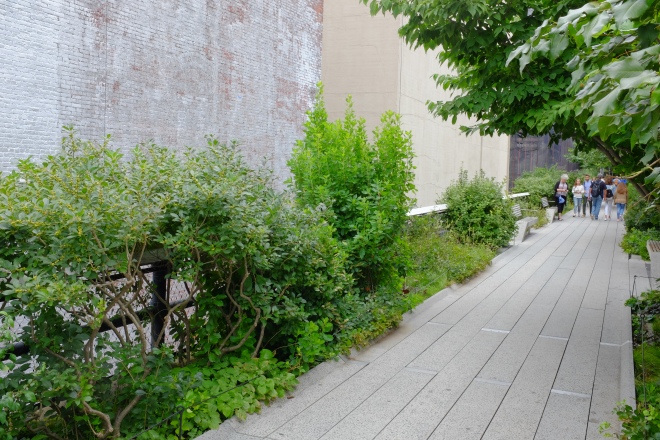
A recent visit by Building Green left us even more impressed than we expected to be. Run entirely by a Trust and a volunteer workforce, the place was packed with happy, strolling visitors. Gardeners moved through the planting, leaving wafts of mint and other fragrances in the wake of their secateurs. There were shops and stalls – all profits back to the Trust – as well as public art, recliners and all around the activity of cranes and new development in progress. As the sign on a new apartment block put it “Think the High Line is Cool? Check out our Roof Deck and no fee rentals“.
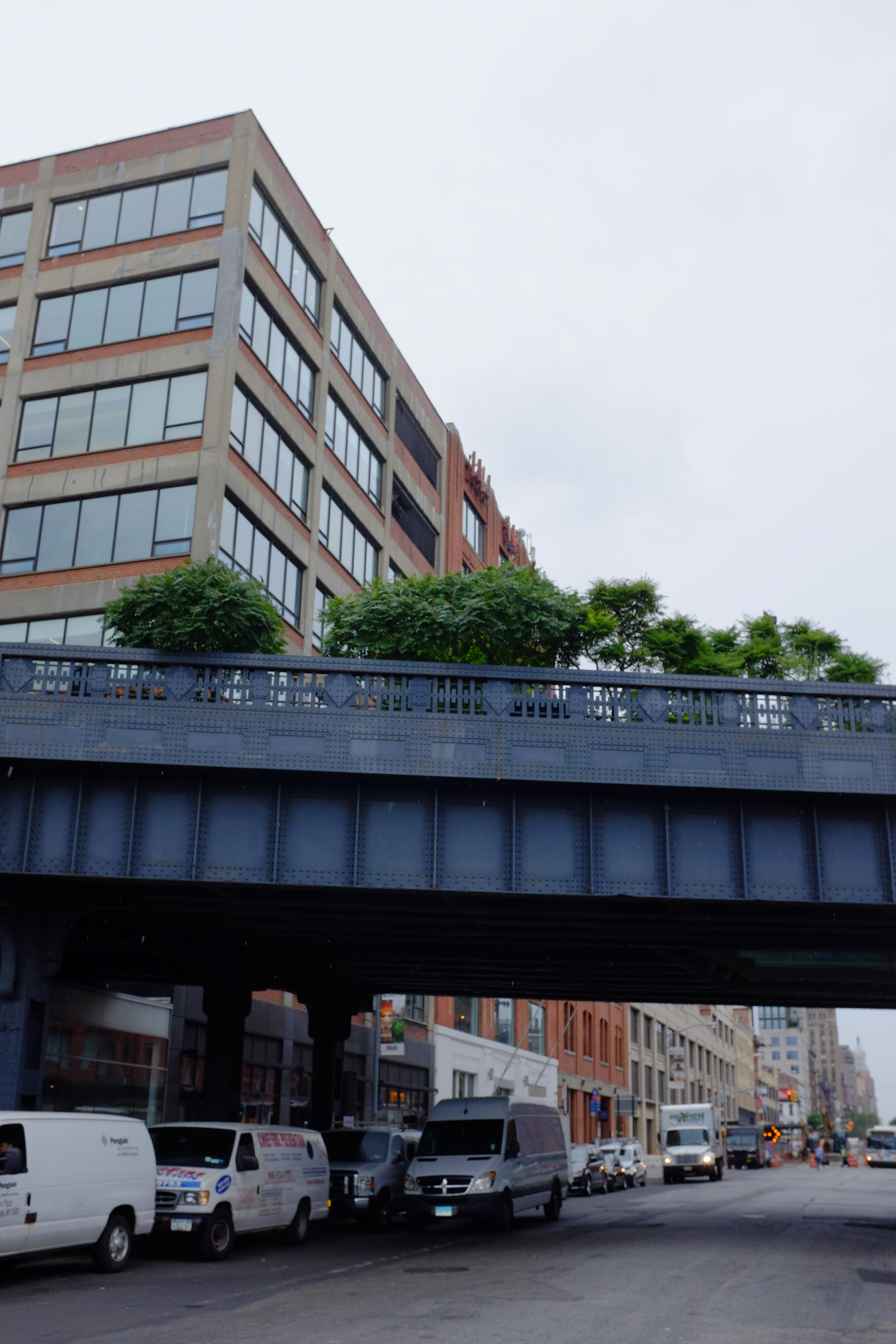
Now to Brighton. We already have a high line – it’s Madeira Terraces, created by the Victorians for similar motives to the modern New Yorkers. Work is underway to source funding for their repair and restoration, and we have the marvellous backdrop of the Madeira Drive Green Wall for visitors to enjoy again in future as they walk the regenerated seafront.
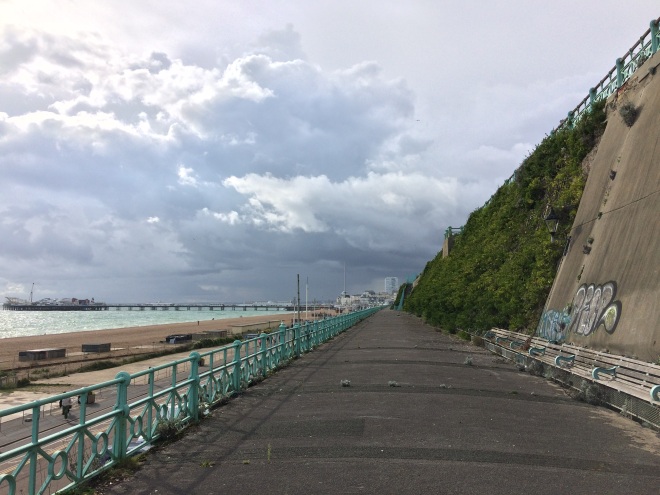
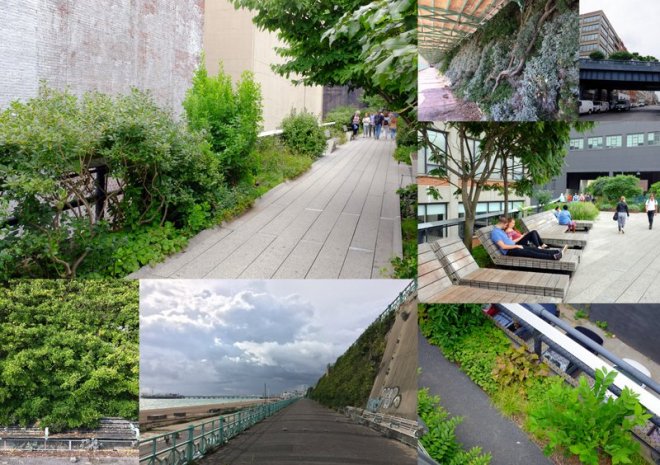
But what if the terrace deck itself was greened? Planted with attractive, fragrant and salt tolerant plants that were a reason for walking the terrace itself? The terrace as a destination, not just a roof for new businesses or a viewing platform for occasional events? It can be done technically. It has access including a mid-level lift at the Concorde. It may well provide an additional avenue for funding, and add value to the offer the restored terraces provide through increased footfall, marketability and environmental quality.
What do you think? Here at Building Green, we will be promoting this vision and encouraging the Council to adopt it. Can you help? Here’s a collage that provides some food for thought.
Building Green’s intrepid survey squad spent last weekend under the terraces at Madeira Drive. Armed with clipboards and Bob the Builder hats, we surveyed the extent and health of the green wall, and updated the list of plants and other wildlife found there.


The results are in. Ton up! We have now broken the 100 species barrier…104 species of plant to be exact…and found a number of other wildlife using the wall that we hadn’t seen before. We counted 117 trunks of 150 year old Japanese Spindle – not including the plants at Duke’s Mound further East, or those in the planters on the terrace itself.
This really strengthens the case to designate this wall a ‘local wildlife site’ in the Council’s forthcoming City Plan. It would be the only green wall site of importance for nature conservation in the UK, and deserves this recognition.
Here is the full list of species. Interesting finds include Japanese Holly Fern, shown below, Hoary Stock, and Holly Blue and Painted Lady butterflies.


Big thanks to our volunteers, and to the Council for the PPE and access.
Download a PDF of the survey: Madeira Drive Green Wall Plant Species List 12.09.2017
Species list from survey 12 September 2017
| Scientific Name | Common Name |
| Faunal Records | |
| Vulpes vulpes | Fox |
| Passer doemesticus | House sparrow |
| Prunella modularis | Dunnock |
| Parus major | Great tit |
| Troglodytes troglodytes | Wren |
| Columba livia | Wood pigeon |
| Turdus merula | Blackbird |
| Celastrina argiolus | Holly blue |
| Vanessa cardui | Painted lady |
| Vanessa atalanta | Red admiral |
| Meles meles | Honey bee |
| Bombus lucorum | White tailed bumblebee |
| Bryophytes | |
| Barbula cylindrical | |
| Barbula sardoa | |
| Barbula unguiculata | |
| Didymodon tophaceus | |
| Didymodon luridus | |
| Didymodon rigidulus | |
| Rhynchostegiella tenella | |
| Tortula muralis | |
| Vascular Plants | |
| Acer pseudoplatanus | Sycamore |
| Achillea millefolium | Yarrow |
| Agrostis stolonifera | Creeping bent |
| Anisantha sterilis | Barren brome |
| Anthriscus caucalis | Bur chervil |
| Anthriscus sylvestris | Cow parsley |
| Arctium minus | Lesser burdock |
| Asplenium adiantum-nigrum | Black spleenwort |
| Avena sativa | Common oat |
| Ballota nigra | Black horehound |
| Bellis perennis | Daisy |
| Berberis darwinii | Darwin’s barberry |
| Brassica rapa | Turnip |
| Buddleja davidii | Butterfly bush |
| Campanula porscharskyana | Trailing bellflower |
| Capsella bursa-pastoris | Shepherd’s purse |
| Carex pendula | Pendulous sedge |
| Catapodium marinum | Sea fern grass |
| Catapodium rigidum | Hard fern grass |
| Centranthus ruber | Red valerian |
| Cerastium fontanum | Common mouse-ear |
| Chenopodium album | Fat-hen |
| Crithmum maritimum | Rock samphire |
| Cirsium arvense | Creeping thistle |
| Cirsium vulgare | Spear thistle |
| Clematis vitalba | Traveller’s joy |
| Convolvulus arvensis | Field bindweed |
| Conyza canadensis | Canadian fleabane |
| Coronopus squamatus | Greater swinecress |
| Crocosmia x crocosmiiflora | Monbretia |
| Cymbalaria muralis | Ivy-leaved toadflax |
| Cyrtomium falcatum | House Holly Fern |
| Dactylis glomerata | Cock’s-foot |
| Digitalis purpurea | Foxglove |
| Diplotaxis muralis | Annual wall rocket |
| Epilobium ciliatum | American willowherb |
| Epilobium hirsutum | Great willowherb |
| Erigeron glaucus | Seaside daisy |
| Erigeron karvinskianus | Mexican fleabane |
| Erysimum cheiri | Wallflower |
| Euonymus japonicus | Japanese spindle |
| Ficus carica | Fig |
| Galium aparine | Cleavers |
| Genista hispanica | Spanish gorse |
| Geranium molle | Dove’s-foot crane’s-bill |
| Geum urbanum | Wood avens |
| Gladiolus communis ssp. byzantinus | Eastern gladiolus |
| Hedera helix | Englsh ivy |
| Hemerocallis fulva | Orange day-lily |
| Hordeum murinum | Wall barley |
| Hyacinthoides hispanica | Spanish bluebell |
| Hypochaeris radicata | Cat’s ear |
| Lactuca serriola | Prickly lettuce |
| Linaria purpurea | Purple toadflax |
| Lolium perenne | Perennial ryegrass |
| Malva sylvestris | Common mallow |
| Malva x clementii | Garden tree mallow |
| Matthiola incana | Hoary stock |
| Melilotus officinalis | Ribbed melilot |
| Narcissus pseudonarcissus cv. | Garden daffodil |
| Onopordum acanthium | Cotton thistle |
| Parietaria judiaca | Pellitory-of-the-wall |
| Pentagottis sempervirens | Blue alkanet |
| Phyllitis scolopendrium | Hart’s-tongue fern |
| Picris echioides | Bristly ox-tongue |
| Picris hieracioides | Hawkweed ox-tongue |
| Plantago coronopus | Stag’s-horn plantain |
| Plantago lanceolata | Ribwort plantain |
| Plantago major | Greater plantain |
| Poa annua | Annual meadow grass |
| Polypodium vulgare | Common polypody |
| Rubus fruticosus | Blackberry |
| Rumex crispus | Curled dock |
| Rumex obtusifolius | Broad-leaved dock |
| Sagina apetela | Annual pearlwort |
| Sagina procumbens | Procumbent pearlwort |
| Sambucus nigra | Elder |
| Sedum acre | Biting stonecrop |
| Sedum album | English stonecrop |
| Senecio cineraria | Silver ragwort |
| Senecio viscosus | Stick ragwort |
| Senecio vulgaris | Groundsel |
| Silene alba | White campion |
| Sisybrium officinale | Hedge mustard |
| Sisybrium orientale | Oriental rocket |
| Smyrmium olusatrum | Alexanders |
| Solanum dulcamara | Bittersweet |
| Sonchus asper | Prickly sow-thistle |
| Sonchus oleraceus | Smooth sow-thistle |
| Sonchus arvensis | Perennial sow-thistle |
| Spergularia marina | Lesser sea spurrey |
| Stellaria media | Common chickweed |
| Taraxacum officinale agg. | Dandelion |
| Triticum aestivum | Bread wheat |
| Urtica dioica | Common nettle |
| Veronica x franciscana | Hedge veronica |
The study by the UK Green Wall Centre in Staffordshire looked at this green wall at New Street station, Birmingham.
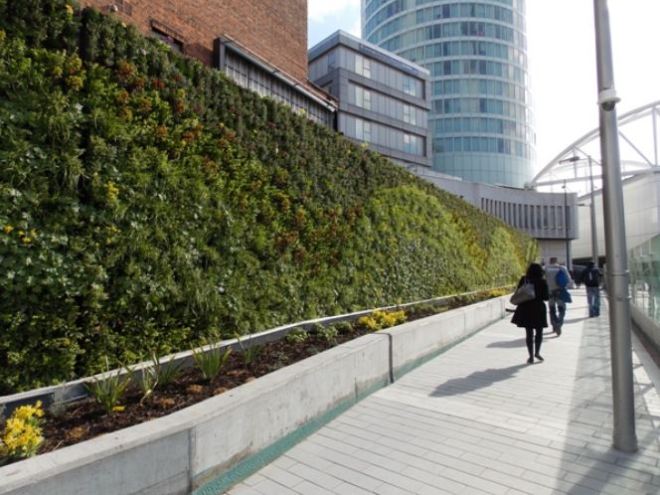
It found ‘promising potential for removal of atmospheric PM (PM1, PM2.5 and PM10). The researchers noted that careful species selection is crucial to optimize living walls as PM filters. ‘Smaller-leaved species, hairy leaf surfaces and [waxy leaves] enhance the PM capture potential of living wall-plants.’
For more, go here.

Have you donated yet to the ‘Save Madeira Terrace’ campaign?
The campaign has now raised over £160,000 from more than 700 local people and businesses who are committed to preserving its future – as well as celebrating its past. Minimum donation is £2. Please spread the word and share this link: Spacehive – Save Madeira Terrace
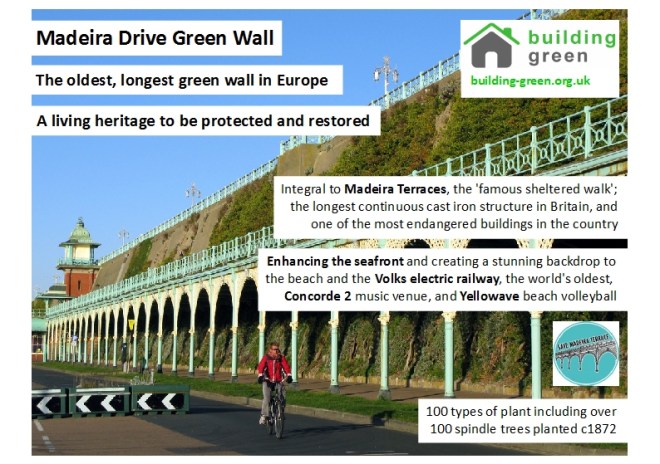
Next Saturday 9 September, a survey squad will be making an assessment of the green wall at Madeira Drive. We have space for volunteers.
An important part of our seafront heritage, the green wall is home to at least 99 species of wild plant, and is the longest green wall in Europe.


The squad will be counting the number of Japanese spindle trees – planted in c1870 – taking measurements, and assessing the health of the green wall that runs from Duke’s Mound in the East, and west along Madeira Drive.
We have space for a couple of volunteers so if you’re interested drop us a line here, via the ‘contact us’ page..
Saturday 9 September 2017, from 1pm. Meet at Duke’s Mound.
If you just want to come along and say hi, then do that too!
Tucked away on the resources section of the Building Green website is a broken link that tells the story of how this group came about.
London Ecology Unit published a highly influential book in 1993 called ‘Building Green – A guide to using plants on roofs, walls and pavements’. It was a prescient tome – heralding techniques and approaches from across Europe and the world that came established only years later in the UK, Building Green was a systemic, ecological approach to urban nature. It became the name of our community group.
When at the Greater London Authority, I created an electronic version of the out of print manuscript – the broken link referred to. Well, here it is in all its free, downloadable glory. Go crazy.
Johnstone and Newton – Building Green
In particular note the appendices which list plants for different locations – walls of different aspects, balconies, roofs etc. Check it out, it’s great – all credit to the originators Jacklyn Johnston and John Newton.
 Brighton & Hove Building Green